


There’s something sacred about journaling. A soft rustle of pages. The honesty of ink. A moment where the noise of food rules quiets enough for your true voice to speak.
If you’re reading this, you might be exhausted by the binge-restrict cycle. Maybe you’ve felt out of control around food, hiding wrappers or starting “fresh” every Monday. You might blame yourself, wondering, What’s wrong with me? Why can’t I just stop?
Here’s the truth: nothing about you is broken.
Binge eating isn’t about lack of willpower. It’s about unmet needs, nervous system overwhelm, emotional numbing, and inner parts of you doing the best they can to survive.
Journaling isn’t a fix. It’s a practice of listening — not just to your thoughts, but to the deeper rhythms of your story. With the right prompts, journaling can help you untangle shame, understand your urges, and soothe the deeper hunger beneath the binge.
In this article, we’ll explore 15 powerful journaling prompts designed specifically to support binge eating recovery in 2025. They’re gentle, trauma-informed, and grounded in the Eating Enlightenment worldview of wholeness and compassionate self-understanding.
Curious about your relationship with food?
Our free quiz can offer a compassionate starting point — no pressure, just insight.
Why Journaling Works for Binge Eating Recovery

Binge eating often arises from a swirl of unmet emotional needs, trauma residue, and internalized beliefs about food and worth.
Journaling creates space to:
- Recognize patterns without shame
- Soothe the nervous system through reflective awareness
- Rebuild trust with your inner world
- Name what’s true beneath the binge
According to a 2018 study in the Journal of Eating Disorders, expressive writing can significantly reduce disordered eating behaviors by helping individuals process underlying emotional distress (Frisén & Holmqvist, 2018).
Journaling helps shift the energy from bingeing to belonging.
Not just to others—but to yourself.
15 Journaling Prompts to Stop Binge Eating (Gently)
Each of these prompts is crafted to speak directly to the emotional terrain of binge eating. Use them in any order, whenever you’re ready.
1. “What am I really hungry for right now?”
This classic but profound question invites curiosity, not judgment. Is the hunger physical, emotional, spiritual? Sometimes it’s for rest. Sometimes it’s for safety.
2. “What was happening before I felt the urge to binge?”
Track context. A fight with a friend? Loneliness? Criticism at work? Often, binges are pre-verbal responses to stress.
3. “If my binge could speak, what would it say?”
Let the behavior speak for itself. You might be surprised. “I’m trying to protect you.” “I don’t know any other way.” This voice is not your enemy — it’s a part of you needing care.
4. “What do I believe this binge will solve?”
Get honest. Relief? Escape? Distraction? Naming the fantasy helps gently deconstruct the pattern without shame.
5. “When did I first learn to use food in this way?”
This may open memories of childhood. A parent offering sweets after fights. A reward system built around food. Go slow. No need to force resolution — insight is enough.
How to Use These Prompts Without Overwhelming Yourself
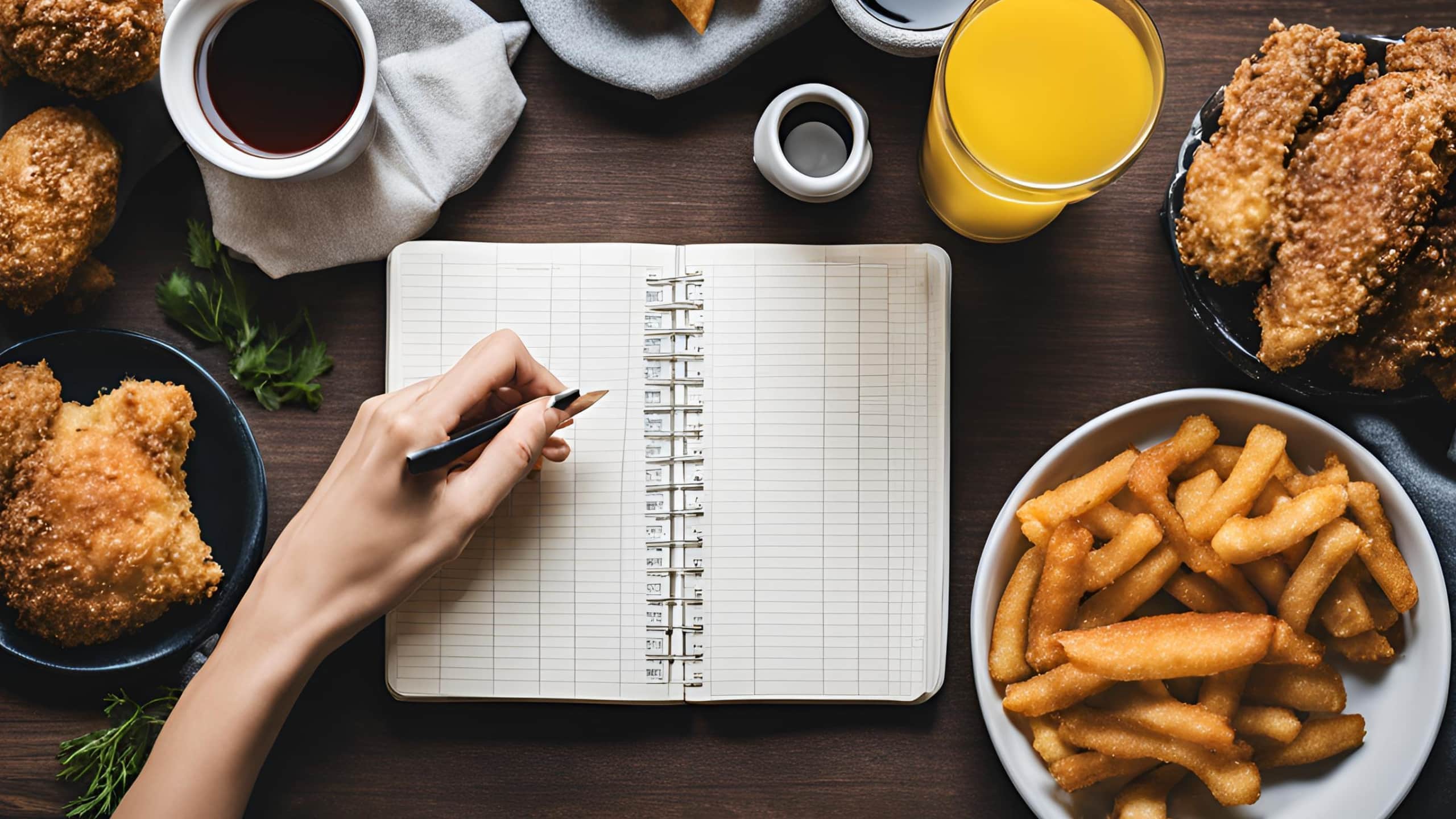
Many people with disordered eating are high-achievers, perfectionists, or hyper-aware. So even journaling can become a self-improvement project.
Here’s how to keep it safe and sustainable:
- Choose just one prompt a day
- Set a timer for 5–10 minutes
- Use a kind tone with yourself (imagine writing to a younger version of you)
- Journal after urges, not just during
- Don’t reread right away — let it breathe
And if it gets too overwhelming? Pause. Breathe. You don’t need to dig up every trauma to heal. Sometimes naming a single emotion — “I felt sad today” — is enough.
✨ Need help organizing your reflections?
Our Mindful Meal Journal app offers gentle daily structure and check-ins, with no calorie counting or food rules.
What If I Don’t Feel Like Journaling?
That’s valid.
Many people in recovery struggle with writing. Here’s why:
- Shame freeze: Your nervous system might shut down when you try to look inward
- Perfectionism: You don’t want to do it “wrong”
- Emotional backlog: There’s just… too much
If this is you, try:
- Voice memos instead of writing
- Drawing or scribbling how you feel
- Writing just one word — “tired,” “angry,” “numb”
- Letting yourself skip it without guilt
Healing doesn’t require constant introspection. It requires kindness. Presence. And co-regulation with safe others.
🌿 Feeling alone in this process?
Our coaching program offers nonjudgmental, trauma-informed support from experienced guides who’ve walked this path.
A Causal Vignette: The Origin of the Pattern

Let’s take a moment to see how bingeing becomes a protective pattern.
Imagine a young girl. Her home is chaotic. Her emotions are too big for the adults around her. She learns early: being “good” = staying quiet. She begins to eat in secret. Food is soothing, predictable. It doesn’t yell or leave.
Fast forward. She’s 28. A breakup triggers that same swirl of panic and aloneness. Her brain doesn’t say, I need co-regulation. It says, Get ice cream. Now.
This isn’t weakness. It’s survival. The journal becomes a space where this inner child is finally heard. Where her needs matter.
How Journaling Supports Nervous System Healing
When binge eating is chronic, the body is often in a state of dysregulation — fight, flight, or freeze.
Journaling can help you:
- Track your triggers (without judgment)
- Name your state — “I feel shut down,” “I’m buzzing with anxiety”
- Breathe as you write, which calms the vagus nerve
- Re-establish choice — instead of reacting from habit
This is not cognitive therapy. This is somatic witnessing. A way of bringing your mind, body, and emotions into gentle contact.
Some days you’ll feel clear. Others foggy. All parts of the process belong.
Closing Reflections: You Are Not Alone
Recovery from binge eating is not about willpower.
It’s about building safety.
Safety to feel, to rest, to say no. To listen inward. To not need food to survive your emotions.
Journaling is one powerful doorway into that safety. And it’s okay if you enter slowly.
If you take nothing else from this article, take this:
Your relationship with food makes sense.
And you deserve to understand it with compassion, not criticism.
✨ Feeling curious where to start?
Take our free food relationship quiz for a gentle, personalized insight into your next step.