

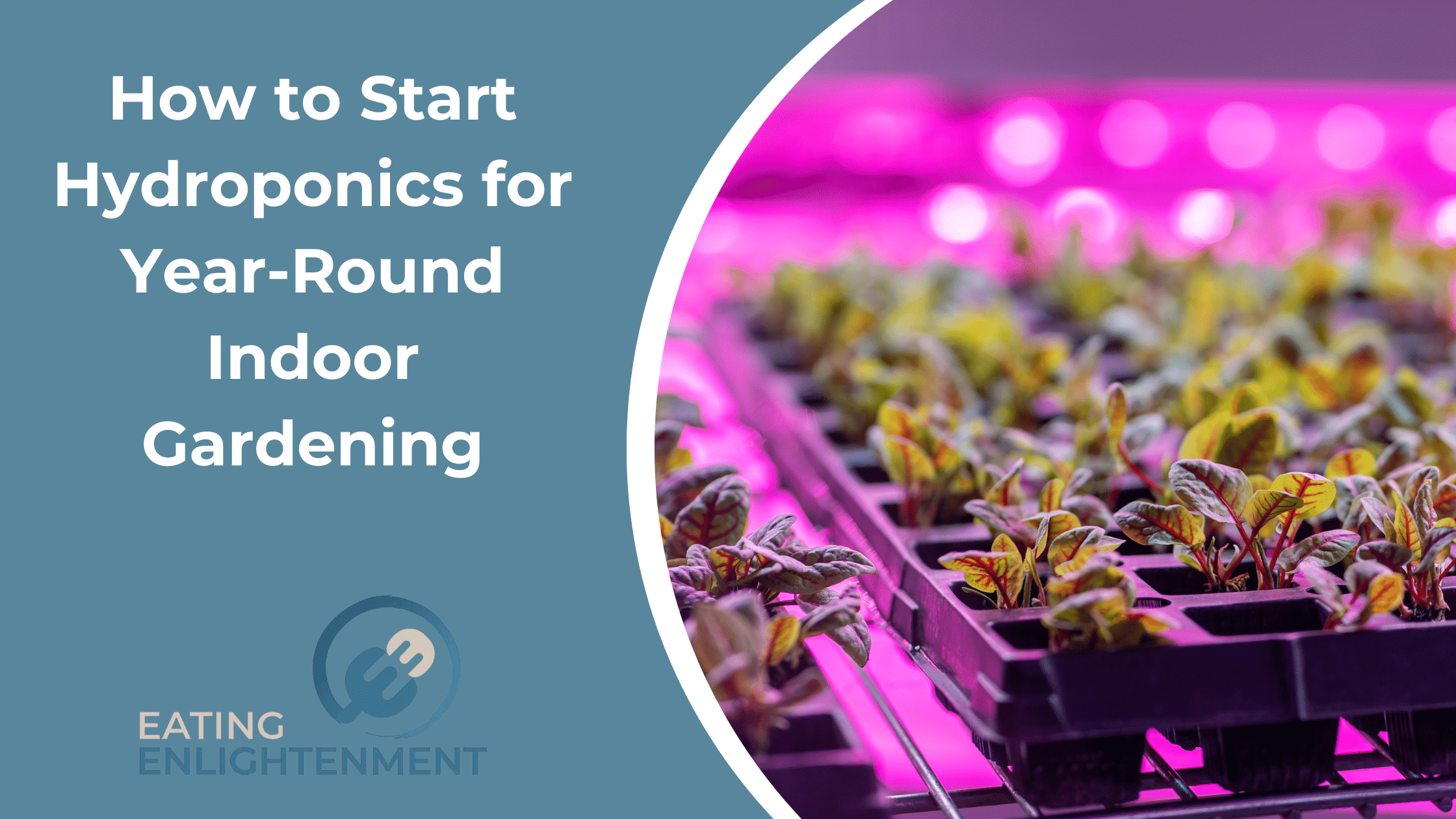
What is hydroponics, and what is it used for?
Imagine enjoying fresh, home-grown vegetables no matter the season. Hydroponics offers an innovative way to cultivate your indoor garden year-round, providing a sustainable and rewarding approach to gardening. This method ensures a steady supply of nutritious produce and serves as a therapeutic hobby that can enhance your well-being.
Complementing this lifestyle, the Eating Enlightenment Food Journal App empowers you to manage cravings, emotional eating, and binges, helping you align with a healthier lifestyle. Together, these tools create a holistic path towards nurturing body and mind. For example, vegan supplements can help replace nutrients while being convenient, and hydroponics can help you maintain nutrient balance.
Here’s a brief guide to growing your garden all year round through the wonders of hydroponic gardening.
What Is Hydroponics?
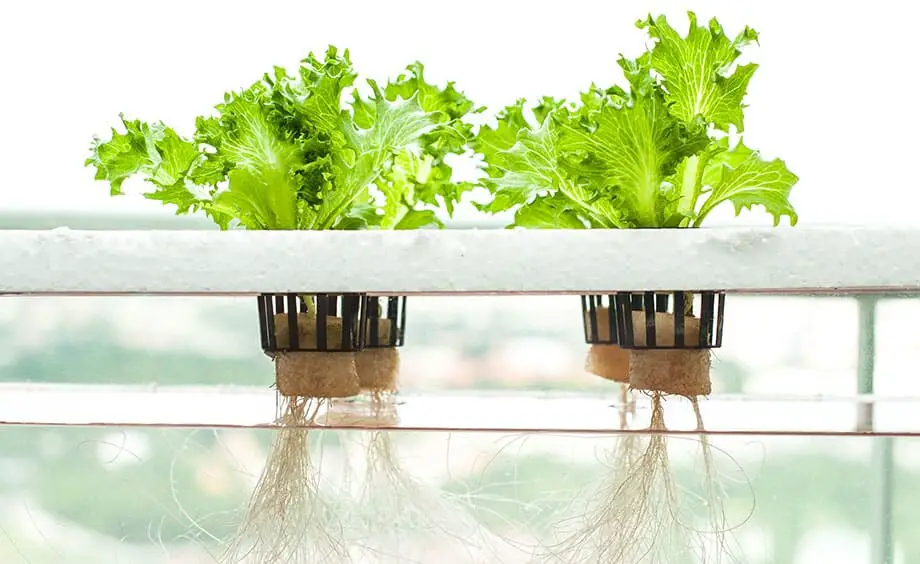
It’s all in the name! Hydroponic gardening is a system that allows you to raise plants in water instead of soil.
Soil-based gardening requires a plot of land that you’ll need to turn over, seed, water, fertilize, and oversee as the plants sprout and then slowly grow to adulthood under the sun.
Outdoor gardens depend on rain or regular watering, take up space, and expend healthy soil by continuously drawing nutrients from it.
On the other hand, hydroponic systems are self-contained, can be set up anywhere, use no soil, and receive sunlight from grow lights and nutrition from a solution you mix yourself.
How Does It Work?
Hydroponics isn’t one kind of system; several are available.
Each requires different equipment, but they all work on the same principle of plants suspended in growing media and putting down roots to absorb a water and nutrient solution.
The nutrient solution you mix is delivered to the root zone through an absorbent material. This material is usually a rope or some netting that’s been tightly packed, so it holds its form but still has plenty of holes for liquid to pass through.
This wicked system supplies your plants with continuous nutrition—which you need to monitor and replace regularly as they use it—and oxygen from the air around them.
Because hydroponics allows you to control every aspect of your garden instead of relying on Mother Nature, you can also fine-tune everything from lighting to temperature and humidity levels indoors for even better plant care.
The most basic hydroponics setup—and the one best suited for beginners—is a wick-based system. In this system, a rope or similar absorbent material brings nutrition up to the plants through capillary action.
Other hydroponics systems include ebb and flow, nutrient film technique, and deep-water culture. But start with a wick system to get a taste and see if hydroponics is for you.
Steps To Setup Wick System
1. Purchase a hydroponic system
2. Purchase wick-type solution and nutrient plants need to grow
3. Fill the container with the wick-type material or rope, which is an absorbent material that can draw water and nutrients up from below
4. Plant your seedlings in the soil of growing media such as coco coir or peat moss, which holds moisture well
5. Cover with a lid or a plastic sheet and place under grow lights
6. Add nutrients for the solution to water as instructed, usually once every week or more often if needed
7. Harvest your crops when they are ripe!
Here’s a helpful video I found on YouTube from the Green Our Planet channel.

More Things To Consider:
The container you choose will depend on how large you want your garden to be. Metal buckets can make it easy to move your project around. But many people prefer sturdy plastic bins so there’s no risk of rusting later on down the road.
Be sure to select a container twice as deep as the longest root from your largest plant; otherwise, it could pull out while trying to reach an absorbent wick in the bottom of an empty container.
You can purchase a complete hydroponics system or buy the components separately. Filling the system and then learning how to balance your nutrient solution in the reservoir below is easy for anyone.
However, you should still follow the instructions included with any new equipment you purchase to ensure everything is installed correctly before you begin growing anything inside it.
Components such as wicks will eventually need to be replaced. These parts are usually machine-washable by hand, so they’re not too difficult to keep clean, though you should always test them regularly for signs of deterioration, like staining or disintegrating material, to know when they need replacing.
If there are gaps between the growth media and container walls where moisture could leak out and drain into the surrounding soil, you can take a piece of mesh and cut a hole in it to fit tightly over that area; make sure there is plenty of ventilation at the top for air to circulate.
About Lighting

Hydroponics can be an effective way to grow food indoors without pesticides and herbicides. However, it’s always important to understand that your plant matter still needs light for energy. There’s only so much light you can get from artificial sources like lights.
So be sure to put your plants by windows!
What Can You Grow Hydroponically?
More than you’d imagine! Some plants, such as root vegetables, aren’t suited for hydroponics. These need to expand in soil, and larger fruits and gourds, like watermelons and pumpkins, would grow too weighty.
Otherwise, you’ll be surprised by the variety of foods and herbs you can grow: strawberries, tomatoes, leafy greens, herbs of all kinds, peppers, bok choy, and much more, including:
- Amaranth
- Artichoke
- Basil
- Beetroot
- Broccoli
- Brussel sprouts
- Cabbage – red or green
- Carrots
- Cauliflower
And without the problems you might face with outdoor gardening—weather, insects, disease, and so forth—hydroponically grown plants thrive.
Read here for another list of healthy vegetables to eat (nonhydroponic related).
Benefits and Disadvantages Of Using A Hydroponic System
One of the most significant benefits of using a hydroponic is that it does not require any soil.
However, the ability to grow plants without soil also causes one of the disadvantages of using a hydroponic system. Without soil, it can be difficult to get enough nutrients in a plant, which can cause the plants to die before they are harvested.
Obviously, it is important to provide plants with adequate water and nutrients so that they can grow.
One of the best ways to provide plants with adequate nutrients is to use liquid fertilizer. Liquid fertilizer is designed especially for hydroponics and offers the correct amounts of chemicals that plants require.
It can be purchased in either a concentrated or diluted form; both are available at your local garden center, or you can purchase them online.
Read this article for more info on what nutrients are needed for hydroponics.
The Future Of Agriculture Is Hydroponics!
There are many benefits to using hydroponics in agriculture.
The advantages of using hydroponics in agriculture are that it can be very high yielding, have the potential to produce a higher-quality crop, and be managed under controlled conditions.
Scientists also believe that hydroponic systems can help with water conservation.
Hydroponic systems can lower the amount of water required for crop production by up to 90 percent. This could offer a solution to water scarcity problems.
My Overall Thoughts On Hydroponics

Overall, hydroponics is an excellent way for people who do not want any mess or damage on their property.
Dirt, fertilizer, and pesticides are unnecessary because all that is needed is water and sunlight.
The only costs of hydroponics are the initial cost of equipment and your time setting up the system. After it has been set up, there will also be minimal upkeep costs each year.
Many people who make the switch from soil to hydroponics find that they become much more productive. An indoor garden allows them to grow plants all year round.
In addition, hydroponic growing does not take up a lot of space because of the small size of a typical system and the careful management of water flow through systems like drip irrigation.
So, if you want to increase your plant production or find yourself running out of room, this may be worth considering.
How Do You Get Started?
Growing your garden all year round is easier than you think.
Hydroponics systems are available online and through gardening centers and hardware stores.
Take measurements of the room where you’ll set up your system to assess the amount of equipment you can install. But again, you should start with a small wick system that you can set up anywhere.
As systems expand, they grow pricier, but the taste of fresh produce will be well worth it.