

There’s a moment — often late at night — when the world quiets down but the mind starts to race.
Maybe you’re exhausted, but restless. Full, but still searching.
And suddenly, food becomes the only thing that feels like it can make the noise stop.
If this feels familiar, please know this: you’re not alone. Binge eating isn’t just about food. It’s about regulation — emotional, relational, and nervous system regulation. It’s about trying to soothe something that words alone can’t always reach.
Yoga isn’t a fix. But it can be a friend.
One that meets you in the ache, in the aftermath, or in the anxious lead-up before a binge.
In this article, we’ll explore six simple, grounding yoga poses that can help you reconnect to your body, calm cravings, and gently unwind from patterns of binge eating.
These aren’t calorie-burning workouts — they’re nervous system rituals for recovery.
Curious about your relationship with food? Take our free quiz here for some gentle insight.
Want to go deeper? Explore our Enlighten Eats course to understand the root causes of binge eating and the stages of real, sustainable recovery.
Why Yoga Helps: Cravings, Co-Regulation, and Coming Home
At the core of binge eating is not a lack of willpower — but a lack of felt safety.
That feeling of being frayed, scattered, overwhelmed… it’s not in your head.
It lives in your body, your breath, your pace of speech, even your jaw.
Yoga offers a unique form of co-regulation.
It speaks in the language of the nervous system — slow, rhythmic, sensory.
Here’s why yoga is powerful for binge eating recovery:
- Interrupts compulsive momentum with stillness
- Activates the vagus nerve, which soothes fight/flight energy
- Increases interoceptive awareness (your ability to feel what’s going on inside)
- Gives you something to do with your body when urges to binge feel overpowering
It’s a trauma-informed bridge back to yourself.
One study found that yoga participants had significantly reduced binge eating episodes and increased body responsiveness compared to a control group (Neumark-Sztainer et al., 2018). This wasn’t about discipline — it was about connection.
Insight to hold: Your cravings are not your enemy. They’re your body asking to be felt.
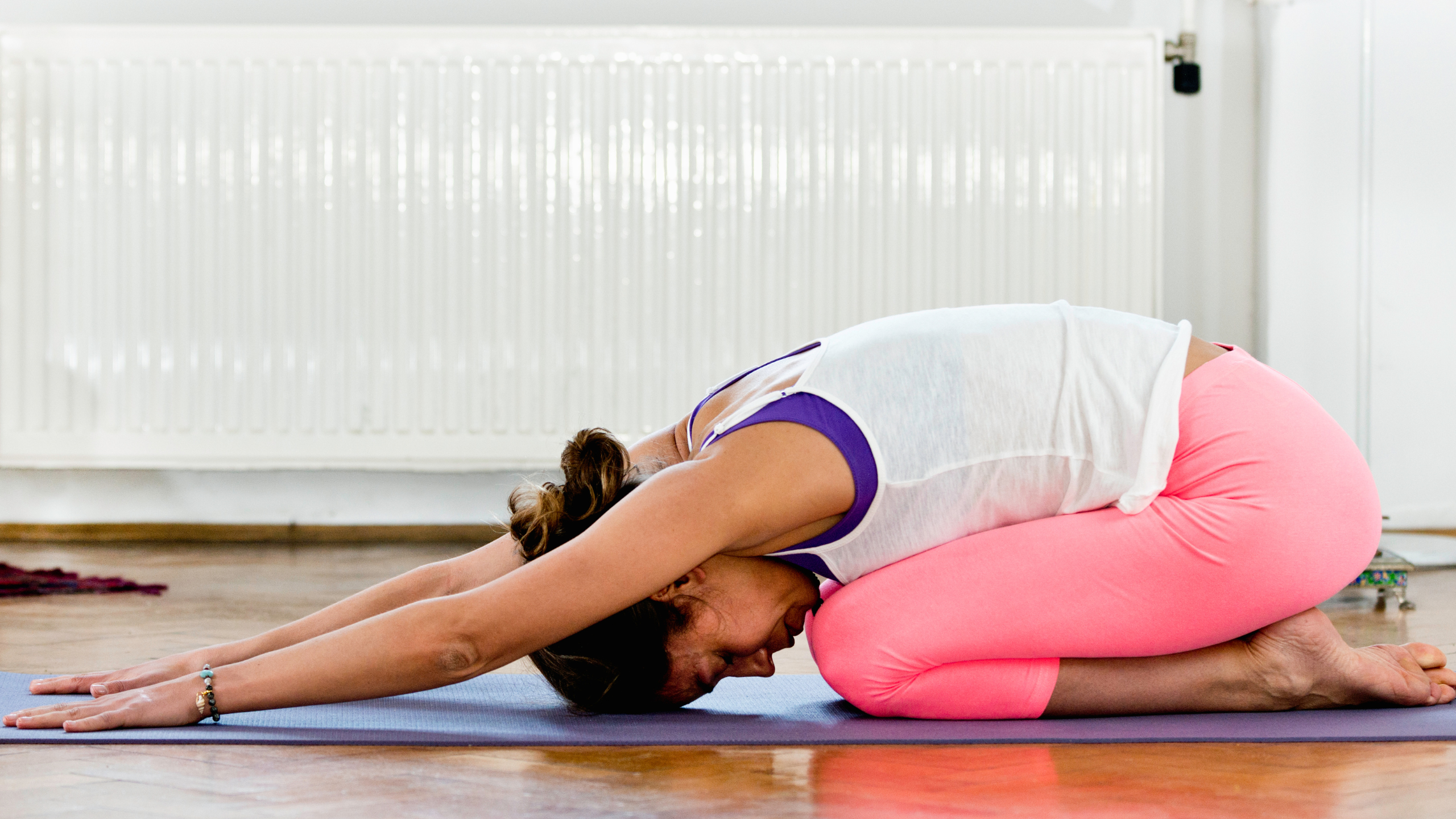
Pose 1: Child’s Pose (Balasana) – Surrender the Fight
Sometimes cravings feel like a battle.
Child’s Pose invites you to gently bow out.
This shape helps:
- Lower cortisol (stress hormone)
- Release belly tension
- Signal safety to the brain through grounded contact
How to do it:
- Kneel on the floor, touch your big toes together, and sit back on your heels
- Fold forward, arms outstretched or tucked by your sides
- Let your forehead rest on the mat or a pillow
💡 Try whispering to yourself: “It’s okay to rest. I don’t have to figure it all out.”
Pose 2: Legs Up the Wall – Soothing the Surge
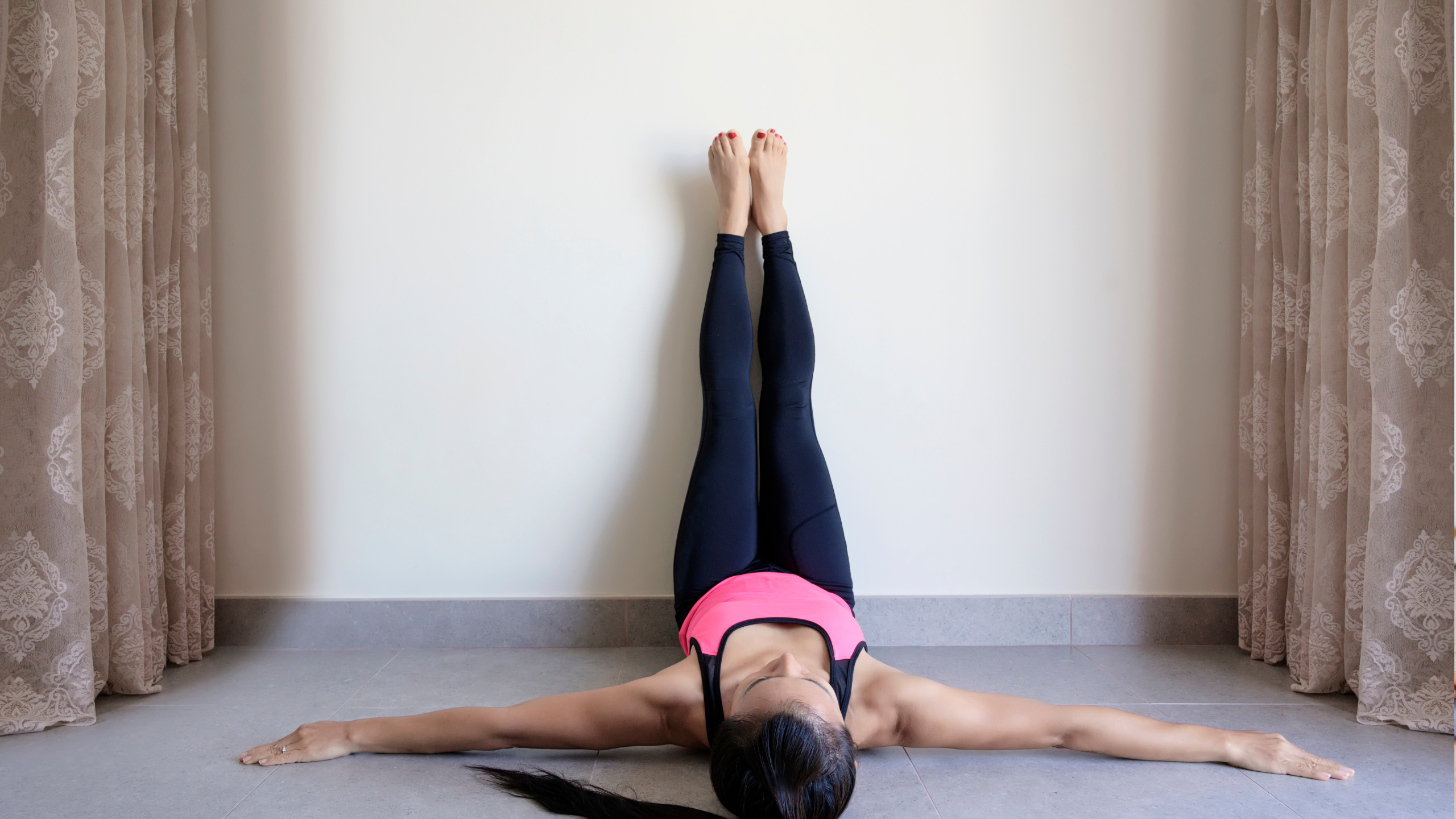
When urges feel explosive or panicked, this pose reverses the flood.
Benefits:
- Cools emotional intensity
- Slows heart rate
- Gently stimulates the parasympathetic nervous system (rest and digest)
How to do it:
- Sit sideways next to a wall
- Swing your legs up while lying back
- Let arms rest by your side, palms open
You might feel silly — or even irritated — at first. That’s okay.
Stay anyway. Your system may surprise you.
Pose 3: Cat-Cow – Reclaiming Rhythm

Disordered eating thrives in dissociation — that floaty, numb, checked-out state.
Cat-Cow brings you back to rhythm. Breath. Movement.
This pose:
- Anchors you in a gentle tempo
- Builds body awareness
- Reconnects brain and belly through spinal movement
How to do it:
- Come onto hands and knees
- Inhale: arch the back, lift tailbone and head (Cow)
- Exhale: round the spine, tuck chin and pelvis (Cat)
- Repeat slowly for 1–2 minutes
🌀 This is a great place to whisper a journal prompt inward:
“What am I really needing right now?”
Pose 4: Supine Twist – Letting Go Without Pushing
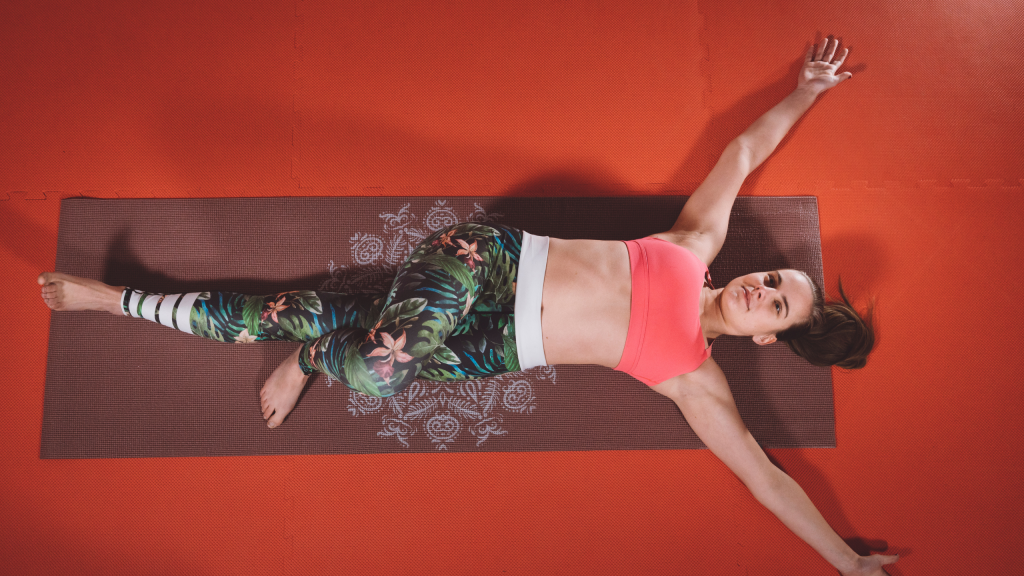
You don’t need to “release” your cravings.
But you can wring out the stuckness.
Twists help digest emotion — physically and symbolically.
Benefits:
- Stimulates digestion (helpful post-binge)
- Releases lower back tension
- Creates gentle compression for emotional “unclenching”
How to do it:
- Lie on your back, hug knees in
- Drop both knees to one side, arms in a T
- Gaze opposite direction
Hold for 1–2 minutes. Switch sides.
No need to force your breath — just follow it.
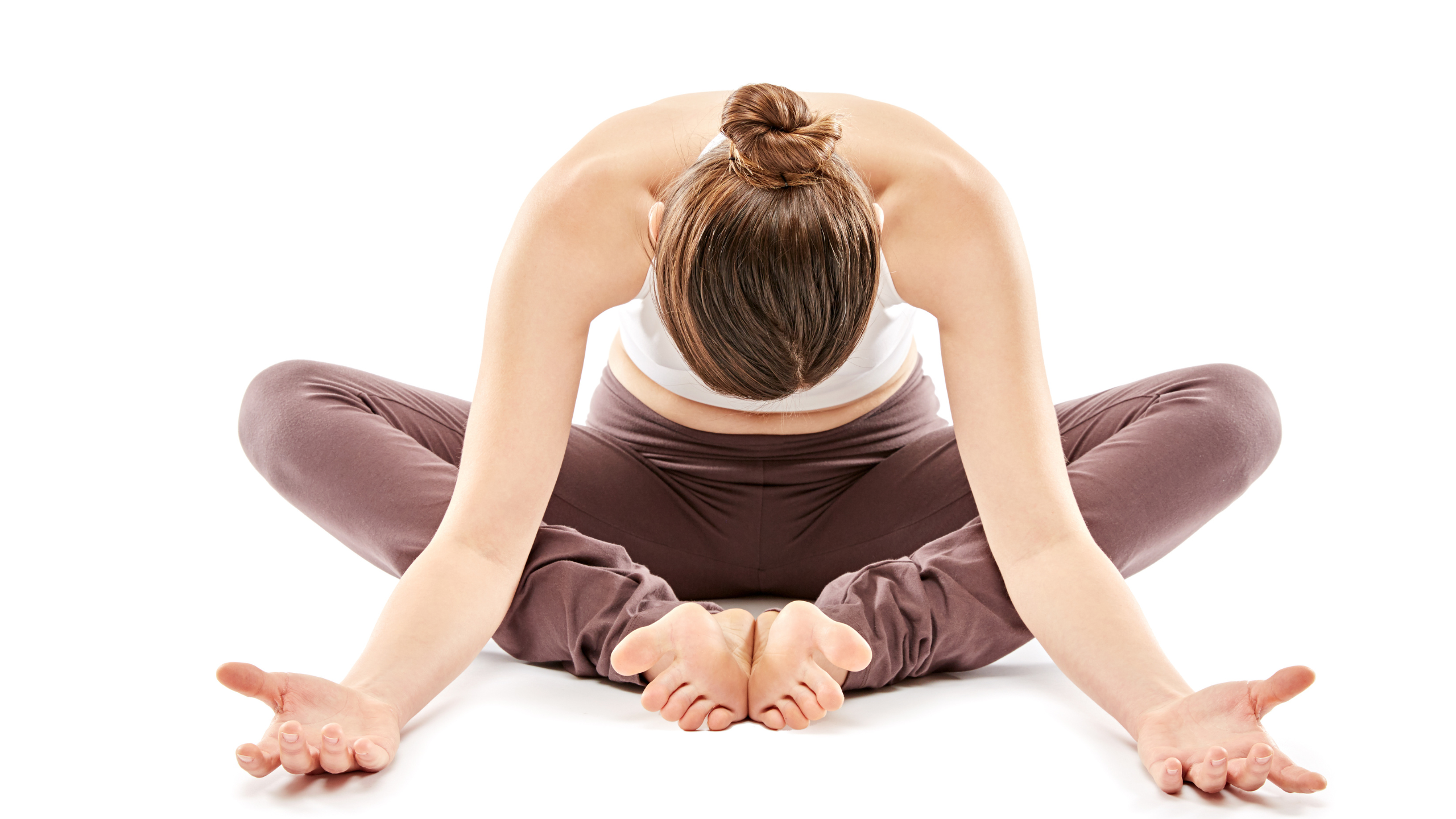
Pose 5: Seated Forward Fold – Meeting the Ache
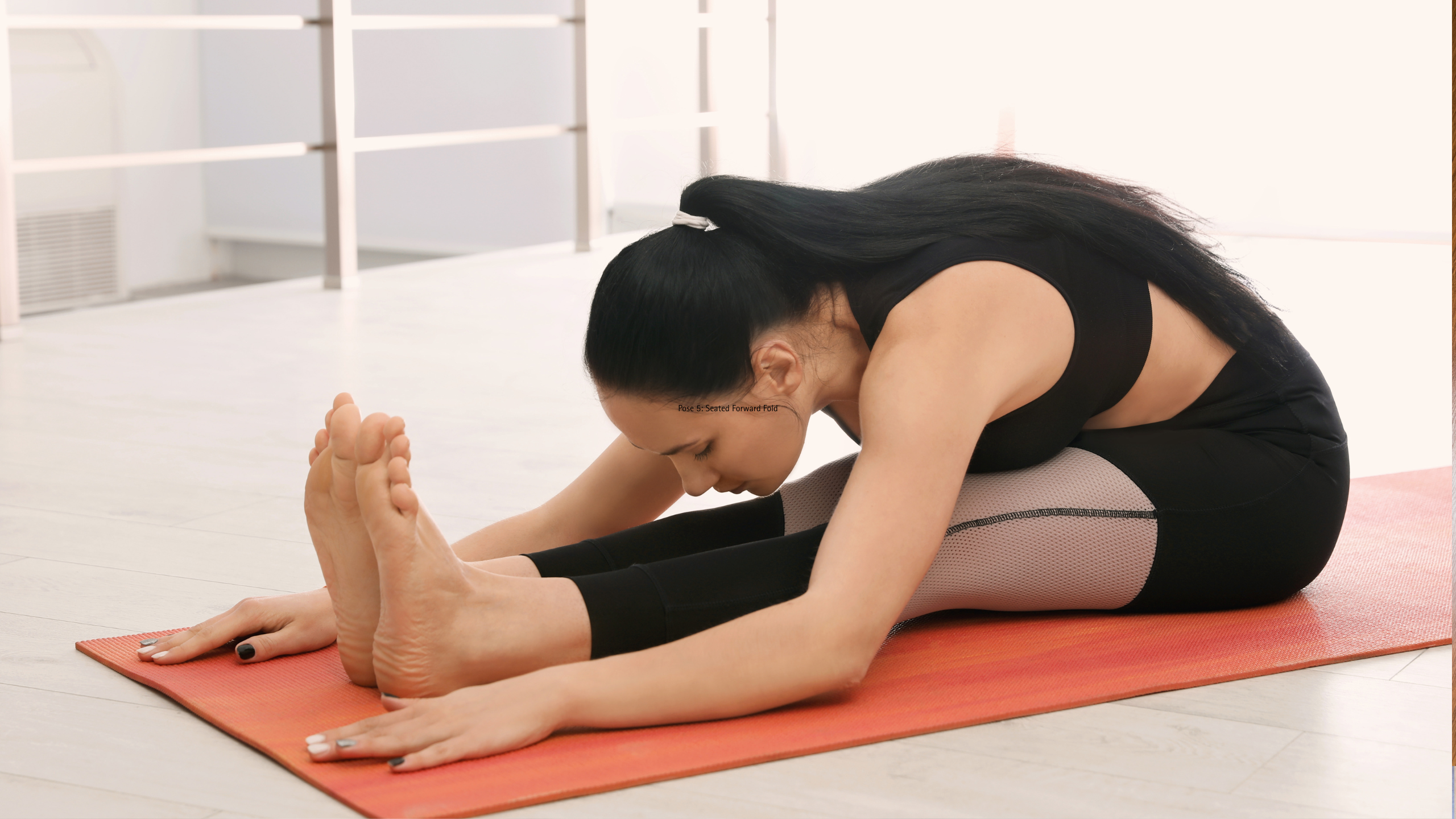
There’s something honest about this shape.
It mirrors how it feels after a binge — folded inward, heavy, vulnerable.
But here, you choose it. You reclaim it.
This pose can:
- Soothe the stomach
- Offer a posture of humility and reset
- Help discharge residual shame through breath
How to do it:
- Sit with legs extended
- Inhale and lift your arms, exhale fold forward
- Let your back round, soften the knees if needed
Let the pose feel like an offering, not a punishment.
Pose 6: Savasana – Just Be Held
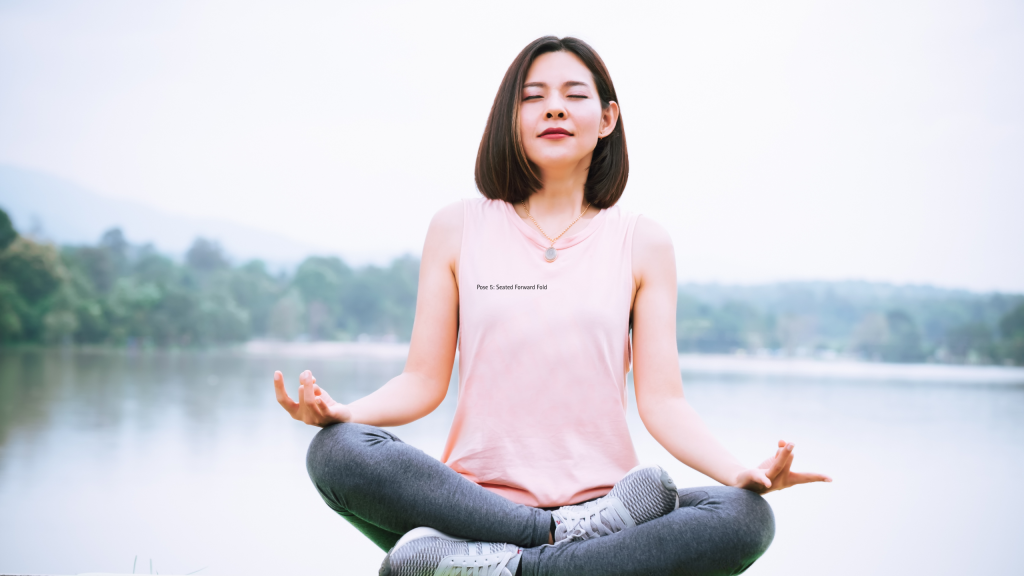
Recovery means learning to stay… not fix, not flee.
Savasana is your practice ground.
It can be surprisingly hard — to lie still, with yourself, without distraction.
Why it helps:
- Trains non-reactivity
- Regulates after emotional storms
- Builds tolerance for presence (a powerful binge interrupter)
How to do it:
- Lie on your back, legs and arms relaxed
- Let your breath be soft, unfixed
- Optional: cover yourself with a blanket, or place a hand on your belly
💭 If tears come, let them. This is integration. This is aliveness.
What to Do After the Poses: Integrating the Shift
When you finish, don’t rush back into your day.
Even 60 seconds of stillness after yoga helps your system metabolize the calm.
Try this 3-step reflection:
- Name what you feel — physically and emotionally
- Gently ask, “What craving is still here?” (It’s okay if the answer is “none” or “all of them”)
- Write down one kind thing you’ll do next
📔 Want a place to track these reflections? Download our mindful eating journal + app to build your practice with compassion.
Yoga is Not the Answer — But It’s an Invitation
Yoga doesn’t erase urges.
But it invites you back into your body — the place binge eating tries to escape.
Each pose above isn’t a fix. It’s a gesture of care. A whisper to your nervous system:
You are not bad for wanting to feel better. You’re just human.
You can use these poses:
- Before a binge, to slow the urgency
- After a binge, to soften shame
- Anytime you need a safe ritual to meet yourself
And if you’re looking to understand the why behind your food patterns — the childhood roots, nervous system patterns, and cultural myths that shaped you — our Enlighten Eats course is a beautiful next step.
💬 Need a human mirror? Coaching offers a space to be deeply seen — not fixed.