

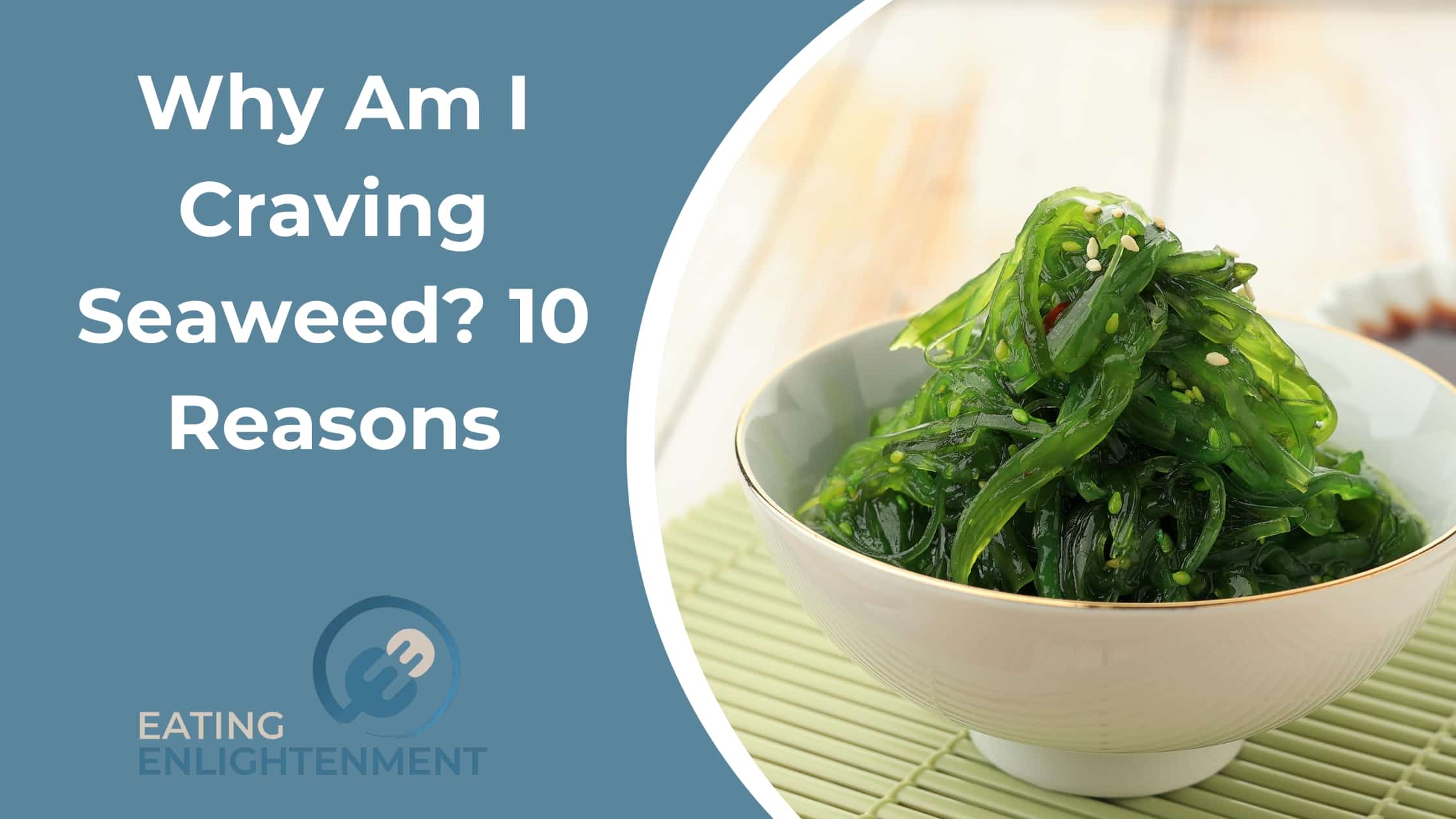
Seaweed may not be the first thing that comes to mind when you think of cravings, but if you find yourself reaching for nori sheets or dreaming of sushi rolls, there’s more to it than just a love for salty snacks.
These unexpected urges could be your body signaling its needs—to replenish nutrients, address emotions, or adapt to lifestyle patterns.
Have you noticed when these cravings strike? Maybe your body is trying to tell you something important—like a need for iodine, a soothing crunch during stress, or even an emotional connection to comforting flavors.
At Eating Enlightenment, we see cravings as clues to deeper stories. By journaling your thoughts, feelings, and patterns around these urges, you can uncover your body’s needs and respond with compassion.
Dive in to explore the surprising reasons behind your seaweed cravings—you might just learn something new about yourself.

10 Reasons You Could Be Craving Seaweed
#1. Your Body Needs Iodine
- Explanation: Seaweed is an excellent source of iodine, essential for thyroid health. A deficiency might trigger cravings.
- Scientific Insight: Link to how iodine supports metabolism and thyroid hormone production.
- Journaling Prompt: “Do you feel unusually tired or foggy? What foods are you drawn to, and could your craving reflect a lack of nutrients like iodine?”
#2. You’re Low on Other Essential Minerals
- Nutrients like magnesium, calcium, and iron in seaweed could explain why you’re drawn to its mineral-dense nature.
- Tie this to physical signs (e.g., muscle cramps, fatigue).
- Journaling Prompt: “When do you typically crave seaweed? After skipping meals or heavy physical activity? What is your body asking for?”
#3. Your Gut Health Craves Attention

- Seaweed contains prebiotics and soluble fibers that support gut health.
- Suggest that cravings could stem from the gut-mind connection.
- Journaling Prompt: “How often do you feel bloated or experience digestive discomfort? How do your cravings coincide with this?”
#4. Dehydration and Salt Cravings
- Seaweed is salty, and your cravings might indicate dehydration or electrolyte imbalance.
- Discuss the body’s natural mechanism to seek sodium in response to water deficit.
- Actionable Tip: Combine hydration with mindful check-ins.
#5. You’re Looking for Certain Fats
- Seaweed has unique omega-3 fatty acids that benefit brain and heart health.
- Cultural Insight: Mention traditional diets that rely on seaweed for fat balance.
- Journaling Prompt: “How do you feel emotionally and physically after eating seaweed? Energized, satisfied, or still searching for more?”
#6. Stress or Emotional Regulation
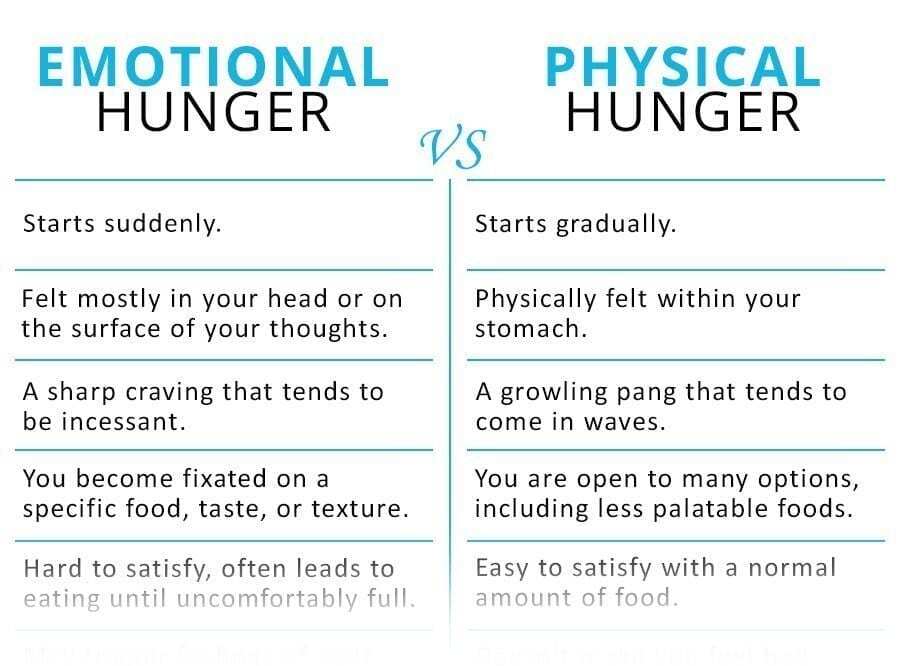
- Seaweed’s crunch and umami flavor can serve as a comfort food.
- Psychological Insight: Emotional cravings stem from seeking soothing foods during stress.
- Journaling Prompt: “What were you feeling before the craving hit? Was something stressful happening?”
#7. Cultural or Habitual Influences
- Growing up in a culture where seaweed snacks are typical or having fond memories of sushi outings.
- Link to the psychological impact of food nostalgia.
- Journaling Prompt: “Does your craving carry emotional weight or remind you of a specific memory?”
#8. Following Dietary Trends or Fads
- Increased popularity of seaweed in health-conscious diets (e.g., vegan or plant-based lifestyles).
- Examine the relationship between societal trends and personal eating behaviors.
- Journaling Prompt: “Is this craving recent? Does it overlap with a new pattern, like a diet change?”
#9. Hormonal Fluctuations

- Discuss how hormonal changes (e.g., pregnancy, menstrual cycle) may drive salt or mineral cravings commonly found in seaweed.
- Journaling Prompt: “Do you notice a pattern in your cravings at certain times of the month or during hormonal shifts?”
#10. You’re Simply Curious or Snacky
- Sometimes, cravings are less about needs and more about whimsy—exploration inspired by a new dish or snack trend.
- Actionable Tip: Journal about why you associate seaweed with savoriness or curiosity.
Cravings and the Binge-Diet Cycle

Acknowledge that cravings, if left unchecked, can sometimes spiral into binge behaviors.
- Binge-Diet Cycle Explanation:
- Restriction (cutting down sodium/minerals) leads to intense cravings.
- Cravings trigger binge eating -> regret -> further restriction.
- Mindful Check-in:
- Encourage the reader to reflect if their seaweed cravings lead to cycles like overeating or guilt with journaling prompts like “How do I feel before and after I give into this craving?”
The Eating Enlightenment Approach
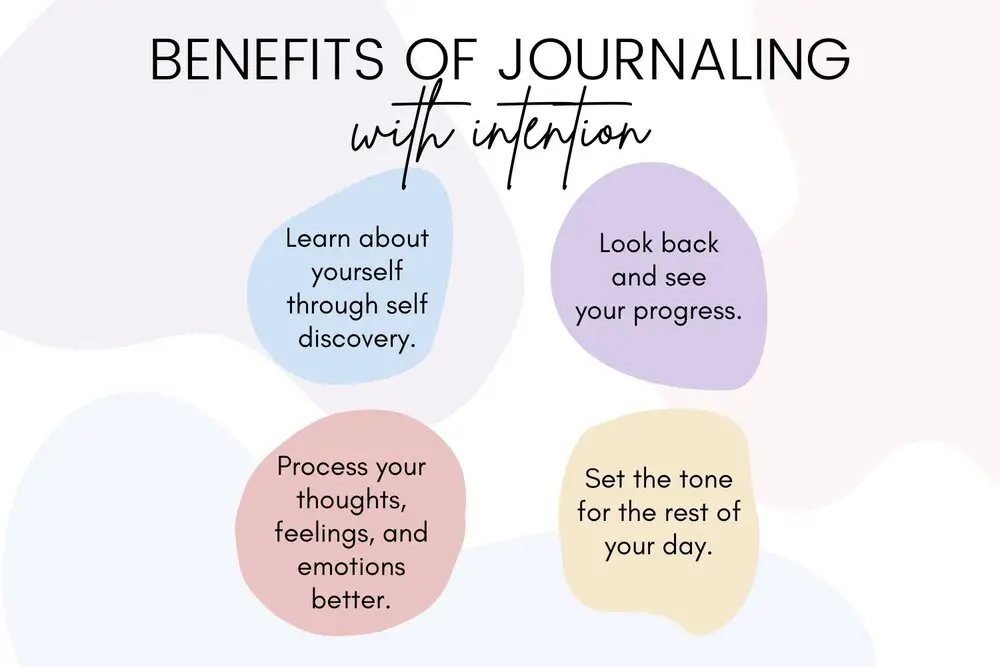
Struggling to understand your cravings and emotional eating? The Eating Enlightenment Approach offers a simple yet powerful way to build a healthier relationship with food and yourself. By combining nutritional awareness, mindfulness, and deep self-reflection, it guides you not through diets but into sustainable change.
Step 1: Nutritional Journaling
This first step connects you to your body’s physical needs. Cravings often mask nutrient imbalances—like a need for iodine, minerals, or hydration. By keeping track of everything you eat and drink, you’ll spot patterns, like salty cravings that hit after a long dehydrated day.
Your journal helps you adjust habits—adding nutrient-dense foods or keeping a water bottle handy. Over time, your nutritional choices evolve, reducing cravings naturally.
Step 2: Layering Mindfulness on Triggers
Cravings are often emotional or environmental. Pause when a craving arises and reflect with questions like, “What emotion is tied to this?” or “Did something trigger it?” Stress or nostalgic cues can bring specific cravings to life.
Mindfulness practices, like taking three deep breaths, give you space between the craving and your reaction, making it easier to respond with intention rather than impulse.
Step 3: Deeper Journaling on Inner Parts
Recognize the emotional voices driving cravings. Perhaps an inner critic sees cravings as failure, while a comfort-seeking part uses food to soothe stress. Journaling from these perspectives can uncover unhelpful beliefs shaping your habits. For example, understanding your inner critic’s roots lets you meet its harshness with compassion, gradually shifting self-criticism to self-care.

7 Fun Facts About Cravings for Seaweed
- Packed with Iodine
Seaweed is rich in iodine, an essential nutrient for thyroid function. A craving for [seaweed variety] might be your body’s way of compensating for an iodine deficiency. - Salt Meets Mineral Powerhouse
Love the salty taste? It’s not just the salt. Seaweed contains an impressive array of minerals like [nutrient], which might be why your body craves it after strenuous activity or dehydration. - A Superfood for the Gut
Seaweed is loaded with prebiotics, which are fantastic for gut health. Cravings could be a subtle signal from your microbiome asking for a fiber-packed boost. - Hormonal Harmony
Research suggests that minerals in seaweed, like magnesium and calcium, may support hormone regulation. This could explain why cravings appear during pregnancy or menstrual cycles. - Umami Bomb
Seaweed delivers an intense umami flavor that satisfies the savory taste buds. This could make it a go-to snack on days when rich, flavorful foods top your cravings list. - Nostalgic Connection
For some, seaweed cravings link back to a cultural or childhood love for dishes featuring [seaweed variety], making it a comforting and nostalgic food. - Stress Relief Snack
Craving crunchy seaweed sheets? Stress might be at play. The satisfying crunch and flavorful hit could be a relaxing ritual for your brain during tense times.
Practical Tips for Handling Cravings

- Healthy Incorporation Ideas:
- Recipes like seaweed salad and snack combinations (e.g., nori with hummus).
- Balance and Moderation:
- Discuss avoiding heavily processed seaweed snacks with extra sodium or additives.
- Suggest using the Eating Enlightenment Journal App as a tool for tracking and reflecting on cravings.
Final Thoughts

Cravings like those for seaweed aren’t random—they’re meaningful signals from your body. Often rooted in nutritional needs like iodine or minerals, seaweed cravings reflect your body’s desire for nourishment.
Packed with health benefits, seaweed supports everything from thyroid function to gut health, making it a powerful ally in a balanced diet.
Take a mindful moment the next time a craving strikes to reflect on what your body might need. Download the free Eating Enlightenment Journal App to start tracking your cravings and uncovering valuable insights about your eating habits.
We’d love to hear your thoughts! What’s your favorite way to enjoy seaweed? Have cravings revealed something new about you? Share in the comments below and connect with our mindful eating community!