


Maybe it starts with a whisper of emptiness.
A long day. A quiet night.
You reach for something — a cookie, a bag of chips, that old familiar comfort.
Before you know it, you’re sitting in the aftermath, full but not satisfied. Numb. Ashamed. Alone.
You wonder: Why do I do this? What’s wrong with me?
But you’re not broken. You’re coping.
For many, binge eating is not about lack of willpower — it’s a response to emotional, relational, or physiological overwhelm. And while labels don’t heal us, sometimes structured assessments like the Binge Eating Questionnaire can help name what’s happening inside. They can shine a light in the dark and point toward gentler, wiser next steps.
If you’ve ever asked yourself, Do I really have a problem with food?, this guide will walk you through one of the most trusted tools used to explore that question.
What Is the Binge Eating Questionnaire (BEQ)?

The Binge Eating Questionnaire is a self-report tool designed to identify behaviors and feelings associated with binge eating disorder (BED). Unlike clinical interviews, it offers a private and non-judgmental way to explore:
- How often you feel out of control around food
- Emotional patterns before, during, and after eating
- Levels of shame, secrecy, or guilt
- Impacts on daily functioning or social connection
It’s not meant to diagnose you. Instead, it acts like a mirror — helping you see, perhaps for the first time, the deeper emotional currents driving your eating behaviors.
The BEQ is often used by therapists, dietitians, and recovery coaches as a starting point. It helps spark meaningful conversations and can reveal blind spots hidden under years of food rules, restriction, or confusion.
💡 Key insight: Many people who “score high” on the questionnaire don’t look like they have an eating disorder.
Why? Because binge eating often flies under the radar — hidden by weight stigma, productivity culture, or self-blame.
This is not your fault. It’s a reflection of systems that have failed to see your pain clearly.
Why Do We Need Tools Like the BEQ?
Binge eating often exists in the shadows — minimized, mocked, or misunderstood. Many sufferers never seek help, and those who do may feel dismissed if they don’t fit a stereotypical profile.
The BEQ helps counteract invisibility by putting internal experiences into words.
Some reasons people benefit from taking it include:
- Clarity: You’re no longer wondering if “it’s just stress” or “lack of control”
- Validation: Your experiences are real and deserve support
- Direction: It becomes easier to take next steps when you have language for your struggle
“Tools like the BEQ bridge the gap between silent suffering and supportive care,” says psychologist Dr. Rebecca Bingam, who specializes in eating recovery. “They help people feel seen without having to explain everything.”
What Types of Questions Are On the Binge Eating Questionnaire?

The BEQ typically asks you to reflect on:
- How often you eat large amounts of food in short periods
- Whether you feel unable to stop eating
- Emotional states before and after binges (e.g., sadness, guilt, relief)
- Whether you eat alone out of shame
- How much your eating habits impact your relationships, self-image, or day-to-day life
You’ll answer on a scale — from “never” to “always” — allowing subtle patterns to emerge over time.
🧠 Worldview framing: These behaviors are often shaped by early confusion about safety, emotional regulation, or self-worth. If you were taught that your needs were “too much” or that food was the only comfort available, binge eating may have become your nervous system’s way of coping.
What Does a “High” Score Mean — And What Should You Do Next?
Scoring “high” on the BEQ can feel overwhelming. It might trigger fears like:
- Am I broken?
- Will I have to give up the foods I love?
- What if I can’t change?
Breathe. A high score doesn’t mean you’re doomed. It means your pain matters. Your relationship with food deserves care.
Here are some gentle next steps:
- Try the Eating Enlightenment Food Relationship Quiz for broader insight
- Use our mindful journaling app to track emotional triggers
- Explore the Enlighten Eats course to understand binge recovery without restriction
📚 One study found that structured assessments like the BEQ can improve help-seeking behavior, especially when combined with self-compassion-based interventions (Kristeller & Wolever, 2011).
The Nervous System Side of Binge Eating
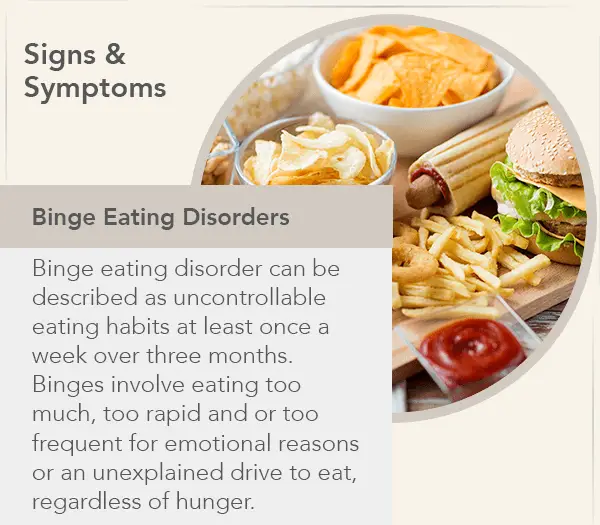
Ever felt like a switch flips — and suddenly, you’re in the pantry before you can think?
That’s not weakness. That’s your nervous system.
Binge eating often arises from:
- A “shutdown” response after prolonged stress or emotional exhaustion
- Overwhelm that pushes your body into survival mode
- Food as co-regulation, soothing a body that doesn’t feel safe
You may not be “hungry” in the traditional sense. But your body is hungry for something: safety, rest, love, understanding.
Healing starts when we stop fighting these patterns and start listening. Not just to the food behaviors, but to the nervous system story underneath.
What If I Don’t Fit the Typical Mold of Binge Eating Disorder?
If you’re not sure the label fits you — that’s okay.
You might:
- Have “mild” episodes, but still feel deeply ashamed
- Cycle between restriction and bingeing
- Struggle with food at night or during emotional crashes
- Use food to dissociate, even if you don’t eat large quantities
The BEQ isn’t about putting you in a box. It’s about opening a window into your lived experience — and honoring whatever you find there.
🌀 Developmental lens: Healing happens unevenly. You might be “high-functioning” at work and deeply hurting in private. That doesn’t make your suffering less valid.
How to Use Your BEQ Results as a Healing Tool
Once you take the questionnaire, here’s how to integrate the insights:
1. Don’t use it as a weapon.
Scoring high doesn’t mean you’re “failing.” It means you’re waking up to your body’s truth.
2. Reflect compassionately.
Use a food journal — like our Mindful Meal Journal App — to gently explore emotions and patterns. No judgment.
3. Seek co-regulation.
Healing often requires another nervous system. Whether it’s a therapist, coach, or compassionate friend, don’t go it alone.
4. Learn your root causes.
The Enlighten Eats Course offers deep insight into how binge patterns form and how to shift them from the inside out.
Conclusion: You Are Not Your Questionnaire Score

At the end of the day, the Binge Eating Questionnaire is just a tool.
You are not a number. You are not your symptoms.
You are a person — complex, resilient, worthy of love and attunement.
If this article stirred something in you, take it as a sign of readiness. Not to change overnight, but to begin listening more closely.
👉 Take the free food relationship quiz
👉 Try our mindful journaling app
👉 Explore the Enlighten Eats course
Healing isn’t linear. But it is possible. And you are not alone.