


Lactose intolerance is a common digestive issue affecting millions worldwide. It is characterized by the inability to properly digest lactose, a sugar in milk and dairy products.
This condition often traces its roots to genetic factors determining its types, risks, and inheritance patterns. Understanding these genetic influences can empower individuals to manage their symptoms more effectively.
The Eating Enlightenment Food Journal App is a supportive tool in this journey. It helps users track their food intake and manage cravings, emotional eating, and binges.
This holistic approach is handy for those navigating the complexities of lactose intolerance, guiding them toward a healthier, more balanced lifestyle.
Most Common Type of Lactose Intolerance

Primary Lactose Intolerance
Primary Lactose Intolerance is the most common type of lactase deficiency. It is caused by a genetic mutation that prevents this enzyme from being produced in enough amounts.
It is estimated that about 30% of people worldwide are affected by this condition.
Depending on the individual, their body will typically stop making lactose sometime before age 5.
As your lactase levels decrease, dairy products become more challenging to digest.
This makes dairy products difficult to digest by adulthood!
This type of Lactose Intolerance is caused by genetics. It is common among people of African, Asian, Hispanic, or Mediterranean heritage. It’s less common if your heritage is from northern or western Europe.
For a discussion on these differences, see the final section of this blog article below.
Other Types of Lactose Intolerance
In addition to Primary Lactose Intolerance, there are three other types:
- Secondary Lactose Intolerance
- Congenital Lactase Deficiency
- Developmental Lactose Intolerance
Secondary Lactose Intolerance is caused by an injury or illness that inhibits lactase production. Unlike the more common primary diagnosis, this form is not due to genetic reasons.
This is more rare than Primary Lactose Intolerance. But it can happen after a triggering event.
About 20% of people have this condition at some point.
The most rare type is congenital lactose intolerance (or congenital lactase deficiency), caused by an inherited genetic mutation that prevents lactase production in infants and children.
When this happens, they will be unable to digest any milk or dairy product until their intestines mature later in life (usually around age five).
Developmental Lactose Intolerance is also less common because it is usually only present during a temporary developmental stage, like infancy. It also does not cause as many symptoms.
Is Lactose Intolerance Genetic?

Yes!
About 30% of people in the world have a genetic mutation in their LCT gene, which prevents them from digesting lactose.
This is the Primary Lactose Intolerance (or the Congenital Lactase Deficiency) we discussed earlier!
It is even possible for secondary inheritors to develop lactose intolerance. For example, your parents might not have lactase intolerance. But they may be carriers of the gene and pass it on to you!
However, not all types of lactose intolerance are genetic, which we discuss below.
Is Lactose Intolerance Inherited?
Yes! If someone is lactose intolerant, it is possible to inherit this condition from a parent.
These mutations are passed down generation after generation until both parents carry them at some point, which leads to their child developing intolerance.
The only way that an individual can develop the rare types of Lactose is if they are born with a genetic mutation.
Can You Become Lactose Intolerant?

It is possible to become lactose intolerant because of injury or illness.
The most common way people become lactose intolerant is by developing Secondary Lactose Intolerance. This is the non-genetic reason I keep hinting at!
Secondary is usually caused by a triggering event, like a virus that damages the gut lining where the lactase is made. For other risk factors, see below.
Congenital is inherited from your parents as well as Developmental. These are both genetic and related to age development.
Congenital can also be diagnosed through DNA testing. DNA testing is a good option if you were born with this gene mutation but never showed any symptoms until later.
Lactose Intolerance Risk Factors
There is a genetic risk factor for lactose intolerance.
If you have one parent who is intolerant and the other is not, then your chances of developing it are 50%.
If neither of your parents has an intolerance, you have less chance of developing the deficiency.
But if another family member has this condition, then it’s possible one or both of your parents are carriers of the genes for Lactose Intolerance—even though they don’t have any symptoms!
However, not all risk factors for Lactose Deficiency are genetic.
Some non-genetic factors that can lead to Lactose Intolerance include:
- taking certain medicines for an extended period
- having a stomach virus
- drinking too much alcohol or caffeine
- eating an insufficient amount of vegetables and fruits
- having a hiatus hernia or gastroparesis
It is also possible to develop Secondary Lactose Intolerance, especially if you do not eat enough vegetables and fruits.
This development could be due to any number of causes, including illness:
- Celiac Disease
- Irritable Bowel Syndrome
- Crohn’s Disease
- Colitis
- Diabetes
- Eating disorders like anorexia or bulimia
Why Certain Groups Are More Prone To Lactose Intolerance

To understand lactose intolerance, we have to understand germs.
In Guns, Germs and Steel, author Jared Diamond tried to answer a powerful question:
Why are some countries materially richer and more potent than others?
(This ties into lactose intolerance, I promise!)
For example, when white people invaded what’s now known as America, why were they able to conquer the native tribes?
Dr. Diamond starts by examining the role germs played in this conflict. He notes that around 90% of the native American Indian population died due to infection from smallpox and other germs passed on by the Europeans.
But why didn’t the Europeans die from smallpox, too? If the viruses that killed all those natives were so deadly, then why didn’t the Europeans die, too?
To answer this question, Dr. Diamond looked at how ancient civilizations arose.
He noted that European cultures had evolved alongside animals like cows, chickens, and pigs for thousands of years.
Here is where lactose intolerance ties in …
Because Europeans lived with domesticated animals for thousands of years regularly consumed milk and dairy products.
Over time, European cultures developed genes that gave them the ability to digest lactose! This is what’s today known as lactase persistence (the opposite of intolerance).
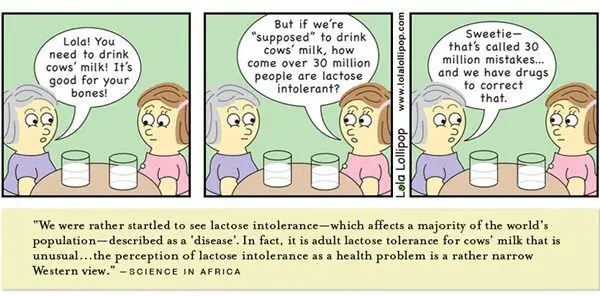
For more information on the genetics of lactase persistence, please be sure to read this Wiki article here.
Final Thoughts on Lactase Deficiency
The most common type of lactose intolerance is caused by a deficiency in the enzyme lactase.
Lactase breaks down milk sugar (lactose) into simpler sugars that are easily absorbed and used for energy.
If you are deficient in this enzyme, consuming even small amounts of dairy products will cause unpleasant digestive symptoms of lactose intolerance, like bloating, gas, or diarrhea! Ew!
Could you read my article here for more info on Lactose Intolerance Symptoms?
