Lactose intolerance is a common challenge faced by many in Asian and African populations, where traditional diets often incorporate dairy in various forms.
Navigating this intolerance requires a thoughtful approach to maintaining nutritional balance while avoiding discomfort. Understanding how to adapt dietary habits is essential to managing symptoms and leading a healthy lifestyle.
The Eating Enlightenment Food Journal App can support this journey by helping individuals track their cravings, emotional eating, and binges. By offering insights into eating patterns, the app empowers users to make informed decisions and address their dietary needs confidently.
What Is Lactose Intolerance and How Does It Affect Asians and Africans?
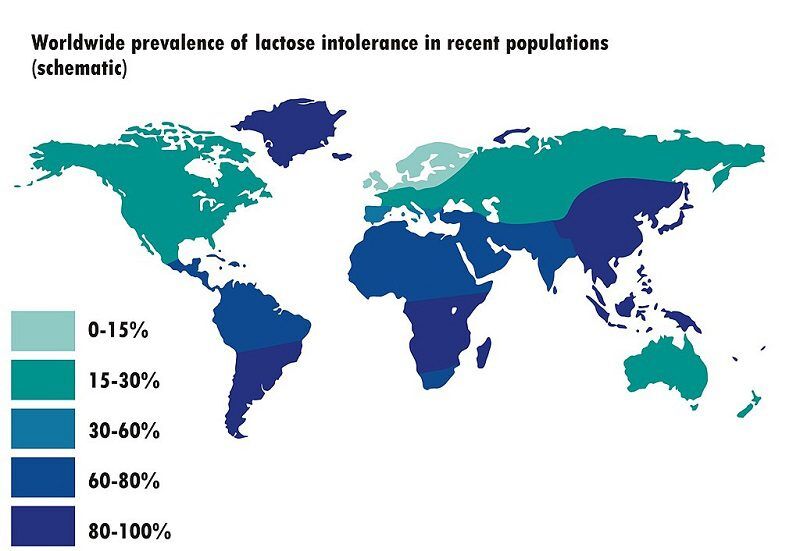
Lactose intolerance is the body’s inability to break down lactose into simpler sugars like glucose.
Intermountain HealthCare notes an interesting statistic:
- 75-95% of the African and Asian populations are lactose intolerant
- 18-26% of Northern European populations are lactose intolerant
So, Lactose intolerance is a common phenomenon in Asia and Africa.
The lactase persistence gene is found in people of Northern European descent and their offspring. This gene makes people immune to lactose intolerance!
Let’s define three terms real quickly before going further:
- Lactase Persistence: when you have the genes that allow your body to digest lactose.
- Lactose Intolerance: when you do not have the genes that allow your body to digest lactose.
- Lactase: Enzyme that helps digest lactose (found in dairy, human, and human milk). The cells that line the small intestine naturally produce lactose.
But Why?
The lactase persistence gene is not present in Asians or African populations because, historically, they never consumed animal meat or milk.
In contrast, Westerners were exposed to dairy animals a long time ago. They have evolved lactase persistence genes that allow them to digest dairy products without any symptoms of lactose intolerance.
If you rewind the clock 5,000 years ago and took a snapshot of your typical northern European lifestyle versus an Asian lifestyle, you’d see:
- Northern European: Cows and other dairy-producing animals like goats live close to the nuclear human family. Humans take care of cattle, herd them, milk them, and ultimately eat them. Cows are also used to plow fields, etc.
- Asian: Dairy animals are nowhere to be found. In many areas, humans toil not on farms but on growing rice fields. I’ve been to Thailand and seen goats there, but there weren’t any thousands of years ago. The dairy animals in Asia today were imported relatively recently.
What Happens When You Lack Ability to Digest Lactose?

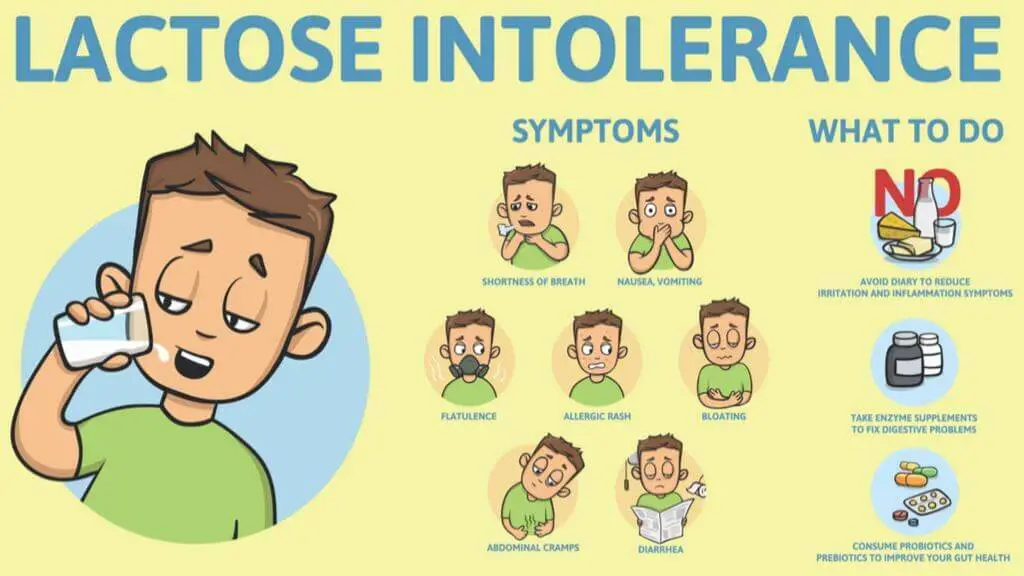
Lactose intolerance symptoms are pretty easy to spot.
Suppose you’re lactose intolerant after consuming dairy products. In that case, your body will try to digest lactose, but unfortunately, it doesn’t have the lactase enzymes to break down lactose into glucose and galactose.
In that case, undigested lactose travels into your colon and down those bacterial flora that also produce lactase.
Whether it’s your body or the bacteria in it – it’s the same thing! Without enough lactase activity in your digestive system, lactose will continue to move through you unbroken until it reaches your large intestine, where bacteria start munching away at the lactose sugars because they can digest them.
The fermentation process in these bacteria gives off hydrogen gas as a byproduct which then makes its way out of your body as flatulence (yes, those smelly farts I talked about earlier!).
It’s not just flatulence, though; people who suffer from lactase deficiency also experience:
- abdominal pain
- nausea
- diarrhea
How Can I Avoid Symptoms of Being Lactose Intolerant When Eating Dairy Products?
The lactase persistence gene is just one of many human genes that have evolved in response to our environment.
It’s an oversimplification to think a pill quickly fixes lactose intolerance. However, options are available for lactose-intolerant individuals who must consume dairy products!
Lactose-intolerant individuals who must eat dairy products can take Lactaid pills, which contain lactase enzymes, so they don’t get sick from consuming milk and other dairy products!
Lactaid pills do not require a prescription in the United States. Still, it’s always best to consult your doctor before you start taking medication, especially since there could be possible side effects or drug interactions between medications/supplements you’re already taking!
At the Eating Disorder Center where I currently work, I see lots of clients come in with various allergies and food preferences.
Fortunately, when I have lactose intolerance, I usually breathe a big sigh of relief. Why? Because I know that Lactose Intolerance pills are effective.
I know that taking a few pills before they consume a meal with dairy will prevent their usual digestive symptoms, like gas!
The hard part is remembering to take the Lactaid Pills before eating. Often, even though people ‘know’ they can’t handle lactose, they’ll still forget and have a meal with milk or other dairy products.
Whoopsie!
One way to discover if you suffer from lactose malabsorption and your body truly cannot digest milk is to take a breath test. For example, hydrogen breath test kits are on the market—you can quickly breathe into them, and the readings will tell you if you are lactose intolerant.
But what if you want some lactose alternatives? Let’s talk about those real quickly, too!
Lactose-Free Alternatives

Nowadays, there are many lactose alternatives. Some are great lactose-free alternatives to dairy products, especially for lactose-intolerant people!
For example, Silk makes soy milk with lactase enzymes so lactose-intolerant individuals can digest it! There is also a brand of almond milk on the West Coast called Almond Breeze, which has added lactase enzymes.
Even though these alternative milks might not taste exactly like cow’s milk, they’re still delicious in their own way and provide lots of calcium for growing bones, significantly when fortified (I’m looking at you, chocolate-flavored Silk Milk—delicious!).
Here is a list of lactose-free alternatives!
- Soy milk
- Rice milk
- Almond Milk Coconut milk (though this one is not lactose-free, it does contain less lactose and can be tolerated by some lactose intolerant individuals)
- Hemp Milk (I haven’t tried hemp milk before, but I’ve heard good things about its creamy consistency – make sure to buy the kind fortified with calcium, vitamin D, and other vitamins because plain hemp milk doesn’t contain these nutrients.)
There are even lactose-free cheeses, yogurts, and coffee creamers!
Final Thoughts on the Lactose Intolerance Asian Phenomenon
The lactose intolerance phenomenon is another example of the extreme global variance in cultural practices, genetics, and disease prevalence.
It’s vital to consider lactose tolerance as one more factor contributing to differences between human societies over time.
We are all unique individuals, but we also share traits with others based on our geographical location. This can influence everything from how food tastes (we know you’ve wondered about this!) to what diseases affect us!
Specific populations have evolved different ways of processing lactase due to the environment where their ancestors lived.
It’s fascinating when you really think about it because without a deeper understanding of mother nature or evolution, these variations on how people digest milk would seem like random occurrences rather than purposeful.
These adaptations were not random but instead were highly functional.
This lactase adaptation is one of the many examples that highlight how humans are pretty incredible beings!
What do you think? Leave a comment below!
If you want to learn why you’re craving milk, check out this article here.