


Many lactose-intolerant people love cheese and dairy products.
If you’re among the many who relish the creamy, savory goodness of cheese but struggle with lactose intolerance, you’re in for a treat.
Exploring the top 5 lactose-free cheeses offers a delightful way to enjoy cheese without the discomfort. These selections aim to satisfy your palate while being gentle on your digestion.
As you embark on this flavorful journey, the Eating Enlightenment Food Journal App offers tools to manage cravings, emotional eating, and binges.
Discover how this app can support your journey towards a balanced and enjoyable eating experience.
The introduction for your blog post is all set! If there’s anything else you’d like to explore, just let me know.
1 – Parmesan Cheese

Parmesan cheese is an aged cheese and is nearly lactose-free.
This makes it an excellent option for lactose-intolerant individuals. Parmesan is made from cow’s milk and aged long, so lactose is barely present in the final product after processing!
You can buy parmesan already grated to save time, or grate your fresh batch at home! It will taste much fresher this way, too.
Parmesan contains 0.0 to 3.2 percent lactose.
2 – Aged Cheddar

Aged cheddar is another lactose-free cheese option for people who are lactose intolerant.
Cheddar is a hard, whitish, or light yellowish cheese that originated in the United Kingdom and has become an American favorite!
If needed, it can be purchased already grated to save time. However, it will taste much fresher if freshly grated, so I recommend buying whole blocks of aged cheddar and grating at home as needed!
The lactose content of mild cheddar, which is softer and not aged for long, is about 0.0 to 2.1 percent. Hard cheddar, which is aged longer, generally has less lactose, although it can also have amounts up to 2.1%.
3 – Gouda
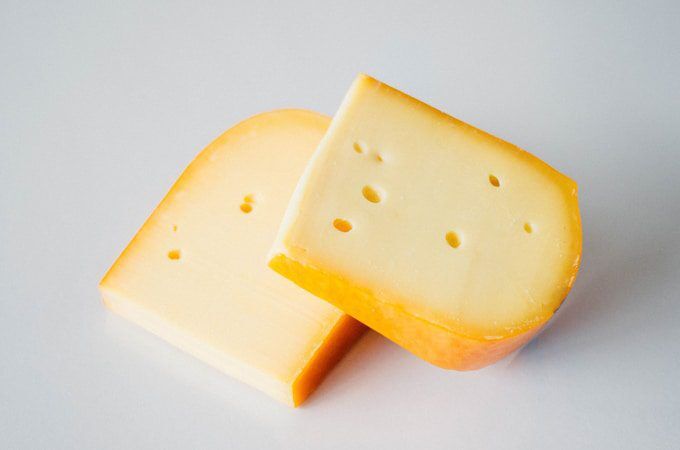
Gouda is my favorite cheese. As a kid, my family would always serve it as an appetizer when friends and family came over.
They would have a cheese slicer and those zesty green olives stuffed with garlic. I can vividly remember the smoky taste of the gouda blending perfectly with the zesty olives to this day!
Turns out Gouda is also a great cheese if you are lactose intolerant.
Gouda is a semi-soft cheese and only contains 0.0 to 2.2% lactose.
If you ask me, it’s one of the best types of low-lactose cheeses.
There are so many different flavors now, such as blue gouda. These all pair nicely with those salty olives my family used to serve up all those years ago.
I also love it served alongside some fresh fruit or on its own. There isn’t much that Gouda can’t pair with regarding food options!
4 – Brie
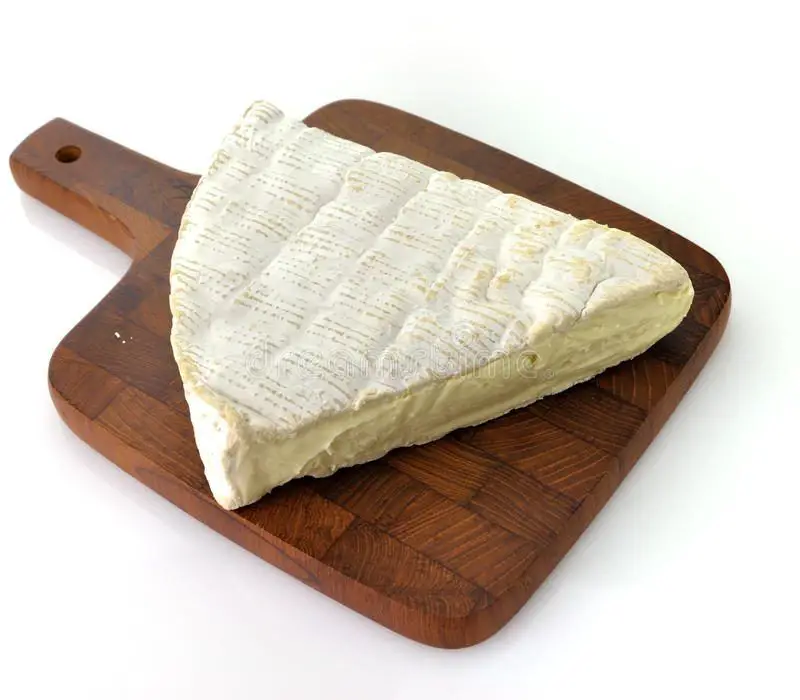
Another one of my favorite cheeses is Brie. It happens to be very low in lactose, too!
Brie is a white cheese that has recently become popular in the United States. Its creamy texture and mild flavor make it an excellent option for lactose-intolerant individuals!
The lactose content of Brie ranges between 0.0 to less than 0.50 percent lactose per serving size. Thus making Brie one of the lowest lactose cheeses out there!
Add some brie to your favorite salad, or eat alongside fresh fruit for a perfect pairing any time of day!
However, technically speaking according to Lactose Free 101, “Lactose content can be so low in Brie that it is nearly undetectable, yet since it does generally contain some amount of lactose, however small, we can’t call it a lactose-free food”.
5 – Blue
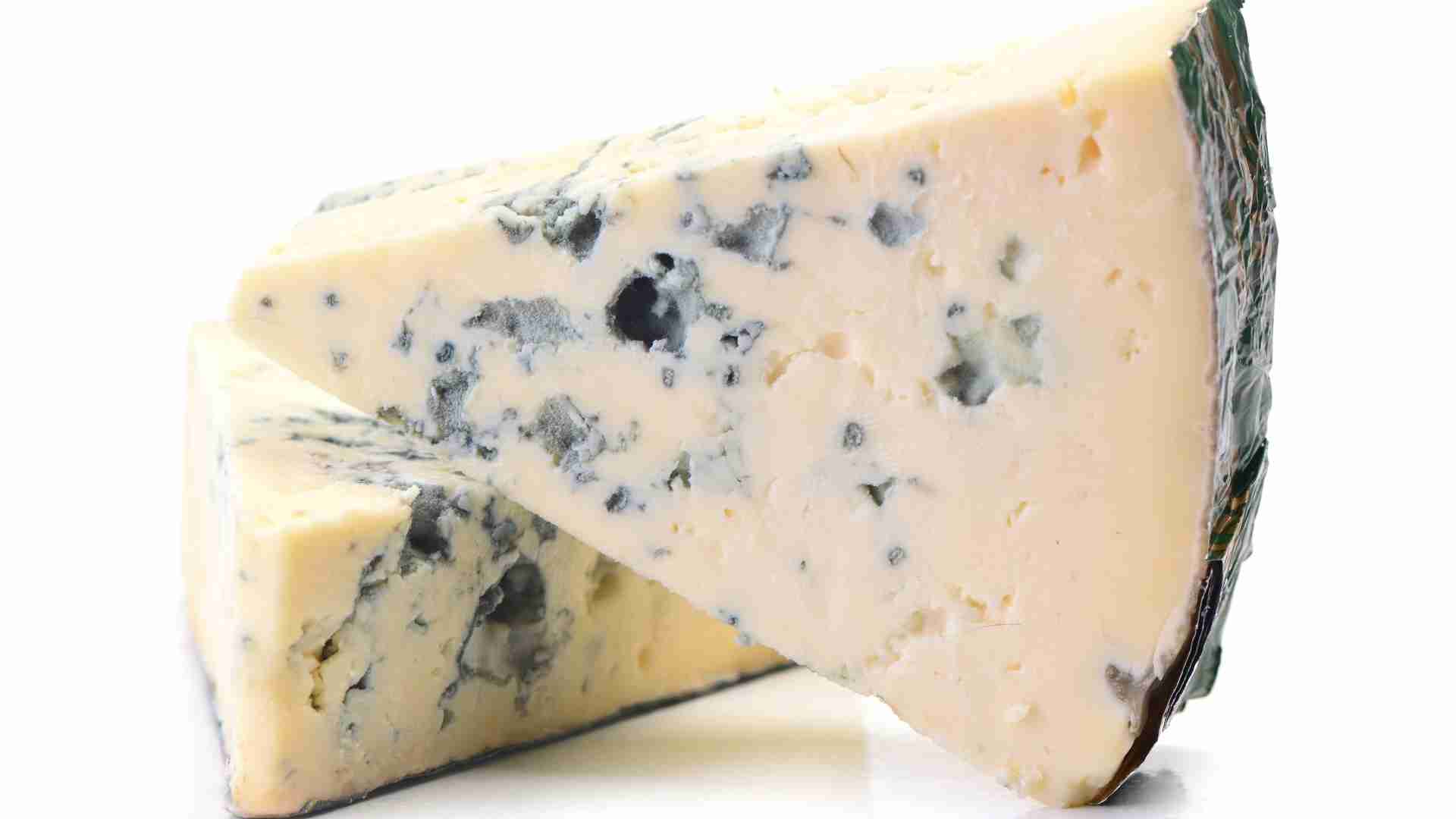
I am lucky in that I like pretty much every type of food.
I’m like a human garbage disposal! But for years, the one food I did not like was blue cheese.
For some reason, I didn’t like the sharp taste. But my taste buds changed over the years, and I remember being pleasantly surprised one day at a work event.
I had accidentally taken some crackers and cheese. Little did I know I had grabbed the blue cheese, and now I had a mouthful in front of my coworkers!
I probably would have spit out the cheese due to reflex, but the presence of my coworkers stopped me.
For whatever reason, I have come to love blue cheese after surviving that one event.
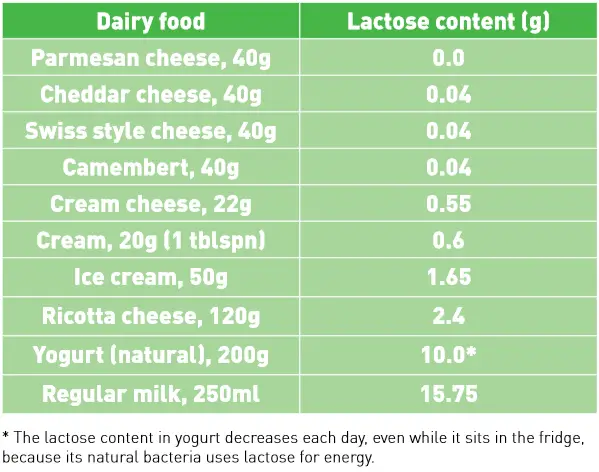
Cheese lactose content chart
Wondering about cheese lactose levels? Here is a cheese lactose content chart from the Australian Dietary Guidelines.
Can lactose-intolerant people eat blue cheese?
And, yes, you guessed it. Blue cheese is low in lactose, containing 0.0 to 2.5% lactose.
If you are lactose intolerant, you can have blue cheese 🙂 Enjoy!
Now that we have discussed cheeses low in lactose let’s examine the opposite end of the spectrum.
The worst cheese for lactose intolerance
Unfortunately, lactose-intolerant individuals must avoid cheese products that are high in lactose.
These include cream cheese, cottage cheese, lactose-free pizza, and ricotta cheese.
Notice a pattern?
Cheese with the highest lactose include cheese spreads and soft cheeses like Camembert, cottage cheese, and mozzarella.
These have more than 17 percent lactose per serving size, which is too much for most lactose-intolerant people to handle!
So, lactose-intolerant individuals should avoid these cheeses.
While it’s hard to pinpoint the ‘worst’ cheese for lactose intolerant people, the best answer to that question is cream cheese.
Cream cheese contains about the same lactose as other high-lactose cheeses like mozzarella; however, cream cheese is more commonly bought and used.
Therefore, we believe cream cheese is the worst cheese for lactose-intolerant people.
Please remember that dairy products produced from cream, such as ice cream, cream cheese, custard, or butter, should also be avoided.
The best cheese for dairy sensitivity

If you’re looking for a great low-lactose cheese and chocolate chip combination, look no further than the Vermont Creamery variety.
This delicious cheese is perfect for those who are sensitive to dairy, as it is completely lactose-free. Vermont Creamery’s lactose-free cheese is also made from 100% organic milk, so you can be sure that you’re getting the best possible quality.
Another great option is the goat milk cheese from La Maison du Chevre. This cheese is also lactose-free and has a milder flavor that many people find more enjoyable. Goat milk cheese is also a good option for those looking for a healthier alternative to cow’s milk cheese.
Buffalo milk cheese is a similar option to goat milk cheese. It is also lactose-free and has a similar nutritional profile to goat milk cheese. Buffalo milk cheese is a good choice for those who are looking for a healthier alternative to cow’s milk cheese.
Finally, another great lactose-free cheese option is sheep’s milk cheese. Sheep’s milk cheese is rich and creamy and has a higher fat content than other lactose-free cheeses. This makes it a great choice for those who are looking for a more indulgent lactose-free cheese.
We can’t tell you the ‘best’ cheese for dairy sensitivity because that depends on your taste buds!
However, we hope the above ideas help! Here are some more, too!
Cheese for lactose intolerant list
Here is a list of cheeses and lactose-free cheese brands for people with lactose intolerance:
- Dairy Free Cheese
- Almond Cheese
- Rice Cheese
- Soy Cheese
- Nutritional Yeast Cheese
- Vegan Gourmet Cheese
- Daiya Cheese
- Follow Your Heart Vegan cheese
- Galaxy Nutritional Foods Vegan Mozzarella Style Shreds
- Tofutti Better Than Cream Cheese
- Wayfare Dairy Free Cheddar Wedge
- So Delicious Dairy Free Shreds
- Violife Just Like Feta Block
- Sheese Vegan Cheddar
- Garlic & Herb “Boursin” style Cheese
Want to learn about a lactose-intolerant cheese maker? Read here to learn how to make lactose-free cheese.
Other dietary tips to go lactose-free
I also typically give this piece of advice to lactose-intolerant individuals who are looking for quick solutions:
A great and easy option is to try Lactaid Pills.
Lactaid pills are lactase enzyme supplements. When taken before eating foods containing lactose, they can help reduce lactose intolerance symptoms.
At the eating center where I work, some people will become very bloated and gassy after they eat dairy. But I’ve noticed that if they take a lactase pill or two, they can eat dairy products without any discomfort.
So, if you are looking for an easy way out, try using these pills before your next meal of cheese and crackers! And enjoy the cheesy goodness once again 🙂
What is lactose intolerance?
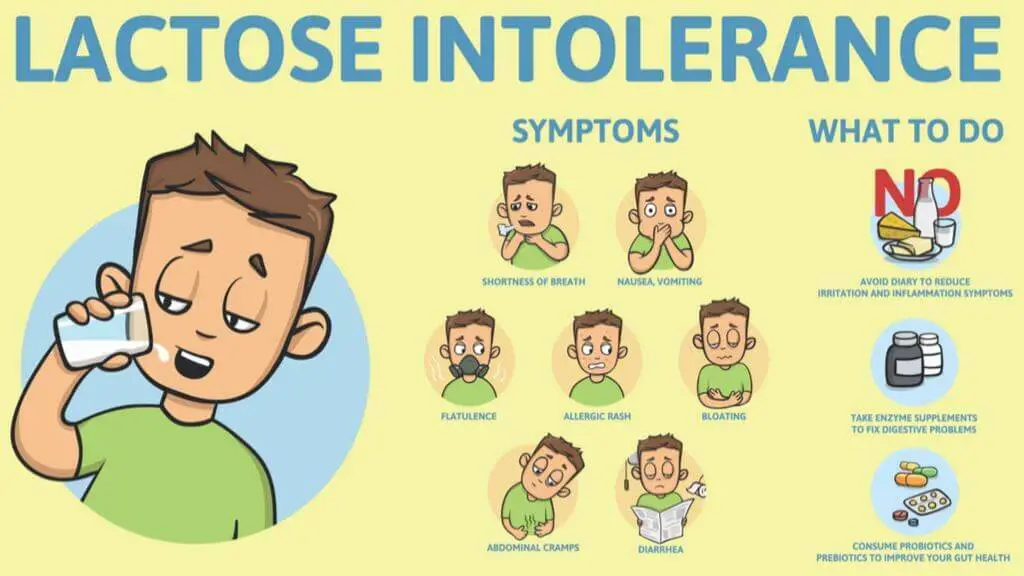
Lactose intolerance is when your body does not have enough lactase to break down lactose, a sugar found in milk and other dairy products.
Lactose then sits in your colon and ferments, creating gases that cause bloating, cramping, nausea, etc. It’s kind of like lactic acid buildup in your muscles, but just within your stomach instead!
If you are lactose intolerant, I feel for you! It can be hard to find food items with labels that read “lactose-free”.
And it’s always a bummer finding out that cheese has lactose after eating an entire bag of mozzarella sticks!
If you’re lactose intolerant, you may wonder if all types of dairy are created equal. Are there some types of dairy that will be easier on your stomach than others? Or do you have to avoid dairy entirely?
Good news! You can eat foods that contain lactose and live a home free of allergies, lactose, and more!
For now, let’s talk about the difference between cheese and milk.
Is cheese or milk worse for people with lactose intolerance?
This is a question that lactose-intolerant people often ask.
Generally speaking, milk contains more lactose than cheese.
Thus, on average, milk is worse for lactose intolerance.
But why is milk worse for lactose intolerance? In other words, why does milk have more lactose than cheese?
Well, cheese is made from milk, let’s remember. You first need milk to make cheese.
During the cheesemaking process, bacteria break down some of the lactase in the milk, so the cheese has less lactose than the milk.
What types of cheese are best if lactose intolerant?

Not all cheese is created equal. Some cheeses have more lactose in them than other types of cheeses.
A general rule of thumb is that aged cheeses will have less lactose. Why?
It’s simple. The longer the aging process (fermentation) goes on, the more bacteria break down lactose.
The cheeses below all have a miniscule amount of lactose, and you should be fine even if you are lactose intolerant. However, some people with lactose intolerance are more sensitive than others and will still get bloated and gassy from these cheeses.
No matter how old a cheese is, you can still get bloated if you have a more sensitive stomach!
If you are lactose intolerant, always look for ” lactose-free ” cheeses on the label. This doesn’t necessarily mean “zero” lactose; it usually means tiny amounts.
In addition, look at the label because many manufacturers also include dairy products and chemicals in their processed food items.
Watch out for the Lactaid brand, too. It produces lactose-free hard cheeses that lactose-intolerant individuals can enjoy.
Remember that the Lactaid brand is lactose-free, not casein-free! If you are also allergic to milk protein, you need a lacto-ovo vegetarian cheese instead.
Lactose Intolerant Cheese Conclusion
We hope you found these tips helpful and that they will help you make better diet choices.
Overall, please know there are many naturally lactose-free cheeses. So, if you were wondering whether they make lactose-free cheese, yes, they do!
If you have any other questions about lactose intolerance or the types of food best for those who are intolerant, please let us know!
Finally, please remember it’s lactose with an e at the end, not lactose-free cheese!