


It often starts small.
A late-night binge after a long day.
A bag of chips that turns into five.
A cycle that leaves you with guilt, shame, and the quiet question: “What’s wrong with me?”
The truth? Nothing is wrong with you.
Binge Eating Disorder (BED) is not a failure of willpower. It’s a signal—an internal cry for support, safety, regulation. And sometimes, that support includes medication.
Whether you’re exploring options for the first time or considering adding medication to your current plan, this article will walk you through:
- What medications are available for BED
- How they work
- The emotional and practical factors involved
- And how they fit within a holistic, shame-free recovery
💡 Want to explore your relationship with food first? Take our free quiz to start gaining insight with compassion.
What Is Binge Eating Disorder, Really?
Binge Eating Disorder is the most common eating disorder in the U.S., affecting an estimated 2.8 million adults. It’s characterized by:
- Recurrent episodes of eating large amounts of food
- A sense of loss of control during these episodes
- Feelings of shame, guilt, or distress afterward
- No regular use of purging behaviors (like vomiting or excessive exercise)
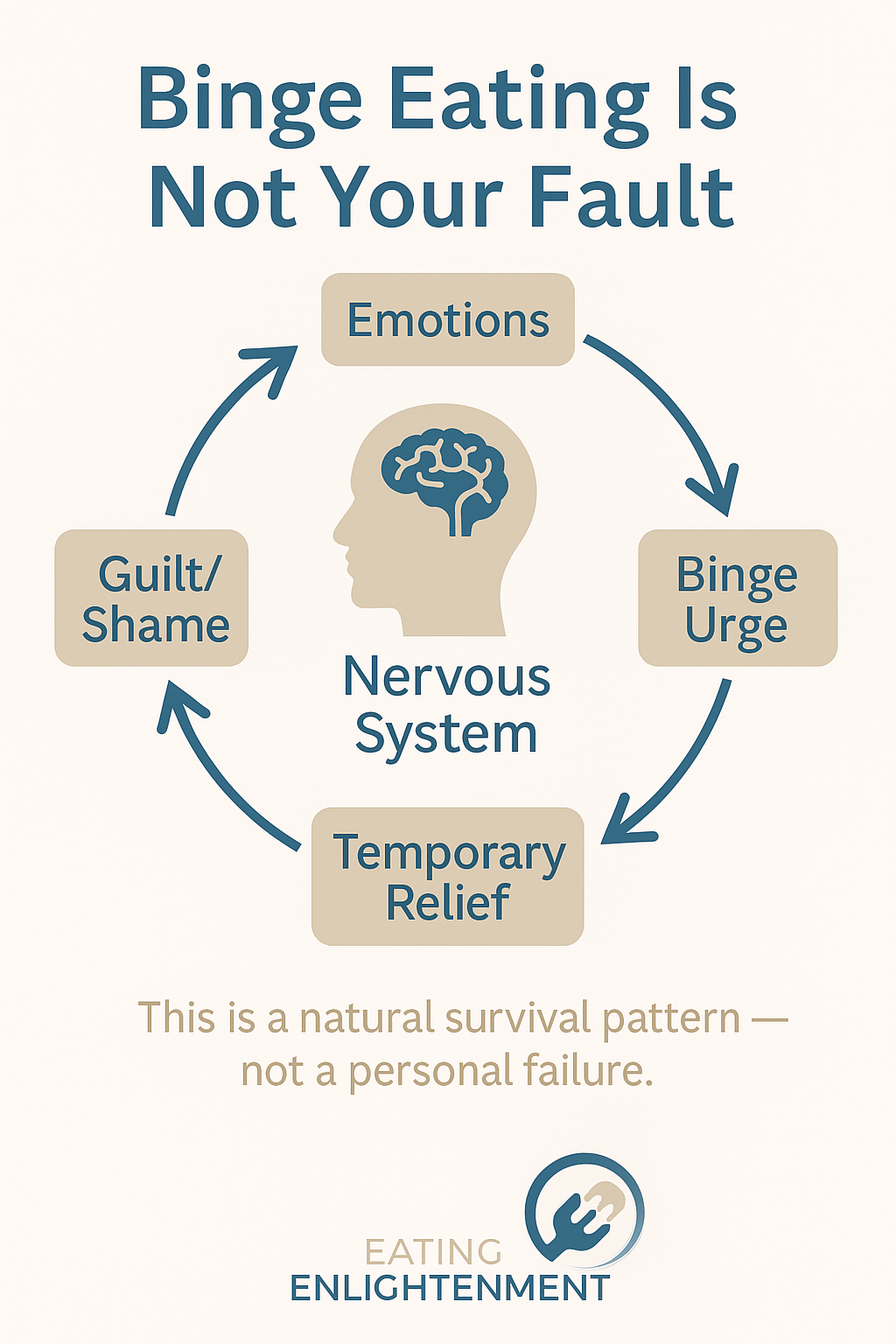
But beneath the diagnosis is something deeper: a nervous system overwhelmed, a self trying to soothe, and often, a life shaped by diet culture, trauma, or unmet emotional needs.
“Binge eating isn’t about food. It’s about what food is trying to do for you.” — Enlighten Eats
Medication can be one part of a multi-dimensional recovery that honors your biology and your story.
FDA-Approved Medication for Binge Eating Disorder
1. Lisdexamfetamine (Vyvanse)
Vyvanse is currently the only FDA-approved medication specifically for the treatment of moderate to severe Binge Eating Disorder in adults.
How It Works:
Originally developed for ADHD, Vyvanse affects neurotransmitters related to impulse control and reward pathways in the brain.
What You Might Experience:
- Benefits: Fewer binge days, reduced urges, increased focus
- Side effects: Dry mouth, anxiety, insomnia, increased heart rate
- Risks: Vyvanse is a stimulant, so it’s not suitable for individuals with a history of substance abuse
A 2015 study published in JAMA Psychiatry found that adults taking Vyvanse had significant reductions in binge days per week, compared to those on a placebo.
📘 Curious how medication fits into your recovery map? Our Enlighten Eats Course explores the deeper causes of BED and healing paths beyond symptom control.
Other Common (Off-Label) Medications Prescribed
Even though only Vyvanse is FDA-approved for BED, several off-label medications are often prescribed—especially when BED co-occurs with depression, anxiety, or trauma.
2. SSRIs (Selective Serotonin Reuptake Inhibitors)
- Examples: Fluoxetine (Prozac), Sertraline (Zoloft)
- How they help: Improve mood, reduce compulsive eating patterns
- Emotional insight: For many, bingeing is a way to soothe depression or numb emotion. Treating the underlying mood can ease binge urges.
3. Topiramate (Topamax)
- Use: Originally for epilepsy and migraines
- Benefit: May reduce binge frequency and promote weight loss
- Risk: Cognitive fog, tingling, mood shifts
4. Naltrexone-Bupropion (Contrave)
- Combination of an antidepressant and an opioid antagonist
- Possible effect: Reduces food cravings and emotional eating triggers
- Consideration: Still under research for BED, but promising in managing addictive-like eating patterns
Should I Take Medication for Binge Eating?
Here’s the truth: Medication can help—but it’s not a cure.
It may reduce the frequency of binges.
It may help regulate mood or impulses.
But it won’t replace the inner work of understanding why food became your safe place in the first place.
Medication Might Be Right For You If:
- You’ve tried therapy and behavioral interventions but still feel stuck
- You experience intense, uncontrollable binge urges
- BED is paired with ADHD, anxiety, or depression
- You want support to stabilize while working on deeper healing
🌱 Medication is a tool—not a verdict. Just one piece of the full healing equation.
💬 Our coaching sessions can help you discern whether medication is aligned with your story, and how to integrate it with nervous system healing.
Nervous System Insight: Why Medication Isn’t the Only Answer
Binge eating often emerges from dysregulation—a nervous system stuck in freeze, fight, or flight. When that happens, the brain craves soothing, stimulation, or numbing. Food is often the fastest way to feel something.
Medication may calm these patterns—but long-term healing requires relearning how to feel safe inside your body.
Signs of nervous system dysregulation behind BED:
- Numbness or shutdown after work → binge
- Hypervigilance or people-pleasing all day → binge at night
- Deep shame after eating → restrict → binge cycle again
A good treatment plan includes:
- Somatic tools for grounding and co-regulation
- Mindful eating practices to restore interoception
- Community or 1:1 support for accountability and warmth
📓 Use our Mindful Meal Journal App to gently reconnect to hunger, emotion, and safety—without tracking or shame.
Holistic Support Beyond Medication
Here are other essential tools to support your recovery:
- 💬 Coaching: Personalized guidance with a trauma-informed, compassionate coach
- 📘 Enlighten Eats Course: Learn how to stop bingeing by healing from the inside out
- 🧠 Therapy: Especially CBT, DBT, or trauma-informed therapy
- ✨ Free Quiz: Understand your food story and next best step
- 🌀 Nervous system work: Breath, movement, and mindfulness to soften inner chaos
You Deserve More Than Just Symptom Management
You deserve to understand your hunger.
To feel safe inside your body.
To have food feel like nourishment, not shame.
Medication can help you begin. But healing is more than symptom suppression—it’s a journey toward wholeness.
Wherever you are, you’re not too far gone. And you’re not alone.
Let this be your next right step—not to control food, but to make peace with it.