

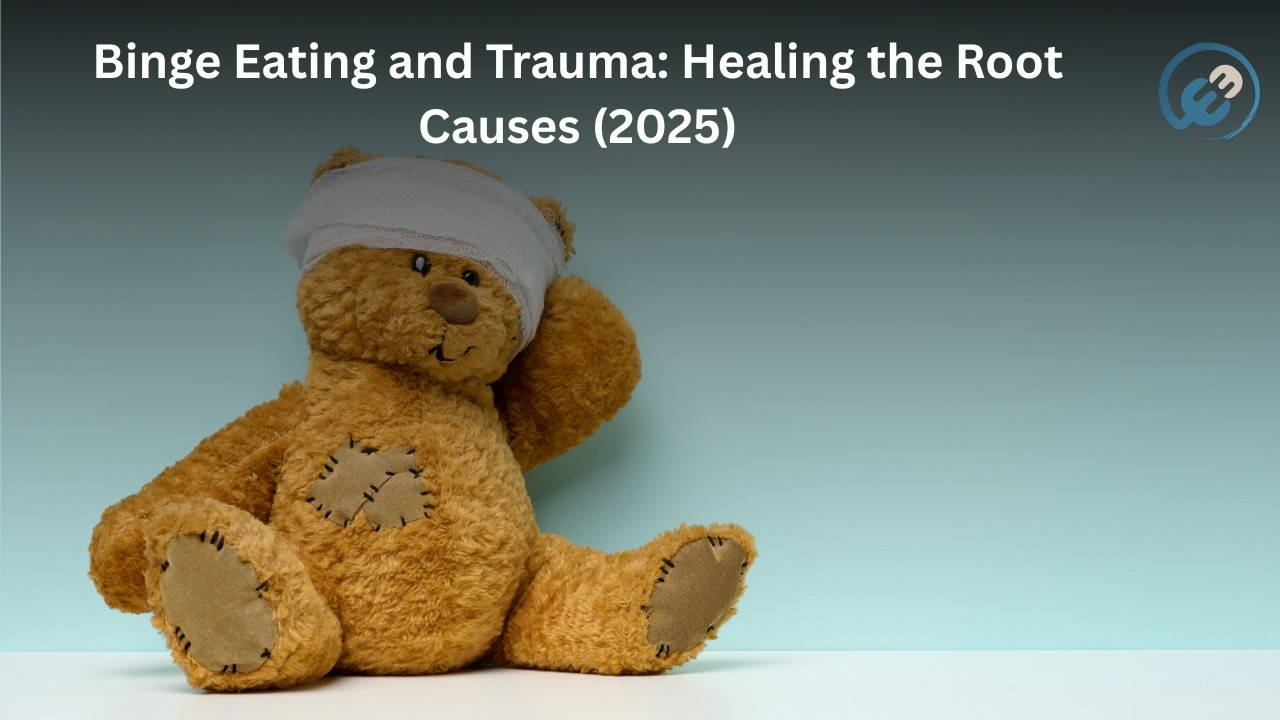
Sometimes, it isn’t about the food.
It’s about the safety.
Or the silence.
Or the momentary escape from a body that holds too many memories.
If you’ve ever found yourself eating not out of hunger, but out of a deep, confusing need—know this: you are not alone. And you are not broken.
Binge eating is often misunderstood. People assume it’s about a lack of control or discipline. But for many, it’s about trauma. It’s a strategy your body learned—to cope, to regulate, to survive.
In this article, we’ll explore the link between trauma and binge eating, not through the lens of judgment, but through compassion and insight. We’ll walk through:
- What trauma actually means (and why it’s more common than you think)
- Why binge eating might be your nervous system’s cry for safety
- How to gently begin healing the root causes
- Trusted, non-coercive tools like journaling, somatic awareness, and compassionate coaching
Curious about your relationship with food?
Take our free quiz for a compassionate starting point.
What Is Trauma—and Why It’s Often Overlooked in Binge Eating
Trauma isn’t always a dramatic event. Often, it’s what didn’t happen—what you needed but never received.
It might be:
- Emotional neglect
- Growing up in a home where emotions weren’t safe
- Surviving medical gaslighting, bullying, or subtle chronic invalidation
These experiences may not leave visible scars. But they shape the nervous system. They create patterns of hypervigilance, dissociation, or collapse.
When your body doesn’t feel safe, food can become a predictable source of relief. For a moment, it grounds you. It comforts. It helps you survive what feels unbearable.
A 2021 review in Current Psychiatry Reports confirms that individuals with binge eating disorder often report higher rates of trauma and PTSD symptoms (Mitchell et al., 2021).
This isn’t just coincidence. It’s a body trying to protect itself the only way it knows how.
The Body’s Wisdom: Why Binge Eating Is a Response, Not a Failure
Your body remembers what your mind forgets.
And in the presence of trauma, your nervous system may swing between:
- Hyperarousal: anxiety, restlessness, intrusive thoughts
- Hypoarousal: numbness, exhaustion, detachment
Binge eating often occurs in hypoarousal—when you feel shut down, disconnected, or lost in a fog.
Eating becomes a way to spark something. To feel. To come back online.
Or, in hyperarousal, it becomes a way to quiet the noise. To soothe the internal chaos.
This is not dysfunction. It’s wisdom. Your body is choosing the fastest, most accessible tool it knows.
The problem isn’t that you binge eat.
The problem is that you’ve been left without safer tools.
Want to begin developing new tools for emotional regulation?
Our Mindful Meal Journal App offers non-judgmental support to reconnect with hunger, emotion, and rhythm.
Shame, Secrecy, and Self-Blame: The Hidden Costs of Trauma-Driven Eating
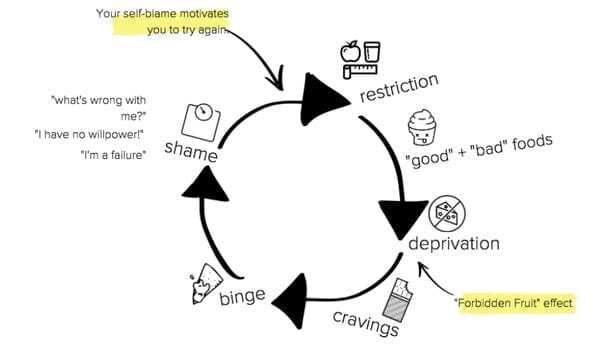
After the binge comes the shame.
“Why did I do this again?”
“I should know better by now.”
“I’m disgusting.”
But here’s the truth: shame was likely part of the trauma to begin with.
Trauma teaches us:
- Our needs are too much
- Our feelings are dangerous
- Our bodies are not safe
So it makes sense that you’d turn against yourself. That you’d eat in secret. That you’d try to punish the body that keeps asking for help.
Shame deepens the cycle. It disconnects us from healing. It convinces us to suffer in silence.
To heal, we must shift from shame to curiosity:
- What is my eating trying to say?
- What part of me is asking for care?
- What does my body remember that I haven’t yet listened to?
Healing begins not when we control our eating—but when we listen to it.
A Story: “Food Was the Only Thing That Didn’t Leave Me”
Alyssa, 35, survived childhood abuse. By the time she was 13, she was binge eating every night—always in secret.
“I didn’t know it was trauma. I thought I was just messed up.”
It wasn’t until her 30s, in a trauma-informed group coaching circle, that she connected the dots.
“I realized food wasn’t my enemy. It was my lifeline. It gave me something predictable when everything else was chaos.”
With the support of a somatic coach and her own deep journaling work, Alyssa began to reclaim her body—not through diets, but through compassion.
She still has binges. But they don’t feel like failures anymore. They feel like signals. And that, she says, has changed everything.
Gentle Ways to Begin Healing Trauma and Binge Eating

You don’t need to fix everything at once. You only need to begin.
🌱 1. Validate Your Story
- Say: “This makes sense, given what I’ve been through.”
- Acknowledge that your body is doing its best.
🌱 2. Practice Sensory Anchoring
- Hold something soft.
- Light a calming scent.
- Name three sounds around you.
These practices begin to rewire safety in the body.
🌱 3. Use Journal Prompts That Invite Compassion
- “What am I needing right now?”
- “What does my younger self want me to know?”
- “What would it feel like to trust my body?”
Try our Enlightened Eating Journal for guided reflections.
🌱 4. Connect with Trauma-Informed Support
- Not all support is safe. Seek those trained in trauma response.
- Our Coaching Offer honors your pace and story.
What Real Recovery Looks Like: A Spiral, Not a Straight Line
Recovery isn’t linear. It’s not a ladder—it’s a spiral.
Some days you’ll feel connected. Others, you’ll feel lost again. That doesn’t mean you’re back at square one.
It means you’re circling deeper into truth.
Signs of healing might look like:
- Pausing mid-binge and breathing
- Reaching out instead of isolating
- Feeling anger or grief you once buried
- Letting go of the need to “fix” yourself
You don’t need to be perfect.
You need to be present—to your needs, your wounds, your slow unfurling.
Healing from trauma and binge eating is not about becoming someone else.
It’s about coming home.
Conclusion: You Are Not the Problem. You Are the Process.

Binge eating is not a failure of willpower. It’s a brilliant adaptation to a world—and sometimes a body—that didn’t feel safe.
When trauma shapes our nervous system, our emotions, and our beliefs, food can become a tool of survival.
But healing is possible.
Not through force or shame. Through relationship. Through slowness. Through re-learning what safety feels like—inside and out.
You are not broken.
You are someone whose body has been doing the best it can.
Want a compassionate reflection on your eating patterns?
Take our free quiz and begin your journey with gentle awareness.