

You’ve probably heard the stereotypes. That binge eating is “just” about lack of willpower. That it looks like hiding in the pantry with a tub of ice cream, or secretly devouring fast food in the car.
But what if the truth is deeper — more invisible, more emotional?
For many people, binge eating isn’t loud or obvious. It’s a silent war waged in the mind and body. A cycle of guilt, secrecy, and confusion that no one else sees. And far too often, the signs are missed — even by those suffering.
In this guide, we’ll explore five key symptoms of binge eating disorder (BED) that most people overlook. These aren’t the symptoms you find in a checklist. They’re the quieter ones — hidden beneath shame, culture, and trauma — yet just as real and worthy of care.
Curious about your relationship with food? Our free quiz can offer some gentle insight.
1. Emotional Numbness After Eating: When Fullness Feels Like Disappearing
“I didn’t even taste it.”
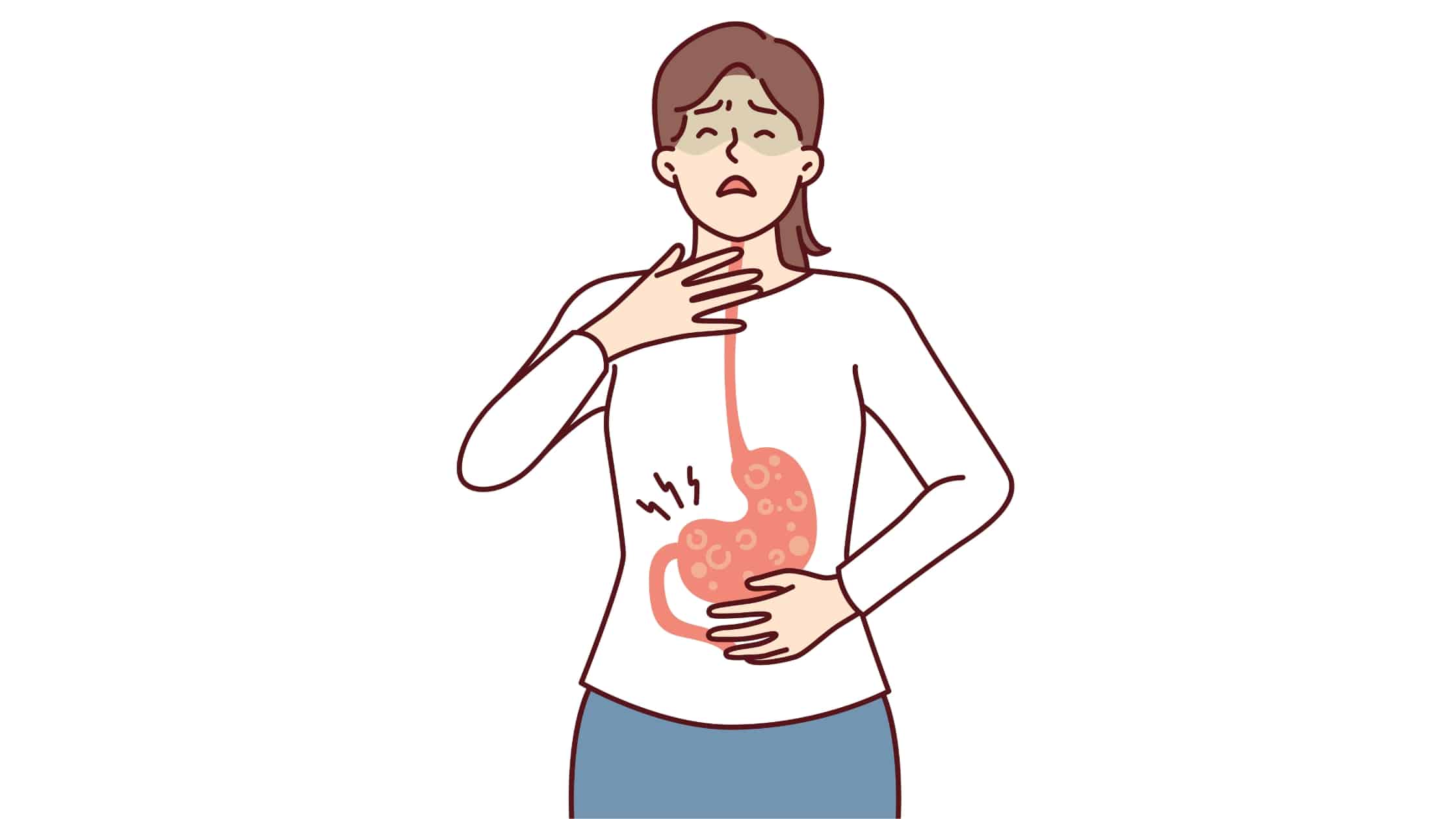
One of the most overlooked signs of binge eating disorder is not the binge itself — but what happens after. Many people report a kind of emotional flatline. Not just guilt or shame, but a strange blankness.
You may not feel full or satisfied. You may not feel anything at all.
This emotional dissociation — a numbing out — is a hallmark of trauma responses. After a binge, your nervous system might shift into a shutdown state, protecting you from the emotional overwhelm underneath.
Rather than a “bad habit,” this response is often the residue of deeper pain:
- Feeling invisible or unheard as a child
- Associating food with temporary safety
- Seeking control in a chaotic emotional environment
You’re not broken. You’re trying to survive.
In our Enlighten Eats course, we explore these body-based patterns in detail, helping you identify your unique survival strategies around food.
Want a compassionate tool for tracking your food experiences? Try our Mindful Meal Journal — designed for gentle awareness, not judgment.
2. Eating Quickly and Secretly, Even Without Hunger

“I don’t even know why I started eating.”
Speed and secrecy are common in BED — but rarely talked about unless someone’s weight changes dramatically. You may eat in the car, late at night, or during breaks when no one is around. And it might happen so fast that you’re left disoriented.
This isn’t about “sneaking” food out of greed. It’s often rooted in shame — the deeply internalized belief that your needs are too much, too messy, or undeserving.
Here’s what this can look like:
- Grabbing food on autopilot the moment you’re alone
- Feeling intense urgency to eat now before being seen
- Not remembering what you ate, or how much
Relational shame is often the unspoken driver here. Somewhere along the way, you learned that eating in front of others wasn’t safe — emotionally or physically.
Binge eating often emerges in response to relational wounds, not personal failure.
3. A Lingering Sense of “Wrongness” Around Food and Body
“No matter what I eat, I feel like I did something wrong.”
This is one of the quietest symptoms of BED — the pervasive feeling that food is always a moral choice, and that you’re always failing. It’s not just about calories. It’s about worthiness.
You may find yourself:
- Mentally cataloguing your food as “good” or “bad”
- Feeling deep regret or panic after eating something “off plan”
- Believing your cravings make you unlovable or undisciplined
This symptom is often shaped by cultural and systemic pressures — thinness idealization, media messaging, diet culture, and a society that equates health with morality. And if you grew up in an environment where emotions were suppressed, food may have become your only coping mechanism.
It’s not your fault. The culture trained you to see your hunger as dangerous.
Explore our anorexia vs. binge eating guide to understand how these dynamics overlap in unexpected ways.
4. Mental Preoccupation with Food — Even When You’re Not Eating
“Food is always on my mind.”
For many people with BED, the most painful symptom is the constant obsession. You might be thinking about your next meal, your last binge, your diet restart tomorrow. It’s a loop — exhausting, shameful, and often invisible.
Some signs:
- Planning binges in advance, then feeling disgusted with yourself
- Ruminating over what you ate days ago
- Reading nutrition labels compulsively or bouncing between extreme diet rules
This is often misdiagnosed or dismissed, especially when someone is “normal weight.” But mental preoccupation is a clinically relevant marker of binge eating disorder (APA, 2013).
It’s also a sign that your nervous system is in a chronic state of alert — trying to manage internal chaos through external control.
You don’t need more control. You need more connection.
Want to learn more about the root causes of disordered eating and the stages of healing? Explore our comprehensive Enlighten Eats Course.
5. Post-Binge Isolation and Self-Punishment
“I can’t let anyone see me like this.”
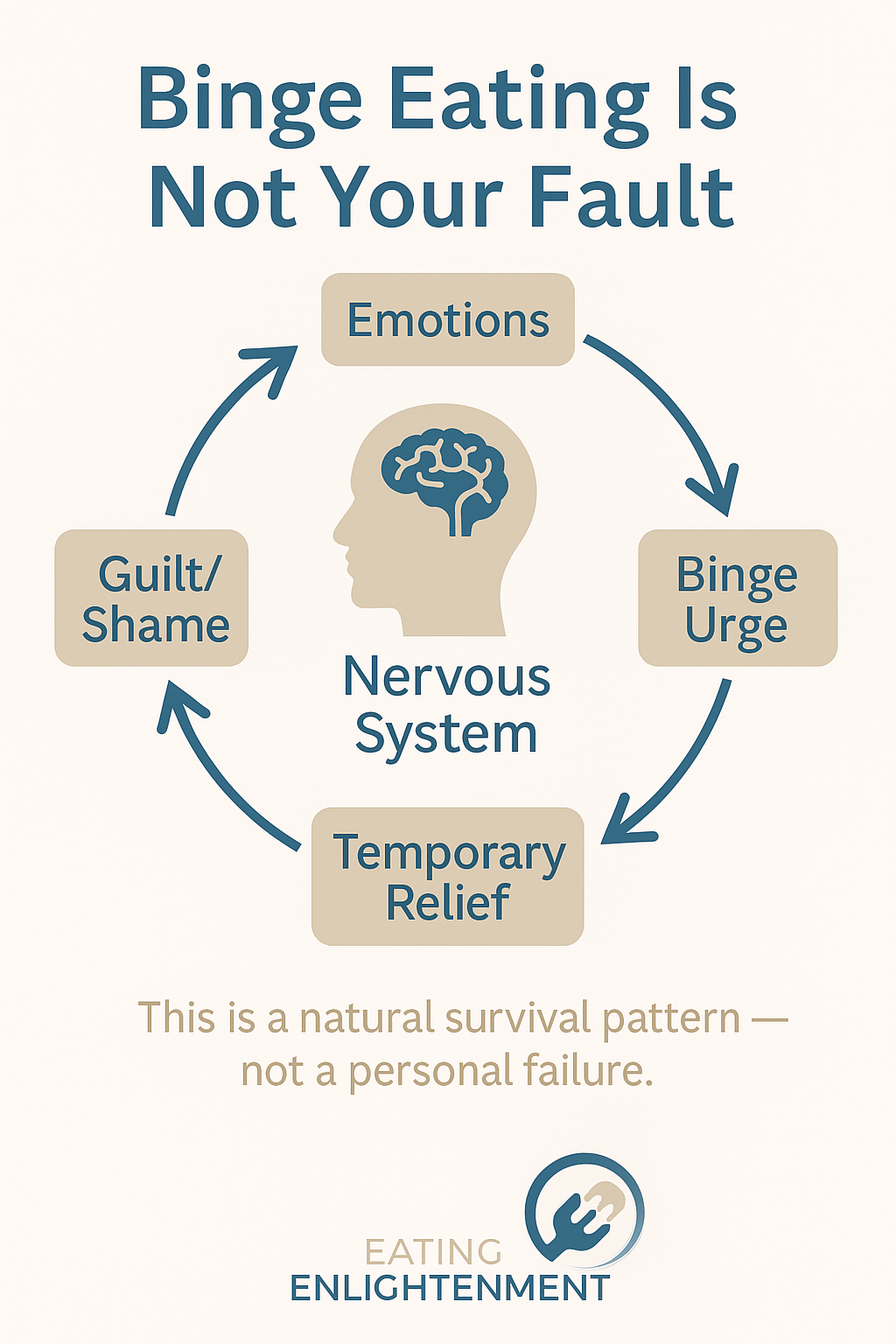
After a binge, many people spiral into self-punishment and isolation. You might cancel plans, avoid mirrors, or punish yourself with harsh rules the next day — fasting, overexercising, or shaming self-talk.
This isn’t laziness or lack of discipline. It’s a trauma loop.
You may have learned that mistakes should be hidden. That if you can’t be perfect, you should disappear. This binary thinking — success or failure, clean or dirty — keeps the binge cycle going.
What helps? Gentle co-regulation. Safe spaces. People who can hold your messiness without trying to fix it.
If you’re ready to explore that kind of compassionate support, our coaching options are here whenever you’re ready. You don’t have to do this alone.
Conclusion: You Are Not Alone — And You Are Not Broken
If you recognize yourself in these symptoms, take a deep breath.
Binge eating disorder is more common than most people realize — affecting an estimated 2.8 million U.S. adults each year (Hudson et al., 2007). But unlike other eating disorders, it often hides in plain sight, especially in people who are high-functioning, kind, and deeply hard on themselves.
Healing isn’t about control — it’s about connection.
It’s about reconnecting with your body, your hunger, your safety. About seeing your patterns not as shameful flaws, but as intelligent adaptations to pain.
And from that place of compassion, real change is possible.
Start with insight. Take our free food relationship quiz to gently explore your eating patterns.