

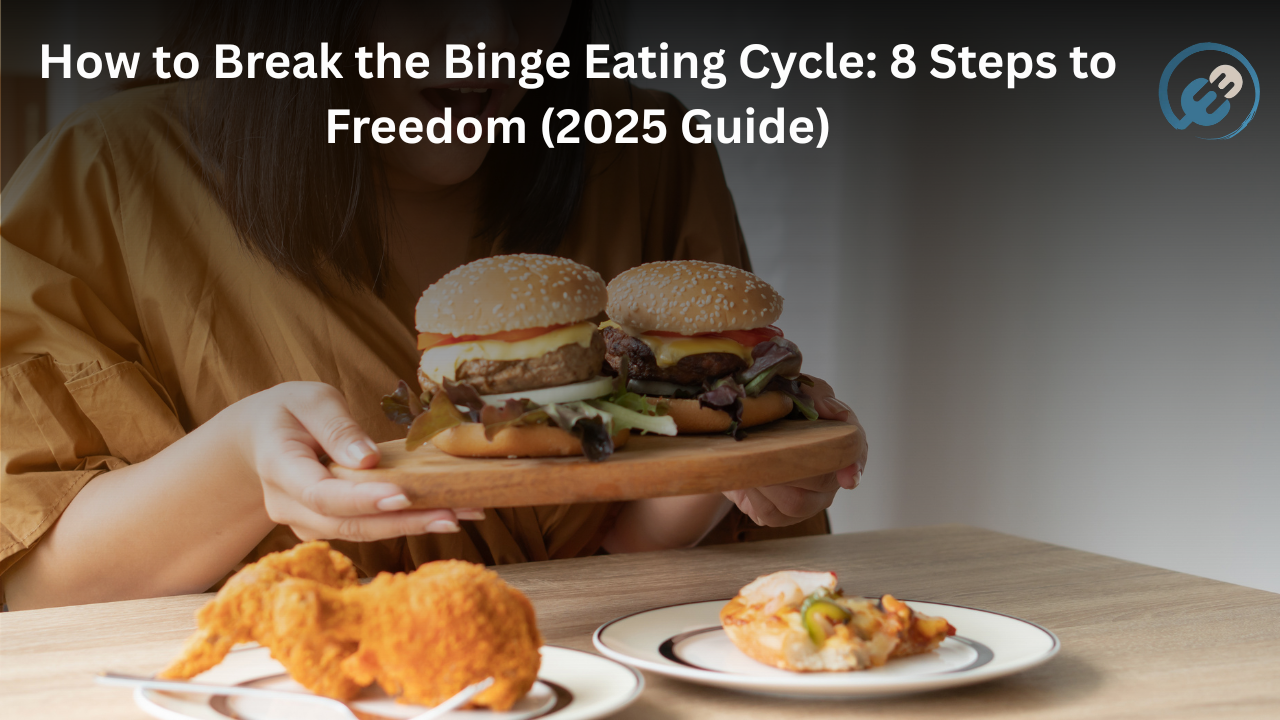
You’re not weak. You’re not lacking willpower. You’re not alone.
If you’ve found yourself stuck in the loop of binge eating — that desperate promise of “never again” followed by a silent slide into another episode — please know this: what you’re going through makes sense. It’s not your fault. And there is a way forward.
Many of us begin bingeing as a way to survive emotional overwhelm, to soothe a body that’s chronically underfed, or to reclaim a sense of control in a chaotic world. The cycle becomes deeply wired into our nervous system. Breaking free doesn’t start with more discipline — it starts with understanding.
In this article, we’ll walk through eight compassionate, trauma-informed steps to help you gently unwind the binge eating cycle — not through force, but through insight, nourishment, and emotional safety.
If you want to understand the root causes of disordered eating and the stages of real recovery, learn more about our Enlighten Eats Course.
Curious about your relationship with food? Take our free quiz for gentle insight.
1. Understand the Binge Cycle as a Nervous System Loop

Binge eating isn’t just about food. It’s a coping strategy — a biological survival response often rooted in a dysregulated nervous system.
Here’s how the cycle often plays out:
- Restriction (conscious or unconscious)
- Tension builds (emotionally or physically)
- Trigger (stress, shame, loneliness)
- Binge (dissociation or urgency)
- Shame + guilt (followed by vows to restrict again)
If your body feels unsafe — physically, emotionally, or relationally — food can become both the escape and the punishment.
Think of bingeing as your body’s last-ditch effort to feel something. Safety. Soothing. Relief. Aliveness.
🌀 This isn’t a flaw in you — it’s a brilliant adaptation.
Insight Practice: Before judging a binge, ask: “What part of me was trying to survive?” This begins to shift the pattern from self-blame to self-compassion.
2. Name and Soften the Shame That Keeps You Trapped
Binge eating thrives in silence. Shame grows in isolation.
When we secretly eat a box of cookies or finish a drive-thru meal in the parking lot, it’s rarely about hunger. It’s about filling the aching gap of unmet emotional needs.
The shame that follows (“What’s wrong with me?”) can deepen the cycle and cut us off from the very connection that could help us heal.
Here’s how to begin unwinding shame:
- Talk about it. Find one safe space — a therapist, group, or journal — where you can name the behavior without judgment.
- Notice the inner voice. When shame speaks (“You’re disgusting”), respond gently. Say: “I’m hurting, not broken.”
- Know this truth: Shame can’t survive being spoken aloud in loving presence.
💬 “When I began talking to my therapist about bingeing, I thought she would be horrified. Instead, she helped me see the courage it took to survive that way.” — Maria, 32
3. Stop Restricting: Begin with Gentle, Consistent Nourishment
One of the most misunderstood truths about binge eating: restriction fuels it.
Skipping meals, under-eating, “saving up calories,” intermittent fasting — all these signal to your body that food is scarce.
Eventually, your body rebels.
Your biology overrides your plans. This isn’t failure. This is protection.
Build a foundation of nourishment:
- Eat every 3–4 hours. Even if you don’t feel hungry.
- Include carbs, fats, and proteins. Every meal matters.
- Give yourself permission. Yes, even for the foods you usually binge on — with structure and compassion.
📱 Our Mindful Meal Journal App can help you gently build consistency without obsession.
4. Identify Emotional Triggers (Without Needing to Fix Them)
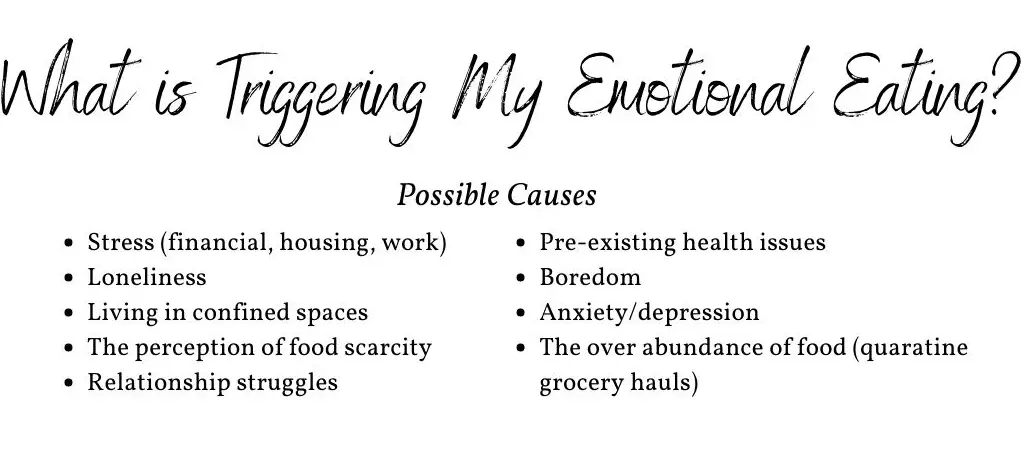
Food often becomes a stand-in for emotions we were never taught to feel.
Loneliness. Boredom. Fear. Even joy can be triggering if you weren’t allowed to feel it as a child.
You don’t need to eliminate your emotions — you just need to see them clearly.
Try this:
- Before a binge, pause (if possible) and ask: What am I feeling right now?
- If not before, reflect gently afterward. No shame.
- Start tracking patterns: is it always after work? After conflict?
This isn’t about control — it’s about building emotional fluency.
🧠 One study found that individuals with binge eating disorder often score lower on “alexithymia,” the ability to identify and describe emotions (Pinna et al., 2015).
5. Practice Interoception: Reconnect With Your Body’s Signals
If binge eating has taught you to ignore hunger, fullness, or emotional cues — you’re not broken. You’re protected.
But healing means learning how to feel again.
Ways to reconnect:
- Before meals: Place one hand on your belly. Ask, “How hungry am I?”
- Mid-meal: Pause. Breathe. Taste.
- After meals: Journal one sentence about how your body feels.
Start small. Think of it as rebuilding trust with your body — one quiet check-in at a time.
Want guidance? Our coaching sessions include somatic tools to help you safely come back into your body.
6. Set Boundaries with Diet Culture and Media Messages
The world around us constantly shouts:
- “You just need more willpower.”
- “Cut carbs and you’ll be fine.”
- “Shame is motivation.”
No. That noise is a lie.
Diet culture keeps you in the binge-restrict cycle by making thinness a moral virtue and hunger a personal failure.
Begin setting boundaries:
- Unfollow triggering accounts
- Stop reading calorie counts if they spike anxiety
- Tell yourself: “My worth isn’t defined by what I eat.”
This step isn’t about rebellion — it’s about reclaiming sanity.
📚 Read more: Binge Eating Disorder DSM-5: Diagnosis and Treatment
7. Learn to Co-Regulate: You Don’t Have to Heal Alone
A regulated nervous system doesn’t happen in isolation.
So much of binge recovery is relational — we heal in safe connection.
When you’re spiraling, overwhelmed, or on the edge of a binge, the presence of a calm, non-judgmental other can change everything.
Whether it’s:
- A trusted friend you can text
- A support group
- A gentle voice on a podcast
You are wired for connection.
🧠 The social engagement system in the brain calms our survival instincts. Healing often begins in safe relationship.
8. Create New Rituals of Self-Soothing
Bingeing offers a momentary ritual: preparing, numbing, soothing. It’s not just about eating — it’s about escaping pain.
To shift the pattern, you’ll need new rituals.
Not to replace bingeing in a punitive way — but to give your nervous system new options for safety and relief.
Try these:
- Light a candle and breathe for 3 minutes
- Journal to your inner child
- Sip something warm while holding a soft object
- Go outside and feel the sun on your skin
These aren’t distractions. They’re invitations to come home to yourself.
Conclusion: There’s Nothing Wrong With You
Binge eating is not a failure of willpower — it’s a brilliant coping strategy that once helped you survive.
But now? You’re allowed to heal.
You’re allowed to eat when hungry. Rest when tired. Cry when sad. Say no when overwhelmed.
Recovery is not linear. You will stumble. But with every compassionate step, you’re rewriting your story.
🧭 Ready to take the next step? Try our free food relationship quiz, or explore our gentle Mindful Eating App to support your daily rhythm.