


Food cravings are a shared experience that can significantly influence our eating habits and overall well-being—understanding the reasons behind these cravings, whether a sudden urge for something sweet or a persistent desire for salty snacks, is crucial for maintaining balanced eating patterns.
Exploring the six critical reasons behind food cravings can help us better manage our dietary choices and enhance our health journey.
The Eating Enlightenment Food Journal App is an invaluable tool in this process. It offers support by tracking eating patterns and helping individuals manage cravings, emotional eating, and binges. This comprehensive approach empowers users to gain insight into their cravings and take control of their eating habits.
What cravings are telling you?

Typically, people see a food craving as bad.
They try to manage, control, and diet their way around cravings.
Instead, you must see cravings as valid signals from your body and mind. Learning to listen to cravings is the key to freedom.
Seeing cravings as meaningful pieces of information that are NOT bad is a massive shift in perspective.
Normally, people think cravings are like the devil on their shoulders, but when you can start to understand why cravings happen in general, you can start to understand your specific cravings.
As you understand your cravings, you won’t be so fearful or hateful towards them.
With more understanding and psychological clarity, you won’t need to think about food all day, and one day, your binges will go away, too!
1 – Working all day (exhausted, craving quick energy)

One of the most common reasons people crave food is their tiredness.
When we are fatigued, our bodies need energy to function correctly.
Junk food can provide a temporary burst of energy with its high sugar content that’s quickly digested.
If you work all day and think about various deadlines while trying to manage your weight, you’ll be exhausted by the end of the day!
You will be craving a sugary treat for an energy burst because …
2 – You can’t stop thinking (craving mental quietude)

If you’re someone who is constantly thinking, your mind might never rest.
You might be thinking about work, school, family, friends, or anything else.
This can lead to stress and anxiety, which can then lead to cravings.
When we are stressed out, our bodies crave sugar and fat because these provide some relief from the constant thinking and agonizing.
- Before bingeing, you might start fantasizing about food images. This helps to distract your brain from your daily worries.
- You are not thinking logically when you stuff your face with sugary foods. Eating helps shut your brain down.
- After eating, when you’re bloated, you are numb and can’t think straight, either. While miserable, at least you aren’t worrying about your to-do list!
In addition to needing an energy boost and mental quiet, you might also be craving because …
3 – You’re bored (craving stimulus)

Now that you’re finally home, it’s time to relax.
Or maybe it’s right after work, and NOW it’s time to relax!
Ok, great, you relax, kick up your feet, and turn on the tunes.
But something feels wrong.
You’re so habituated to stress. It’s like you’re addicted to the constant doing.
Now that you finally have some downtime, you’re practically miserable!
Of course, there are endless entertainment options today, but nothing satisfies you like a face full of chocolates.
But why does boredom create so much misery for you specifically? Your friends can be bored without compulsively bingeing, so why can’t you?
Well, if your childhood was filled with neglect, then boredom might remind you of being alone.
Even if this sounds silly, on a subconscious level, this could be one reason boredom is so horrible for you.
4 – You are restricted during the day (craving a “treat”)

If you worked all day yesterday and binged because you were bored and needed to calm down …
Then, of course, you’re feeling guilty, bloated, and more determined than ever never to binge or compulsively eat ever again.
That feeling where your cheeks are visibly bloated is the worst!
So you are “good” the whole day.
You restrict your calories, don’t eat anything “bad,” and you even work out.
But by the end of the day, you feel so deprived that you can’t help but get chocolate cravings and overeat.
You feel good all day, so now you deserve a treat!
And what better way to reward yourself than with some sugary, fatty, fried foods!
WRONG.
You might think you deserve a treat because you were good all day, but in reality …
You are only setting yourself up for another binge.
If you genuinely want to overcome your craving for food, it is crucial to be mindful of what you eat and not restrict yourself.
If you constantly deprive yourself of certain foods, you will only crave them more.
It is crucial to have a healthy relationship with food and not consider certain foods “off limits.”
5 – You’re hungry (craving fuel)
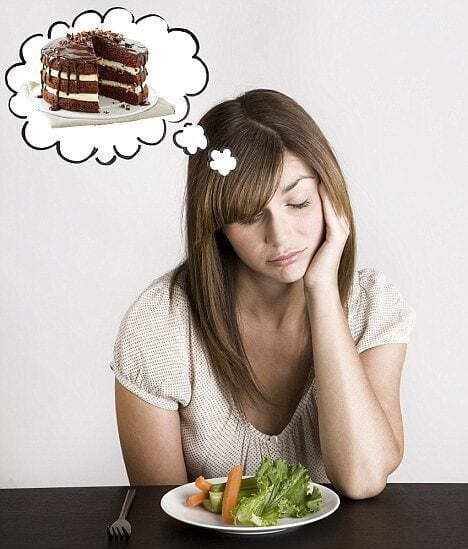
If you’ve restricted or tried to be “good,” odds are you’re hungry at night’s end.
But wait! You just had a big dinner. Shouldn’t you be satisfied and full now?
No! One big dinner does not make up for a day of restriction and hardly eating anything.
Even if you are not purposefully trying to limit your calories, you may forget to eat if stressed out and under pressure.
Have you ever accidentally skipped a meal? I know I have!
Whether by restriction or by accident, if you are hungry at the end of the day, this can be another valid reason for craving food.
Your body craves energy and nutrients, so you’ll naturally be drawn to foods that quickly boost you.
These sugary, fatty foods may not be the most nutritious, but they are certainly the most satisfying when you’re hungry!
6 – Food triggers (unconscious triggers craving)

A trigger is something that sets off a craving or a binge.
For some people, the smell of baking cookies might set off more food cravings.
Other people might be triggered by their favorite TV show.
To overcome your food cravings, you must become aware of your triggers and avoid them if possible.
One widespread food craving trigger is “Netflix and Chill.”
You know, when you’re mindlessly scrolling through Netflix, and you see your favorite show coming up.
You think, “I’ll just watch one episode,” but before you know it, a bag of popcorn is in your hands, and you’re chowing down.
Another common trigger is being around other people who are eating.
This can be a tough trigger to avoid if you want to lose weight or be healthier.
One way to avoid this trigger is by not being around food when hungry.
If you know you’ll be tempted to eat if you see other people eating, try to eat before you go out or bring your food with you.
These are just a few triggers that can trigger a craving for food.
By becoming aware of your triggers, you can avoid them and hopefully overcome your food cravings for good!
Do you have cravings for ice? Learn more about this potential trigger here.
Other factors that cause food cravings

There are many factors besides the top 6 reasons we listed above.
- Genetic – if your parents craved food and struggled with food intake (and you do too), then genetics can help explain your relationship with food
- Hormones – when you’re craving food, it could be because of a hormonal imbalance
- Legitimate hunger – hunger pangs are part of healthy eating
- History of dieting – if you’ve dieted in the past, you’re more likely to struggle with food cravings
- Social cues – being around people who are eating can trigger a craving
- Advertising and marketing – we are constantly bombarded with ads for unhealthy foods, which can lead to cravings; seeing images of food can trigger a craving, especially if you’re hungry
- Dehydration – if you’re dehydrated, you may be more likely to crave sugary drinks or salty snacks
- *Unconscious forces – Shadow, Inner Critic, Rebel, Diet Voice, etc..… these can cause you to self-sabotage with food without your conscious decision
*Unconscious forces are the things we work on at Eating Enlightenment! You start by journaling and quickly become more aware of these unconscious energies and “parts.”
As you learn more about these internal dynamics, you create a map of your inner world and how it relates to food. Then, you can understand why you binge and how to stop.
Intuitive Eating comes much more naturally from this point onward.
Are cravings signs of deficiency?
Cravings can sometimes be a sign of nutritional deficiency, while other times, they can be a sign of an emotional deficiency or an unmet emotional need.
If you find yourself craving certain foods, your body might be telling you that it needs certain nutrients.
Craving sweets could be a sign that you need more carbohydrates, craving salty foods could be a sign that you need more sodium, and craving fatty foods could be a sign that you need more fat.
Of course, this doesn’t mean that you should give in to your cravings and eat unhealthy foods!
- If you are craving sweets, try to satisfy your craving with fruit instead of cake or cookies.
- If you are craving salty foods, try to satisfy your craving with popcorn instead of chips.
- If you are craving fatty foods, try satisfying your craving with nuts or avocado instead of fried food.
Other times, cravings occur because of an unmet emotional need.

If you crave certain foods when you’re feeling certain emotions, it might be because you’re using food to cope with them.
For example, if you find yourself craving ice cream when you’re feeling sad, it might be because you’re using ice cream to comfort yourself.
An unconscious force within you might have a belief about sadness.
While you may consciously recognize sadness as a part of life, an unconscious part of you from childhood may think sadness is a sign of failure, low worth, or danger.
So whenever you feel sad, even a bit, your unconscious part blocks out sadness with food!
In this case, it is essential to learn how to process sadness, your unconscious dynamics, and how they relate to food.
If you are struggling with cravings, emotions, and food—particularly the unconscious forces—it’s best to see a Food Cravings Coach.
Tell me the meaning of “craving”?

Cravings are defined as “excess, immediate, or abnormal desire for anything” in the dictionary.
When there’s nothing else to eat, food cravings can strike. They are intense desires for a specific food that can feel like you cannot resist or control. You may crave foods high in sugar, salt, or fat.
As noted above, these cravings can be caused by many things, such as stress, hormones, boredom, or dehydration. If you’re trying to eat healthy and have an appetite for unhealthy foods, try to find a healthy alternative to satisfy the craving.
If you’re still struggling with food cravings despite trying everything, it’s best to see a Food Cravings Coach for help.
Food cravings and emotions
Food cravings and emotions are very much connected. When we feel certain emotions, we may crave foods that will comfort us.
For example, if we’re sad, we may crave sugary foods because they make us feel better. However, these emotional eating habits can lead to weight gain and other health problems in the long run.
That’s why it’s essential to learn how to deal with our emotions healthily without using food as a crutch.
If you want to learn more about emotional eating and how to break the unhealthy food cycle, then book a free call with me today.
Food Craving Conclusion

Craving can tell you a lot about yourself, and it’s essential to pay attention to what your cravings are trying to communicate.
If you can understand the underlying messages your cravings are sending, you can take steps to address them.
In that post, we discussed more food cravings, especially if you crave a particular food (like sweets).
We also discuss ways to reduce cravings for comfort foods, high-calorie foods, and other odd eating behaviors.
For example, if you experience food cravings, then did you know research suggests that chewing gum can help? Of course, eating balanced meals is the best way to stop sugar cravings or eating out on fast food – but still, crazy, huh? Who knew gum could be helpful?
What was your biggest takeaway from this post?