

When we hear the word “anorexia,” many of us picture a thin, white, teenage girl refusing food. But that image — shaped by media, medical bias, and fear — leaves out so much.
The truth is, anorexia is not a one-size-fits-all condition. There are multiple subtypes, each with different symptoms, behaviors, and emotional roots. And sadly, when someone doesn’t “look the part,” they often go unnoticed — or even praised for their disorder.
If you’ve ever felt like your suffering wasn’t valid because you didn’t fit a stereotype, this article is for you.
We’ll explore the different subtypes of anorexia nervosa with clarity and compassion — not as rigid boxes, but as ways of understanding complex, adaptive patterns of survival.
💡 Curious about your own relationship with food? Our free quiz offers gentle insight — no labels, just reflection.
Anorexia Nervosa, Restricting Type (AN-R): The “Classic” Subtype

This is the subtype most people associate with anorexia.
Key features of AN-R include:
- Extreme food restriction
- Intense fear of gaining weight
- Significant weight loss
- No regular binge eating or purging behaviors
This subtype is often driven by perfectionism, control, and a desire to feel “clean” or “disciplined.” People with AN-R may skip meals, count calories obsessively, avoid social eating, and experience an internal reward for hunger.
But beneath the surface?
Often there’s a profound sense of unworthiness, anxiety, or a freeze response from the nervous system. Hunger might not even be felt — not because it’s gone, but because the body has numbed it in self-protection.
💬 One woman shared: “I didn’t even realize I was starving. It just felt good to be empty. Quiet.”
📊 Scientific Insight: A study published in Journal of Eating Disorders (Fairburn et al., 2003) found that individuals with AN-R often have the longest duration of illness, especially when treatment is delayed.
This underscores the need for early, compassionate intervention — not just food-based treatment, but relational and emotional healing, too.
Anorexia Nervosa, Binge-Purge Type (AN-BP): The Hidden Cycle
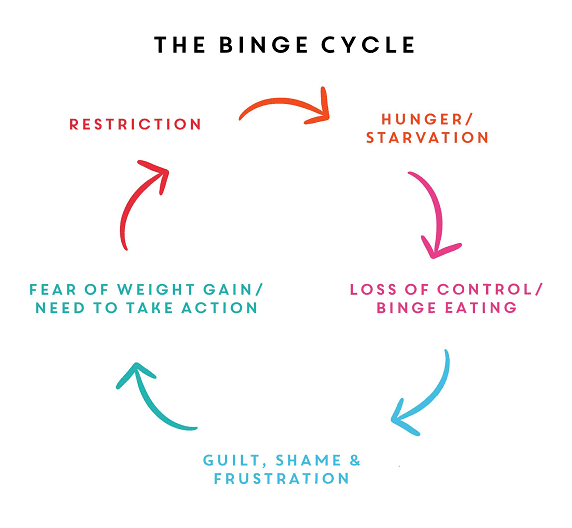
This subtype includes all the core symptoms of anorexia — restriction, fear of weight gain, body image distortion — but also includes episodes of bingeing and/or purging.
Purging can include:
- Self-induced vomiting
- Laxatives
- Diuretics
- Excessive exercise
Bingeing, in this context, doesn’t always mean eating large volumes. It can also mean eating a “forbidden” food or slightly exceeding rigid rules, followed by shame and attempts to “undo” it.
People with AN-BP often feel trapped in a cycle of discipline and perceived failure. They may be highly intelligent, outwardly successful, and deeply ashamed of their secret behaviors.
💡 Nervous system note: This cycle often mirrors dysregulation — swinging from shutdown (restriction) to sympathetic overdrive (binging or purging). It’s not a lack of willpower. It’s a survival loop.
🌀 Try the Mindful Meal App if you feel overwhelmed by these swings. It gently supports rhythm and grounding.
Atypical Anorexia: When the Body “Doesn’t Look Sick”
This is perhaps the most underdiagnosed and misunderstood subtype.
People with atypical anorexia meet all the criteria for anorexia nervosa, except for low body weight. In fact, many are in “normal” or higher-weight bodies — and this difference often means they are praised for their restriction, not treated for it.
This subtype reveals how weight bias harms people.
Those with atypical anorexia often:
- Experience significant weight loss over time
- Feel intense fear around food, weight, and body
- Hide their struggles because no one believes them
- Delay treatment because they’re not “thin enough” to be taken seriously
Atypical anorexia can be just as dangerous — medically and psychologically — as any other subtype. In fact, the mortality rate for eating disorders does not correlate directly with weight, but with behaviors, malnutrition, and comorbidities (Schaumberg et al., 2017).
✨ If you feel unseen in your pain, you’re not alone. We see you. And your suffering is valid.
Explore deeper healing through our Enlighten Eats Course — not just for symptom relief, but for reconnection with your whole self.
Subthreshold and Overlapping Presentations: When You Don’t Fit a Box
Some people experience a blending of symptoms or don’t meet full diagnostic criteria — and yet they’re still struggling deeply.
Examples include:
- Orthorexia (obsession with “clean” eating)
- Restriction with occasional bingeing, but no purging
- Chronic dieting with intense food anxiety
- Obsessive thoughts without outward behaviors
These experiences often live in the gray area — and that can feel confusing. But healing doesn’t require a diagnosis.
You don’t have to prove your pain to deserve support.
💬 One client told us, “I thought I had to hit rock bottom to get help. But turns out, waiting made it harder.”
This is why Eating Enlightenment offers coaching that meets you where you are — no scale required.
Why Do These Subtypes Matter for Healing?

Understanding the different subtypes of anorexia isn’t about labeling.
It’s about:
- Identifying patterns that need compassion, not control
- Exploring how trauma, conditioning, and nervous system states shape our eating
- Customizing support to your reality, not someone else’s model
Here’s what can happen when we see subtypes clearly:
- Medical providers stop overlooking people in higher-weight bodies
- Individuals understand their “bingeing” isn’t a failure — it’s part of a survival loop
- Healing becomes more relational, nuanced, and real
Healing isn’t about becoming a diagnosis. It’s about becoming more yourself — slowly, gently, fully.
Conclusion: You Are More Than a Subtype — But Knowing Helps
Whether you identify with the restricting type, binge-purge type, atypical anorexia, or something less defined — you are not alone. You are not too complicated. And you are not beyond healing.
Understanding anorexia subtypes can offer insight. But it’s your inner world — your hunger, your fear, your story — that deserves the most attention.
✨ Start with a soft step:
- Take our free quiz for insight
- Explore the Mindful Meal App for gentle food support
- Go deeper with our Enlighten Eats Course
- Or reach out for coaching when you’re ready to be seen, not fixed
You are not broken. You’re just responding to a world that made food, body, and worth confusing. But healing is real. And it can start today.