

You tell yourself today will be different. You’ll eat “clean.”
No sugar. No carbs. Just discipline.
But one cookie turns into ten.
And suddenly it feels like the whole day is ruined — like you are ruined.
So you give up. Or give in. And promise, again, to “start over tomorrow.”
This is the exhausting cycle of the all-or-nothing mindset. It doesn’t just affect what you eat — it affects how you see yourself.
If this feels familiar, you are not weak. You are human. And you are not alone.
This article gently explores how this rigid, perfectionistic mindset fuels binge eating — and how you can begin to unwind it with compassion, curiosity, and clarity.
💡 Curious about your relationship with food and control?
👉 Take our free quiz — a soft place to begin.
What Is the All-or-Nothing Mindset?
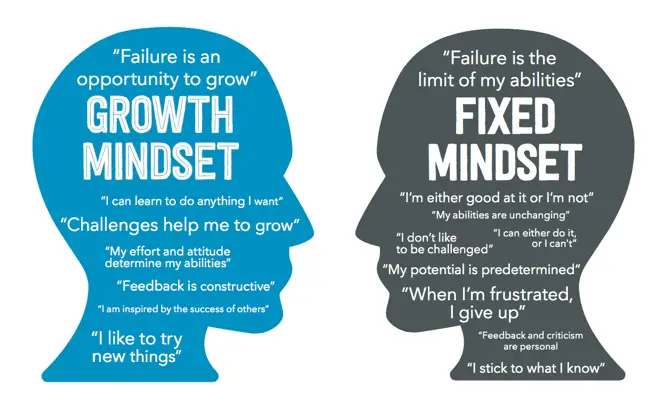
The all-or-nothing mindset — also known as black-and-white thinking — is the belief that something is either entirely good or entirely bad.
You’re either “on track” or “off the wagon.”
Perfect or failing. Clean or dirty. Healthy or broken.
In eating patterns, it sounds like:
- “I ruined my diet, so I might as well eat everything.”
- “If I’m not eating perfectly, I’ve failed.”
- “One binge means I’m starting over from zero.”
This kind of thinking is exhausting. It keeps us swinging between extremes — restriction and rebellion, control and chaos.
“I could go weeks on a strict diet,” one client shared. “But the second I slipped, the guilt would take over — and I’d spiral into a binge.”
This isn’t a flaw in character. It’s a learned coping mechanism — often shaped by trauma, perfectionism, or emotional neglect — that once kept you safe by giving you a false sense of control.
How All-or-Nothing Thinking Fuels Binge Eating
To understand this pattern, we need to look at how the nervous system and shame interact.
When we restrict food, we create both physical deprivation (hunger) and emotional tension (pressure to succeed).
Eventually, something triggers a binge — hunger, stress, loneliness, or just a craving. And then comes the spiral:
- Break the Rule: Eat something “forbidden.”
- Emotional Collapse: Feelings of guilt, shame, failure.
- Rebellion: “I already messed up — might as well go all in.”
- Binge: Overeating to numb, punish, or soothe.
- Reset: Vow to be “better” tomorrow.
And the cycle repeats.
Key Insight:
Binge eating is often the body’s survival response to internalized rigidity and restriction. Not a lack of willpower — but a form of nervous system dysregulation.
This pattern has been clinically supported. According to Fairburn et al. (2003), rigid dietary restraint is one of the strongest predictors of binge eating in individuals with disordered eating.
✨ Want to go deeper into these patterns?
Explore our Enlighten Eats Course — a holistic journey into food, trauma, and nervous system healing.
A Causal Vignette: When Food Becomes the Only Way to Feel Safe
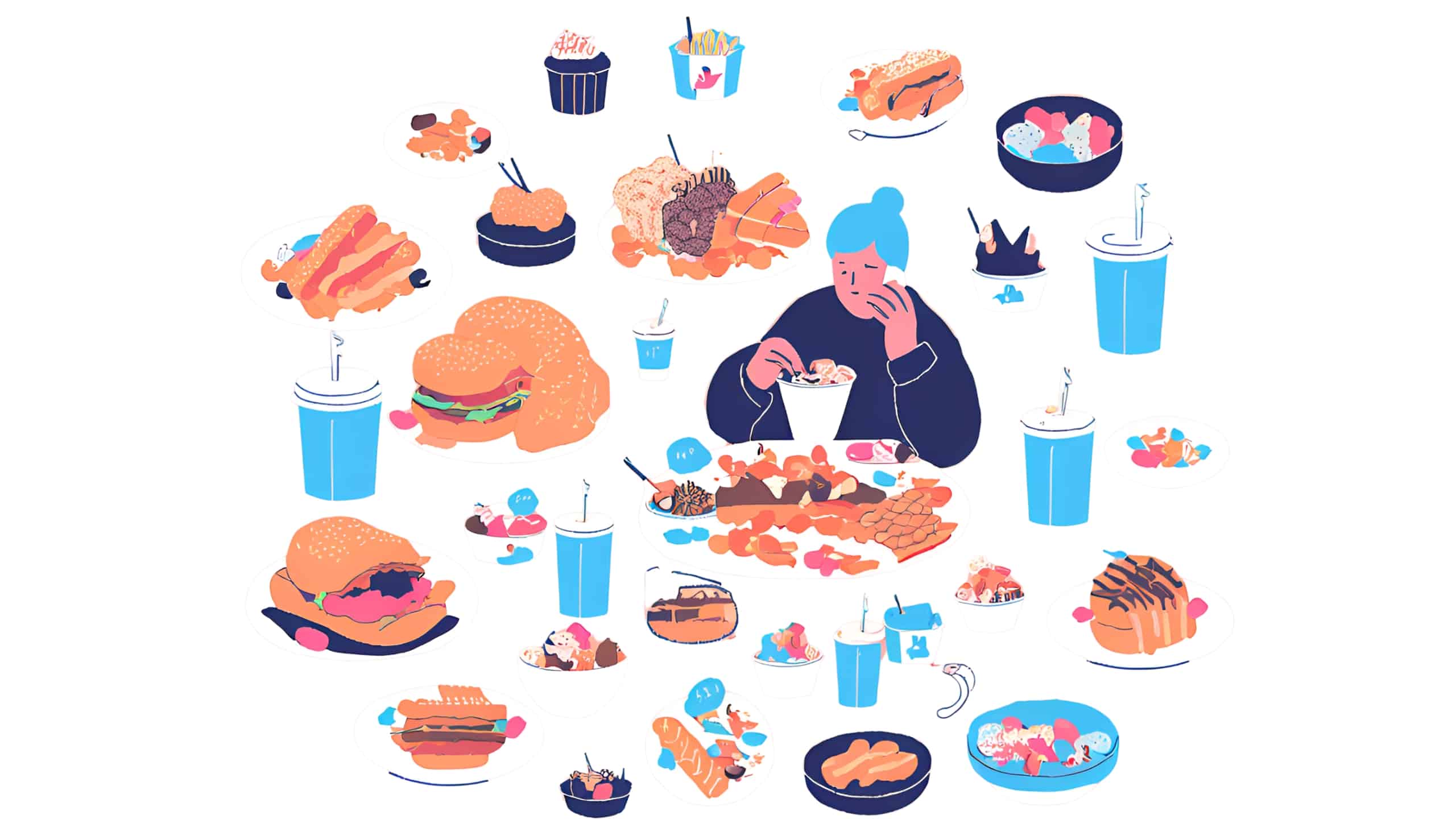
Let’s imagine:
A child grows up in a household where emotions are either ignored or punished.
Achievement is praised. Mistakes are met with withdrawal or criticism.
Food is controlled — praised for being “good,” shamed for being “bad.”
This child learns: I must be perfect to be safe.
So they grow up striving for control — in school, in relationships, and in food.
But life isn’t perfect. Hunger, emotion, and stress leak through the cracks.
And when perfection slips, shame floods in.
That shame doesn’t need food. It demands it.
Because food becomes the only reliable source of comfort, numbness, and control — all at once.
How to Gently Break Free from the All-or-Nothing Trap
Healing doesn’t mean becoming perfect. It means becoming present.
Here are a few tangible places to start:
1. Practice Both/And Thinking
Try replacing “I failed” with:
- “I ate more than I needed and I can still care for myself.”
- “I had a hard moment and I’m learning.”
- “This day had struggle and resilience.”
2. Dismantle Food Rules
Rigid food rules fuel the binge cycle. Instead, move toward food neutrality:
- All foods can fit.
- There are no “good” or “bad” foods — only context and connection.
- You deserve to eat, no matter what.
📓 Try our Mindful Meal Journal App — a judgment-free way to track your emotions and eating patterns.
3. Regulate, Don’t Restrict
Before the urge to binge hits, try checking in with your body:
- Are you tired, not hungry?
- Are you seeking comfort, not food?
- Can you pause — not to deny yourself, but to soothe first?
This is the foundation of nervous system co-regulation.
Bingeing often comes from disconnection — not just from hunger, but from yourself.
Recovery Is a Process of Returning (Not Starting Over)

If you binge after a few good days, you didn’t ruin anything.
You didn’t go back to square one.
You’re still healing.
Progress isn’t linear — it’s a spiral. A series of returns.
“The moment I stopped trying to be perfect,” one client shared, “was the moment I started getting better.”
Healing from the all-or-nothing mindset is not about doing it “right.”
It’s about staying curious. Gentle. Open to what unfolds.
🧠 Want help integrating this mindset?
Work with a Coach who understands the emotional, somatic, and systemic roots of disordered eating.
Conclusion: You Are Allowed to Be In Between

You are not all good or all bad.
You are not either recovered or broken.
You are human. Messy. Whole. Still learning.
The all-or-nothing mindset says you must choose: succeed or fail.
But healing whispers: you are already enough, even in the middle.
💡 Want a soft place to begin your next step?
👉 Take our free quiz — and explore where you are, with compassion.