

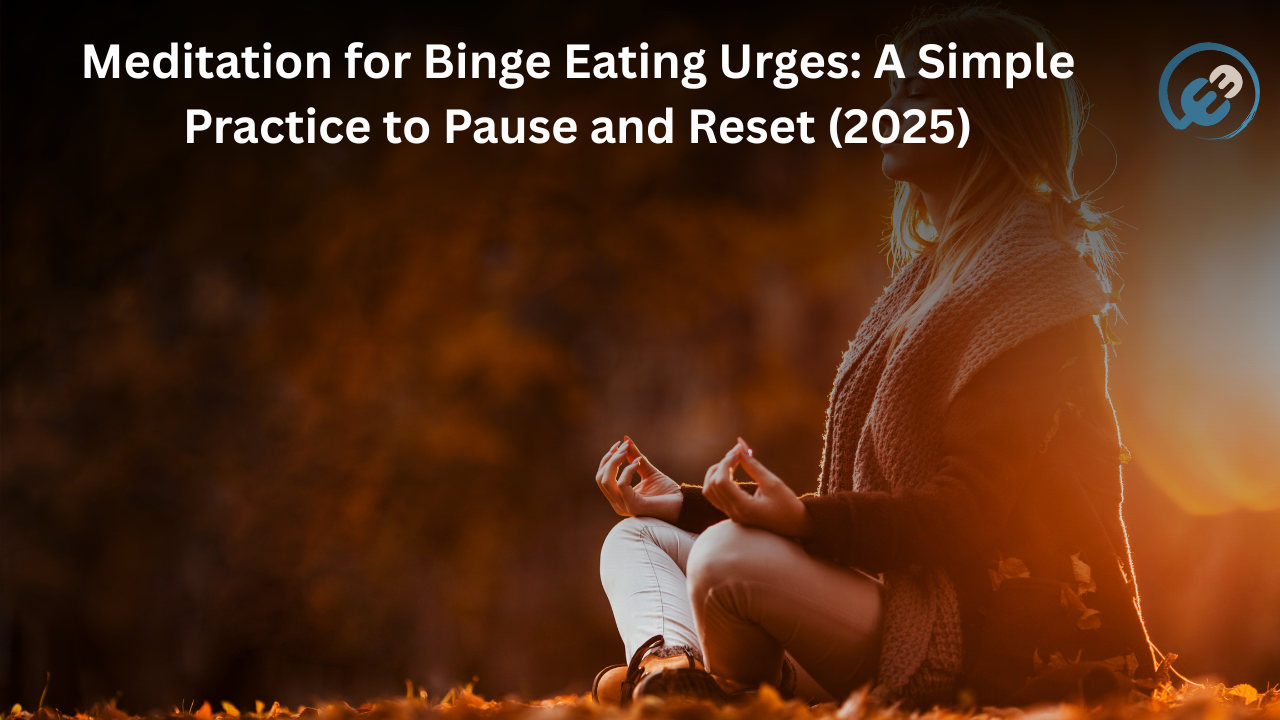
There’s a moment—maybe you’ve known it—where the urge to binge eats away at everything else. You see yourself heading to the kitchen, heart racing, mind foggy. You tell yourself, “Just one bite.” But inside, something deeper is crying out: Please, let me feel okay—just for a second.
If that moment feels familiar, you’re not alone.
These urges don’t mean you’re broken. They’re often the nervous system’s way of crying out for safety, connection, or relief. Meditation can offer not a fix—but a pause. A small, sacred space to reset. And sometimes, that space is enough to interrupt a pattern long enough for compassion to take root.
In this article, we’ll explore how meditation for binge eating urges can become a simple, accessible practice that offers both relief and insight. If you’re ready to understand your urges instead of fighting them—and maybe even learn to trust yourself around food again—this gentle guide is for you.
Curious about your relationship with food? Our free quiz can offer some gentle insight.
Why Binge Eating Urges Feel So Overwhelming
Before we dive into meditation, let’s honor the reality: binge urges aren’t just “bad habits.” They’re often the body’s cry for regulation.
Here’s what might be happening under the surface:
- Emotional suppression: When we push down grief, shame, or loneliness, the body often turns to food for release or distraction.
- Nervous system dysregulation: If you grew up in chaos, neglect, or pressure to “be good,” your body might toggle between freeze, shutdown, and fight responses—binging is one way to discharge that energy.
- Cultural and relational conditioning: Diet culture teaches us that “being in control” is a virtue. So when we lose control, we blame ourselves rather than seeing the deeper patterns.
- Shame cycles: Binging can momentarily numb pain—but the shame that follows only fuels the next binge. This isn’t weakness. It’s a cycle of pain and protection.
In one study, nearly 62% of individuals with binge eating disorder reported using food to numb emotional distress (Leehr et al., 2015). This isn’t about willpower. It’s about survival.
That’s where meditation comes in—not as a cure, but as a way to feel safe in your own body again.
What Is Meditation for Binge Eating Urges?

Meditation, in this context, isn’t about emptying your mind or achieving peace. It’s about learning to pause.
When an urge hits, most of us are flooded. Our thoughts race, our bodies tense, and all we can feel is the need. Meditation can create a small pocket of stillness in the storm. Not to resist the urge, but to meet it with curiosity.
What this might look like:
- One minute of breathing before walking to the fridge
- Placing your hand on your heart and whispering, “This is hard. And I’m here.”
- Visualizing your future self who feels free and at peace, just for 10 seconds
These aren’t interruptions—they’re acts of devotion.
“When I started meditating, it wasn’t to stop bingeing. It was to stop hating myself when I did.” —Sarah, 33
By learning to sit with rather than fight against the urge, we begin to loosen its grip.
If you want to understand the deeper stages of recovery, our Enlighten Eats Course explores the root causes of disordered eating with compassion and clarity. Learn more here.
A Simple 5-Minute Practice You Can Do Anywhere

Here’s a gentle practice to try the next time you feel an urge rising. You don’t need to be on a cushion. You don’t need to close your eyes.
You just need a willingness to be here, now.
The Pause-and-Reset Meditation
- Name the Moment
Whisper to yourself: “This is an urge.” That’s it. Naming it breaks the trance. - Feel the Ground
Notice your feet. Press them gently into the floor. Let the ground hold you. - Place a Hand on Your Body
Chest, belly, cheek—wherever comfort lives. Offer touch as a form of grounding. - Breathe in for 4, Hold for 2, Out for 6
Do this three times. Slowly. Gently. Like you’re exhaling the pressure, not the urge. - Ask, Without Needing an Answer
“What do I actually need right now?”
Not to fix—just to listen.
Even if you binge afterward, this pause matters. Over time, it becomes a new kind of muscle: awareness, not avoidance.
Meditation as a Form of Self-Compassion
Meditation doesn’t make the urges go away. But it transforms your relationship to them.
Imagine a crying child. One approach is to yell or walk away. The other is to kneel beside them and listen. Meditation is that kneeling. That listening. Even if the child still cries, they’re no longer alone.
You deserve that kind of presence—with yourself.
“Before, I’d binge and spiral into shame. Now, I can pause. Sometimes I still eat—but I also cry, breathe, and write. And that changes everything.” —Jon, 28
If you’re not sure where to begin, our Mindful Meal Journal & Scheduling App can guide you with gentle prompts and practices that align with your rhythms.
When Meditation Feels Impossible

Sometimes, the body is too activated for sitting still. That’s okay. Meditation doesn’t have to mean silence. It can mean:
- Taking a mindful walk and naming five things you see
- Singing to yourself softly while breathing deeply
- Journaling one word over and over until the noise settles
Stillness doesn’t always mean quiet. Sometimes it just means choosing not to abandon yourself.
Our 1:1 coaching can help you find practices that meet you where you are. If you’re ready for personalized guidance and support, you’re not alone—learn more here.
Healing Happens in Layers: You Are Not Failing
You might try meditation once and still binge. That doesn’t mean it didn’t work.
Healing is not linear. It’s relational. Layered. Sometimes messy.
Some days, the best you’ll do is pause for two breaths. That matters.
Some weeks, you’ll feel like you’re back at square one. You’re not.
Each moment of awareness is a thread being rewoven. Into trust. Into safety. Into wholeness.
There’s no finish line—only a deepening into yourself.
Conclusion: You Deserve to Be With Yourself
Meditation for binge eating urges isn’t a magic fix. It’s a form of remembering: that you are here, that you are worthy, and that your body is not the enemy.
Your urges are not shameful. They’re stories—of pain, of need, of survival. And they can be listened to with love.
So pause. Breathe. Place a hand on your heart. And remember:
You don’t have to fight the wave. You can ride it—with presence, with grace.
Curious what your patterns around food might be pointing to? Take our free quiz to explore with compassion.