
“I don’t think I’m sick enough.”
Even when you’ve skipped meals for weeks. Even when hunger feels like power, even when your whole life revolves around numbers — calories, weight, steps — and the thought of eating “too much” feels unbearable.
Maybe someone mentioned the term “anorexia.” So you looked it up. Read the list. Maybe you even ticked off a few boxes and still thought: “But I’m not that bad.”
This article is for that moment. For the question behind the question. Do I belong here? Do I need help? Is what I’m feeling real?
Let’s walk gently through the DSM-5 criteria for anorexia — what they are, what they mean, and what they miss — while holding space for your story, in all its complexity.
Curious about your relationship with food? Our free quiz offers insight without judgment.
Take the Eating Enlightenment Quiz
What Is the DSM-5 — and Why Should You Care?

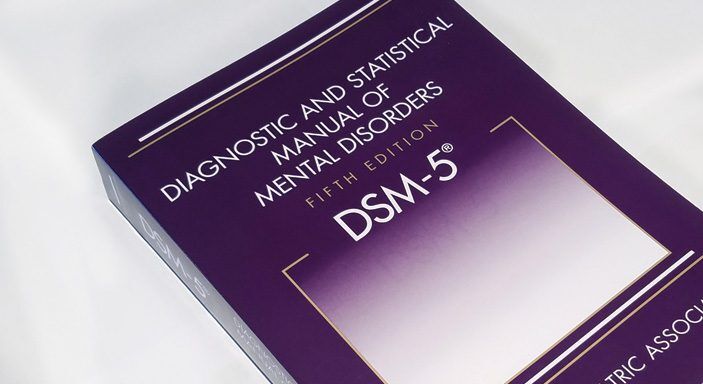
The DSM-5 (Diagnostic and Statistical Manual of Mental Disorders, Fifth Edition) is the guide mental health professionals use to classify psychiatric conditions.
It helps:
- Clinicians communicate clearly
- Insurance providers determine coverage
- Researchers define criteria for studies
But while it provides structure, it doesn’t capture everything — especially in the realm of disordered eating, where lived experience often transcends textbook definitions.
The DSM-5 isn’t a truth-teller. It’s a map. And sometimes, it’s missing roads.
The Three DSM-5 Criteria for Anorexia Nervosa
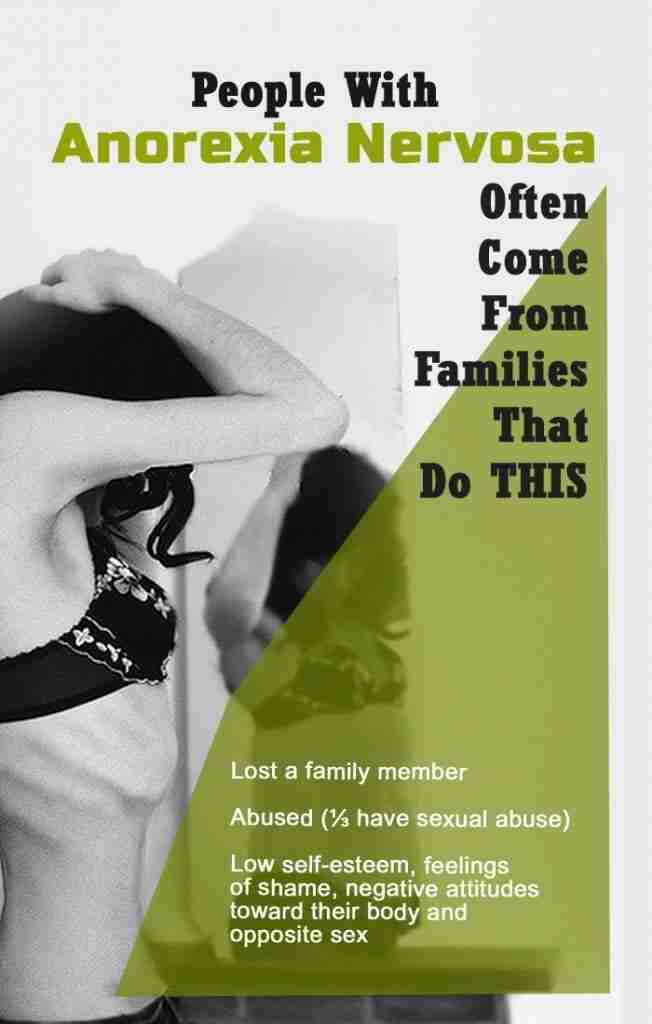
According to the DSM-5, to be diagnosed with anorexia nervosa, all of the following must be present:
A. Restriction of Energy Intake
A persistent restriction of food intake leading to significantly low body weight (in the context of age, sex, development, and health).
But here’s the issue: what is “significantly low”?
BMI is often used — but it’s flawed. Many people who restrict food, obsess about body size, and experience serious health effects may still have a “normal” or “high” BMI.
Especially those with:
- Larger-bodied ancestry
- Higher muscle mass
- A history of weight cycling
This means that many people with life-threatening restriction are missed by this first criterion alone.
B. Intense Fear of Gaining Weight
Even when underweight, there is an intense fear of gaining weight or becoming fat. Or behaviors that actively prevent weight gain.
This fear doesn’t always sound like fear.
It might sound like:
- “I just feel better when I’m empty.”
- “I don’t want to lose control.”
- “I’m healthy, not disordered.”
Sometimes, there’s no fear at all — just a sense of rightness in shrinking. That’s often the nervous system speaking — not the rational mind.
In truth, this fear can live deep in the body, shaped by trauma, shame, or a childhood where control became safety.
C. Disturbance in Body Image or Weight Perception
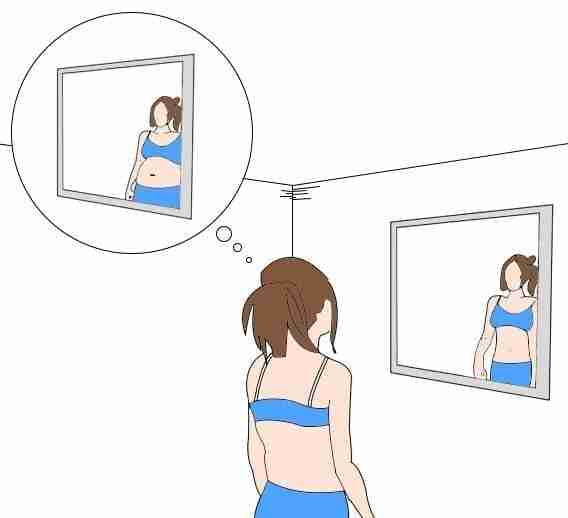
A distorted experience of body weight/shape, or denial of the seriousness of one’s current low body weight.
This is where things can get confusing.
Many people don’t consciously hate their bodies but still measure their worth through food “rules.” Or they think they’re being “healthy” when they’re actually living in constant stress, fear, or deprivation.
Others may genuinely not realize how dangerous their behaviors are. Hunger has become normal. Cold hands, fatigue, brain fog — just part of the routine.
The body has adapted to starvation. And the mind has too.
What the DSM-5 Misses: Atypical Anorexia and Beyond
If you meet all three criteria but your body weight isn’t technically “low,” you’re likely classified with Atypical Anorexia Nervosa — listed under “Other Specified Feeding or Eating Disorder” (OSFED).
But here’s the truth:
Atypical anorexia is not less serious.
It carries the same health risks, psychological distress, and mortality rates as classic anorexia (Whitelaw et al., 2014).
And yet… many people with atypical anorexia:
- Are dismissed by medical providers
- Don’t receive adequate treatment
- Blame themselves for “not being sick enough”
That dismissal becomes internalized. And that is often what keeps people stuck.
Why Diagnosis Can Feel Like Both Relief and Harm
A diagnosis can be:
- A moment of recognition
- A path to treatment
- A language to describe the chaos
But it can also feel:
- Invalidating (if you’re told you don’t meet the criteria)
- Stigmatizing (if you’re labeled too quickly)
- Identity-forming (if you begin to see yourself only through that lens)
We’ve worked with clients who said:
- “I felt like I didn’t deserve help because I didn’t have a diagnosis.”
- “Once I was diagnosed, I clung to it. I didn’t know who I was without it.”
This is the paradox: diagnosis can open doors, but it can also close hearts — if we’re not careful.
What Healing Looks Like — Regardless of Your Diagnosis

Whether or not you meet the DSM-5 criteria, your experience matters.
You may be living in:
- Constant food fear
- Hunger numbness
- Obsessive rituals
- Isolation and shame
And all of that is real.
Healing is not about fitting a box. It’s about building a new relationship with:
- Your body (with curiosity, not control)
- Your hunger (as a message, not a threat)
- Your nervous system (as an ally, not an enemy)
- Others (with trust, not performance)
This healing often requires co-regulation — being seen, held, and supported by someone who gets it.
If you’re ready for that kind of support, our coaching program offers attuned guidance rooted in trust.
You Don’t Have to Fit the Criteria to Start Healing
You don’t have to be thin. Or diagnosed. Or sure.
You just have to be willing to ask the question:
What if I deserve to feel at home in my body?
That’s enough.
That’s the beginning.
Not ready to talk to someone? Start with our Mindful Meal Journal App — a quiet, compassionate space to check in with your body and feelings.
Conclusion: The Criteria Are a Tool — You Are the Truth
The DSM-5 criteria for anorexia can be helpful. They can offer clarity. They can save lives.
But they are not the truth of who you are.
You are not your diagnosis.
You are not your restriction.
You are not broken.
You are someone who adapted to survive. And now, maybe… you’re ready to live.
If that’s where you are, we’re here. Take the first step — no pressure, just permission.