

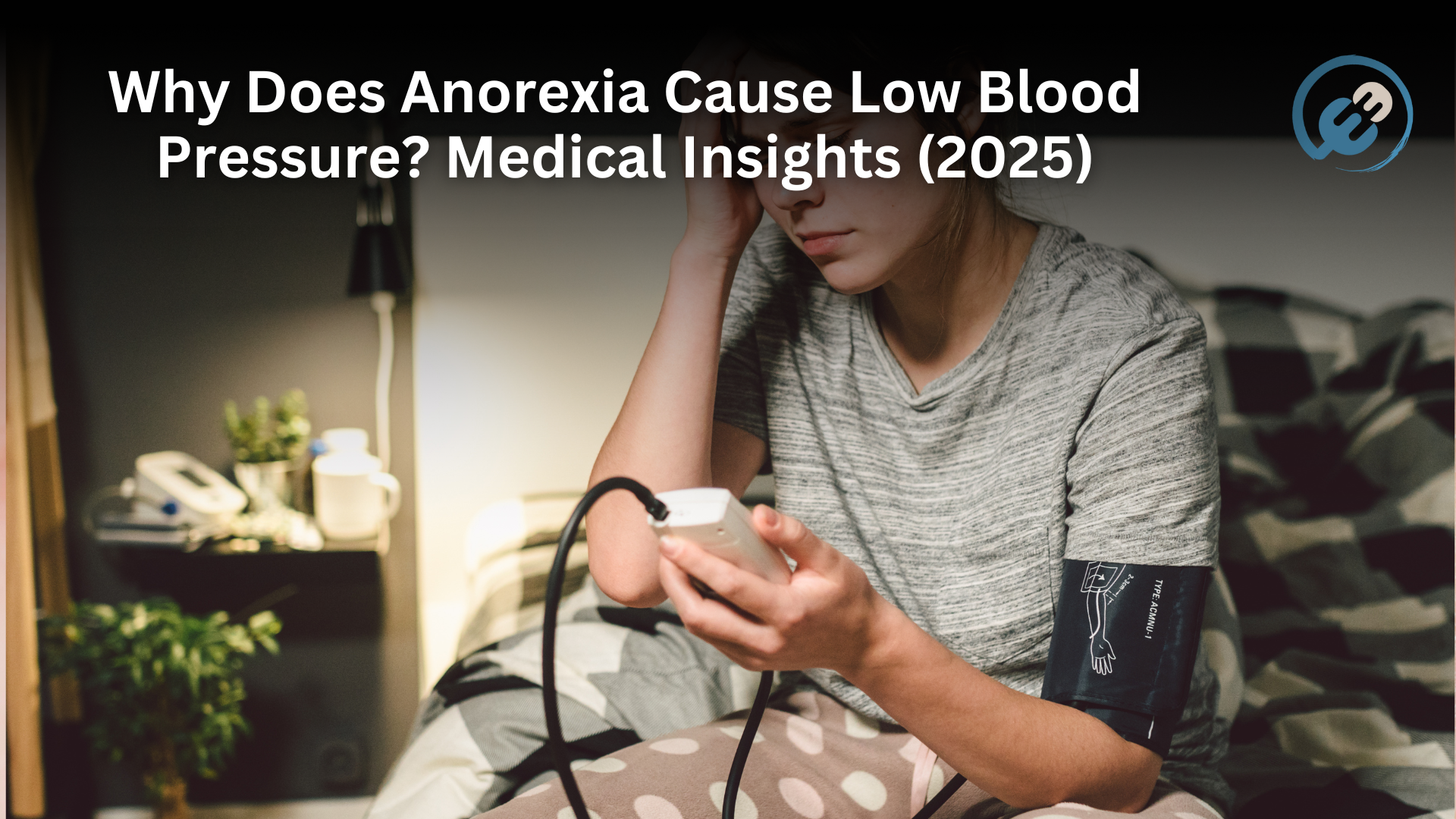
There’s a stillness that feels strange.
You stand up too fast — and the world tilts.
Your heart races, then slows again.
Maybe it feels like your body is disappearing from the inside out.
Low blood pressure isn’t just a symptom. It’s a signal — a quiet plea from your body that it’s working too hard with too little.
In the context of anorexia, low blood pressure (or hypotension) is more than a number on a medical chart.
It often reflects a deeper story of survival, depletion, and the body’s desperate attempt to protect itself in the face of ongoing stress and starvation.
This article will walk you through what happens physiologically, emotionally, and relationally when anorexia impacts your cardiovascular system — particularly your blood pressure.
And if you’re here because you’re worried, curious, or simply ready to listen to your body in a new way, you’re not alone.
👉 Take our free quiz to gently explore your relationship with food.
👉 Learn more about the root causes of restriction and recovery in our Enlighten Eats course.
What Is Low Blood Pressure — and Why Does It Matter in Anorexia?

Low blood pressure (hypotension) is defined as a resting blood pressure reading below 90/60 mmHg. It often comes with symptoms like:
- Dizziness or fainting
- Blurred vision
- Fatigue or weakness
- Cold hands and feet
- Brain fog
- Irregular heartbeat
In someone with anorexia, these signs can feel eerily familiar — not because they’re rare, but because they’re often ignored or normalized.
But they’re not “just in your head.” They are real, measurable signs of a body running on empty.
In a study published in Current Opinion in Pediatrics, researchers noted that bradycardia and hypotension are among the most consistent physiological markers of anorexia nervosa, especially in adolescents (Golden et al., 2003).
🧠 Worldview framing: These are not random symptoms. They are the body’s wisdom — conserving energy, slowing circulation, and prioritizing survival over speed.
Why Does Anorexia Cause Low Blood Pressure?

Here’s a closer look at the biological cascade that happens in the body:
1. Heart Muscle Shrinkage
Malnutrition causes the heart muscle to weaken and shrink. With less force behind each heartbeat, blood pressure naturally drops.
2. Dehydration
Low fluid intake, vomiting, or laxative use can lead to dehydration — reducing blood volume and making it harder for the heart to pump effectively.
3. Electrolyte Imbalance
Anorexia often leads to imbalances in potassium, sodium, and chloride, which affect how muscles (including the heart) contract and relax.
4. Hormonal Shifts
The body in starvation mode increases cortisol and suppresses thyroid hormones. These changes lower metabolism — and blood pressure along with it.
5. Autonomic Nervous System Suppression
Long-term starvation blunts the body’s stress response. The sympathetic nervous system (your “fight or flight” mode) becomes muted, resulting in a baseline state of low energy, low arousal — and low blood pressure.
How Does It Feel to Live with Low Blood Pressure?
It’s not just a medical condition. It’s a felt experience — one that many people don’t even realize is connected to their eating patterns.
You might feel:
- “Foggy — like I’m moving underwater.”
- “Like I’m here, but not quite.”
- “Terrified of fainting in public, so I stay home.”
This isn’t laziness. It’s a shutdown response — the body pulling back to protect you from overstimulation. Many people with anorexia report feeling emotionally blunted, socially withdrawn, or chronically exhausted — all symptoms linked to dysregulated blood pressure and nervous system collapse.
🌀 Nervous system lens: What looks like apathy is often hypoarousal — a freeze response. The heart slows. Vision narrows. Sensation dims. You’re surviving, not thriving.
The Medical Risks of Chronic Hypotension in Anorexia
Low blood pressure might seem harmless at first, especially compared to other symptoms. But over time, it can lead to:
- Cardiac atrophy (weakened heart muscle)
- Fainting injuries
- Hypoperfusion of the brain (less oxygen delivered)
- Kidney stress
- Sudden cardiac arrest
Even if you feel “fine,” chronically low blood pressure puts strain on every organ system. And when combined with bradycardia (low heart rate), the risk of heart failure increases significantly.
One study in The American Journal of Cardiology found that up to 80% of hospitalized anorexia patients presented with hypotension and bradycardia, reflecting systemic stress on the heart (Mehler & Brown, 2015).
Gentle Signs It Might Be Time to Seek Support
You don’t have to hit bottom to start healing.
Here are signs your low blood pressure might need medical attention:
- You frequently feel lightheaded or dizzy
- You’ve fainted, even once
- Your resting heart rate is below 60 bpm (especially below 50)
- You avoid standing for long periods
- You feel emotionally flat or disconnected from your body
If any of these resonate, it’s not about pushing harder. It’s about letting in more care.
Our Mindful Meal Journal App can help you notice patterns between eating, movement, and symptoms — gently, without calorie counting.
And our Enlighten Eats course can help you understand why your body responds this way — and how to slowly rebuild trust with food and rest.
What Healing Looks Like: From Shutdown to Safety
Recovery from low blood pressure doesn’t happen overnight. But with consistent nourishment and support, your body begins to wake up again.
What might that feel like?
- A steadier heartbeat
- Less dizziness upon standing
- Emotional aliveness returning
- Clarity in thought and vision
- Moments of warmth, even joy
Healing the heart — metaphorically and physiologically — often involves rebuilding safety: in your nervous system, in your relationships, and in your relationship with food.
And sometimes, that starts not with more effort, but with permission — to rest, receive, and remember that you are worthy of care.
Conclusion: Your Slowed Heart Is Not a Failure — It’s a Message
Low blood pressure in anorexia is not a fluke.
It’s your body doing the best it can under conditions of deprivation.
It’s trying to help.
But now, it’s asking for help in return.
You deserve more than to simply “function.”
You deserve to feel alive — present, grounded, safe.
👉 Take the quiz to explore your food patterns with compassion
👉 Use the mindful journaling app to reflect on nourishment and symptoms
👉 Join the Enlighten Eats course for root-cause recovery
👉 Consider coaching for personalized support
Your heart is not broken.
It’s asking to be heard — and held.