


Purging disorder is a lesser-known but significant eating disorder that demands attention and understanding. Characterized by recurrent purging behaviors without the presence of binge eating, it presents a complex challenge within the realm of mental health, affecting both physical and emotional well-being.
As individuals navigate the intricacies of this disorder, tools like the Eating Enlightenment Food Journal App can offer invaluable support.
The app provides crucial insights into eating patterns by helping users track and manage cravings, emotional eating, and binges. It empowers individuals to understand better and address their dietary habits.
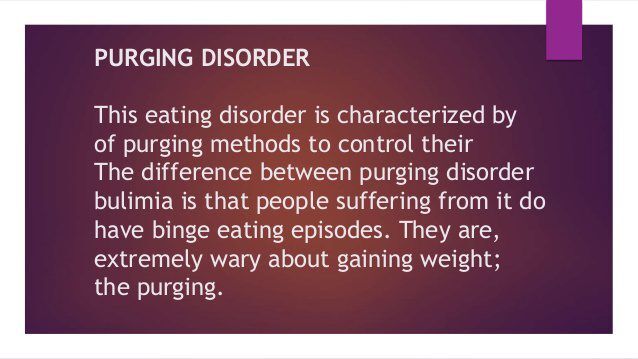
Do I Have a Purging Disorder?
Here are some of the other symptoms of Purging disorder besides binge eating.
These symptoms mirror Bulimia because the only difference is binge eating!
- You purge regularly, whether that be by:
- Self-induced vomiting
- Too much exercise
- Laxatives
- Extreme fasting or dieting
- Enemas
- Diuretics
- Extreme weight obsession or incredible fear of gaining weight
- Your weight or body shape determines your self-esteem
- You are anxious during the day and often isolate yourself
Do these eating disorder symptoms sound familiar to you?
Remember, if you have these symptoms and you binge eat, then you have what’s called Bulimia. If you don’t binge but still purge, then this is a Purging disorder.
Usually, people with Purging disorder eat average amounts of food. Yet you may feel like you are losing control despite eating regular food.
You may even feel like you binged—your belly may be full—but in reality, you ate a normal amount of food.
This suggests Purging disorder is more mental than is the case with other eating disorders.
A meta-analysis on women with Purging disorder shows distorted perceptions about food.
These women report feeling out of control even though they ate normal-sized portions, too!
What Are The Signs Of Purging Disorder?
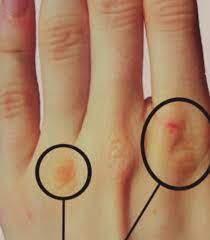
There are many negative consequences to purging!
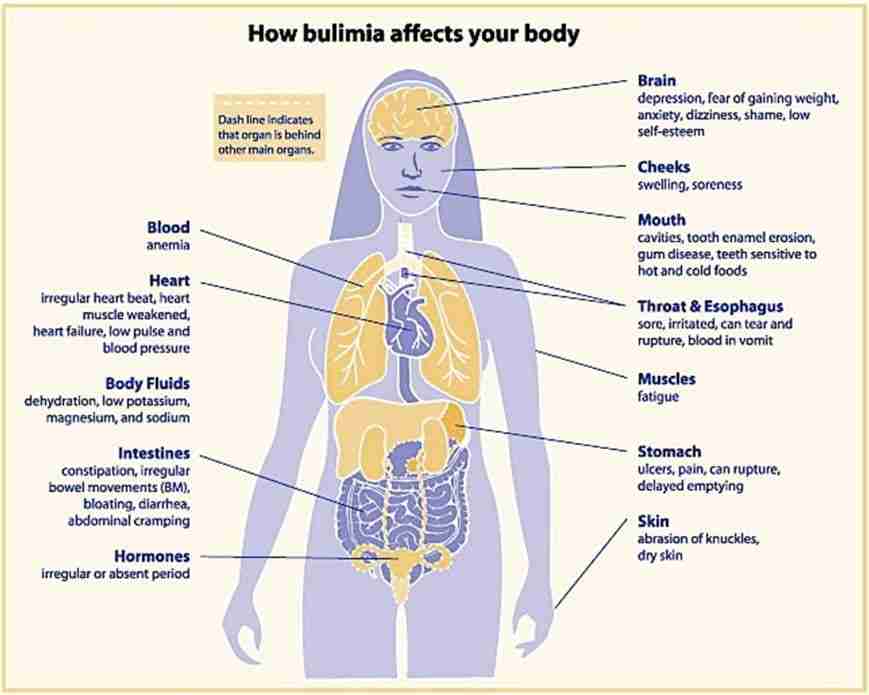
Purging affects your body in various ways.
Here are some of the signs and symptoms of purging:
- Scars on the back of your knuckles (because you bite down when purging, also known as Russell’s Sign)
- Facial bloating
- Irregular heart rhythms
- Feeling dizzy
- Teeth enamel wearing away
- Kidney problems
- Dehydration
- Nutritional deficiencies
- Hormonal imbalances
- Problems digesting
- Constipation
- Intense mood swings
How Bad Is Purging and Self-Induced Vomiting?
Purging disorder is hazardous!
Self-induced vomiting impacts your hydration, heart, and digestion.
If purging is a regular occurrence for a long time, there is a higher risk of death. Plus, purging is not even effective for weight loss!
The Bulimia hotline notes: ‘Purging isn’t effective at getting rid of calories, which is why most people suffering with bulimia end up gaining weight over time. Vomiting immediately after eating won’t eliminate more than 50% of the calories consumed— usually much less.’
How Do You Treat Purging / Bulimia Nervosa?
Deciding how to treat purging disorder is complicated.
It’s complicated because there are no randomized studies on Purging disorder treatment. See, Dr. Keel and fellow collaborators only formally identified purging disorder in 2005.
Even today, Purging disorder isn’t classified by itself but is still considered an Other Specified Feeding Or Eating Disorder (OSFED). (This term means scientists don’t know much about the disorder).
In comparison, Dr. Stunkard first noted Binge Eating Disorder in 1959, although he called the eating disorder ‘night eating.’
So, one reason for the lack of scientific research on Purging disorder treatment is the short time frame.
Plus, there aren’t as many people who get diagnosed with Purging disorder. Unfortunately, this means scientists have less incentive to study the eating disorder.
But there’s good news!
Eating Disorder Treatments Are Transdiagnostic
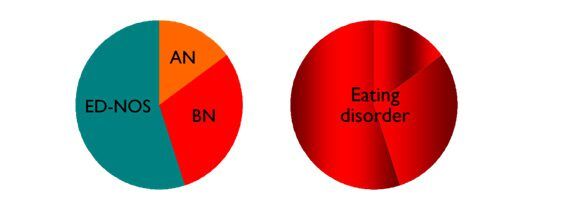
Transdiagnostic is a fancy word for ‘treated similarly.’
You treat Anorexia nervosa the same as you treat Bulimia. You treat Bulimia the same as Binge Eating Disorder.
For example, I am a Recovery Counselor at Cielo House for Eating Disorders. At Cielo, our clients struggle primarily with Anorexia nervosa, but we see all types of eating disorders.
However, our eating disorder treatment program is nearly identical for all eating disorders. Of course, different emphases are required for each client.
But I would say treatment for eating disorders is ‘transdiagnostic.’
This means you can breathe a sigh of relief. Treatments for other eating disorders likely work well for Purging disorders, too!
Cognitive Behavioral Therapy – Eating Disorder (CBT-E) has shown tremendous promise for Eating Disorders.
CBT-E works with the cognitive mental problems behind Purging Disorder.
Treating The Root Cause Of Eating Disorders

It might seem like bingeing, restricting, or purging are way different problems. How would eating disorder treatment work across different issues?
Well, it turns out there are foundational mental factors behind all these problems.
Here are some of the root cognitive factors behind all types of eating disorders:
- A preoccupation with weight or body shape
- Fear of weight gain
- Being obsessed with weight loss
- Having specific triggers that elicit automatic responses, like anxiety being a trigger for eating
- Distorted perceptions about food
- Restrictive rules around food
- Self-worth tied up with weight
- Anxiety
- Depression
- History of dieting
- History of trauma
I’m sure you get the point. You treat these underlying cognitive distortions, and boom!
The eating disorder starts to go away.
Conclusion:

There isn’t a ton of scientific evidence on Purging disorder. But Purging disorder is dangerous. It can be treated with CBT-E. And it is likely other eating disorder treatments apply to Purging disorder as well.