


You told yourself it was the last time.
You felt the ache in your stomach. The shame. The numbness.
Maybe you curled into bed afterward, wondering Why did I do that again?
If you’ve been searching online, quietly whispering binge eating therapist near me, I want to first say this:
You are not broken.
You are not alone.
And help does exist — the kind that sees the whole you.
This guide is here to gently walk with you.
Not just to find a name on a screen… but to help you take a step toward real healing.
🧭 Curious about your relationship with food?
Take our free, compassionate quiz here — it’s a simple, insight-giving first step.
What Is Binge Eating, Really? (And Why It’s Not Just About Food)
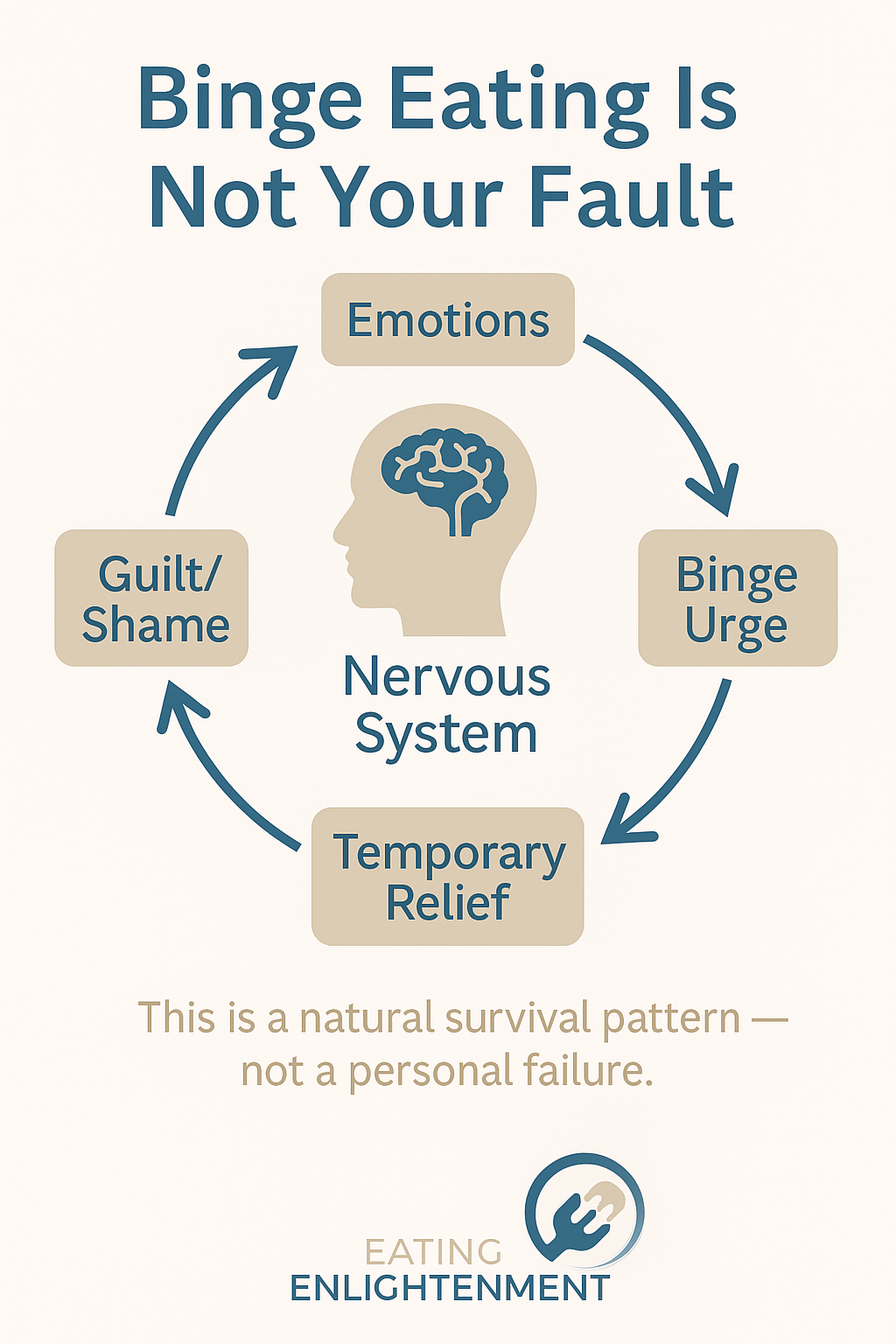
Let’s name something important:
Binge eating is not a lack of willpower.
It’s a response — to overwhelm, to unmet needs, to silence.
Often, it’s the nervous system’s last-ditch way of trying to soothe or protect us.
It might have started in childhood — maybe food was love. Or safety.
Or the only thing that didn’t yell, leave, or confuse.
We now know from research (Hudson et al., 2007) that binge eating disorder affects more people than both anorexia and bulimia combined — yet it remains widely misunderstood.
Common emotional patterns behind binge eating may include:
- Shame and secrecy
- Perfectionism or chronic stress
- Emotional numbing or trauma histories
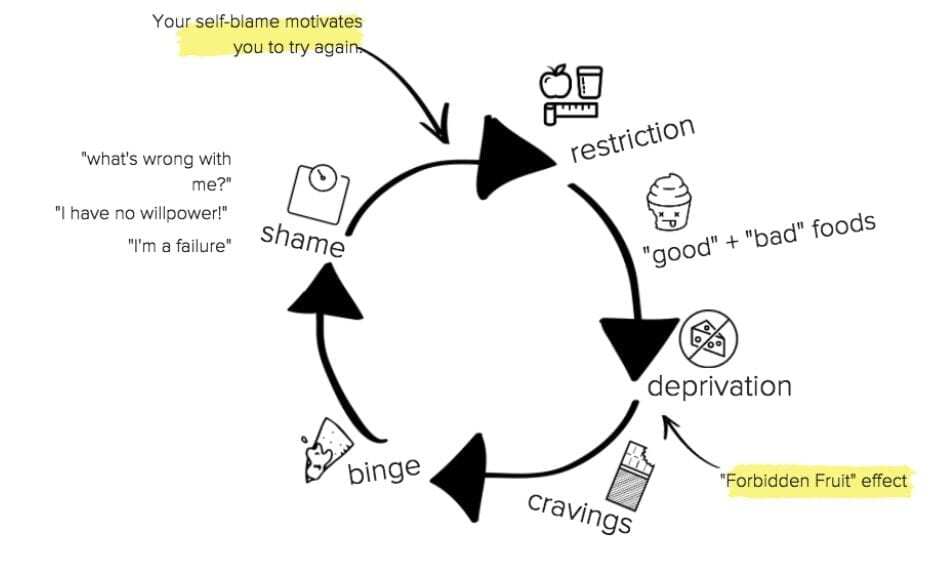
- Cycles of restriction → binge → guilt → repeat
Your body isn’t sabotaging you. It’s adapting.
And while food is part of the picture — it’s never the whole story.
Why Finding the Right Therapist Matters

Not every therapist is trained in eating disorders.
And even fewer know how to work with binge eating specifically — especially when it hides behind high-functioning lives or internalized shame.
So what makes a good fit?
Look for a therapist who:
- Specializes in eating disorders or trauma
- Uses somatic, body-based, or intuitive approaches
- Creates safety before change
- Honors your pace and doesn’t rush to “fix” you
The goal isn’t perfection.
It’s presence. It’s a space where your pain can unfold without judgment.
And often, the right therapist becomes a nervous system co-regulator — someone who helps you feel okay in your own skin, for maybe the first time in years.
How to Find a Binge Eating Therapist Near You
Here are a few gentle, real-world ways to begin:
🌐 Start With These Directories:
- Psychology Today – Filter by “binge eating” or “eating disorders”
- National Eating Disorders Association
- Local mental health clinics or nonprofit therapy centers
🗣 Ask Around (If You Feel Safe)
Sometimes a recommendation from someone you trust can help remove the stigma or fear.
💻 Consider Virtual Options
In 2025, telehealth is more accessible than ever — and many therapists offer flexible, compassionate care remotely.
🌱 Pro Tip: When reaching out, ask: “Do you have experience supporting clients with binge eating?”
Notice how your body feels as they respond. You’re allowed to trust your gut.
What to Expect in Therapy: Safety, Shame, and Soft Beginnings
Walking into that first session might feel like walking into fire.
Or fog.
Or both.
But the right therapist won’t ask you to explain everything at once.
They’ll invite you to land — slowly, gently — in a space where your defenses can loosen without fear.
Common themes in early sessions:
- Unpacking the binge/restrict cycle
- Exploring emotional roots and body awareness
- Building new tools for self-regulation
- Naming shame — not to fix it, but to witness it
Many clients describe therapy not as “working on food” — but as slowly reclaiming themselves.
Their voice. Their rhythm. Their enoughness.
Barriers to Access: When Therapy Feels Out of Reach
Maybe therapy feels financially out of reach.
Maybe your insurance makes it nearly impossible.
Maybe you’re just… not ready for one-on-one vulnerability yet.
This is so valid.
Access is real. And unjust. And shaped by more than just motivation.
Here’s what you can do instead — without shame:
- Use our free Mindful Meal Journal & App to track urges and triggers
- Explore our Enlighten Eats Course for a self-paced healing container
- Try group coaching for lower-cost, compassionate support
- Check for local universities offering sliding-scale therapy with student clinicians
You don’t have to do everything at once.
You just have to begin — from wherever you are.
Alternative Supports: Journaling, Courses, and Gentle Coaching

Sometimes, healing begins before therapy.
That’s why we created tools that meet you where you are.
📝 Try Our Mindful Meal Journal
Track your meals without judgment. Notice patterns. Connect dots. Gently.
📚 Learn in Our Enlighten Eats Course
Understand how trauma, hunger, and shame shape eating. Reclaim curiosity.
💬 Join a Coaching Call
Our trained coaches listen, reflect, and offer tools rooted in non-diet, body-respecting care.
None of these replace therapy.
But they can bridge the gap. Open a door. Spark relief.
You are not lazy. You are not weak. You are overwhelmed. And that deserves care.
Is This the Right Time? How to Know You’re Ready
Ask yourself:
- Do I feel stuck in cycles I can’t break alone?
- Do I feel a longing to be more free in my body?
- Am I ready — even just a little — to be seen?
You don’t need full certainty.
Just a flicker of willingness. That’s where it all begins.
And if now isn’t the time? That’s okay too.
This article will still be here.
So will we.
Conclusion: You Are Not Broken — And You’re Not Alone
If you’ve searched “binge eating therapist near me,”
I want you to remember this:
The urge to binge isn’t proof of your failure.
It’s proof of your need. For safety. For space. For softness.
You can begin healing today — with or without a therapist.
You can begin by breathing.
By noticing.
By letting someone — even just a voice in a blog — say:
You are good. You are whole.
And you are not alone anymore.
🧭 Ready for a gentle first step?
Take our free food relationship quiz or download the Mindful Meal Journal App.
We’re here with you — every messy, meaningful step of the way.