


There’s a moment, after a binge, that feels like falling. The room spins with shame. You tell yourself, This was the last time. But it’s not. And a quiet fear rises: What if I never stop? What if I’m too broken to heal?
If you’ve felt this way, please hear this—you are not alone.
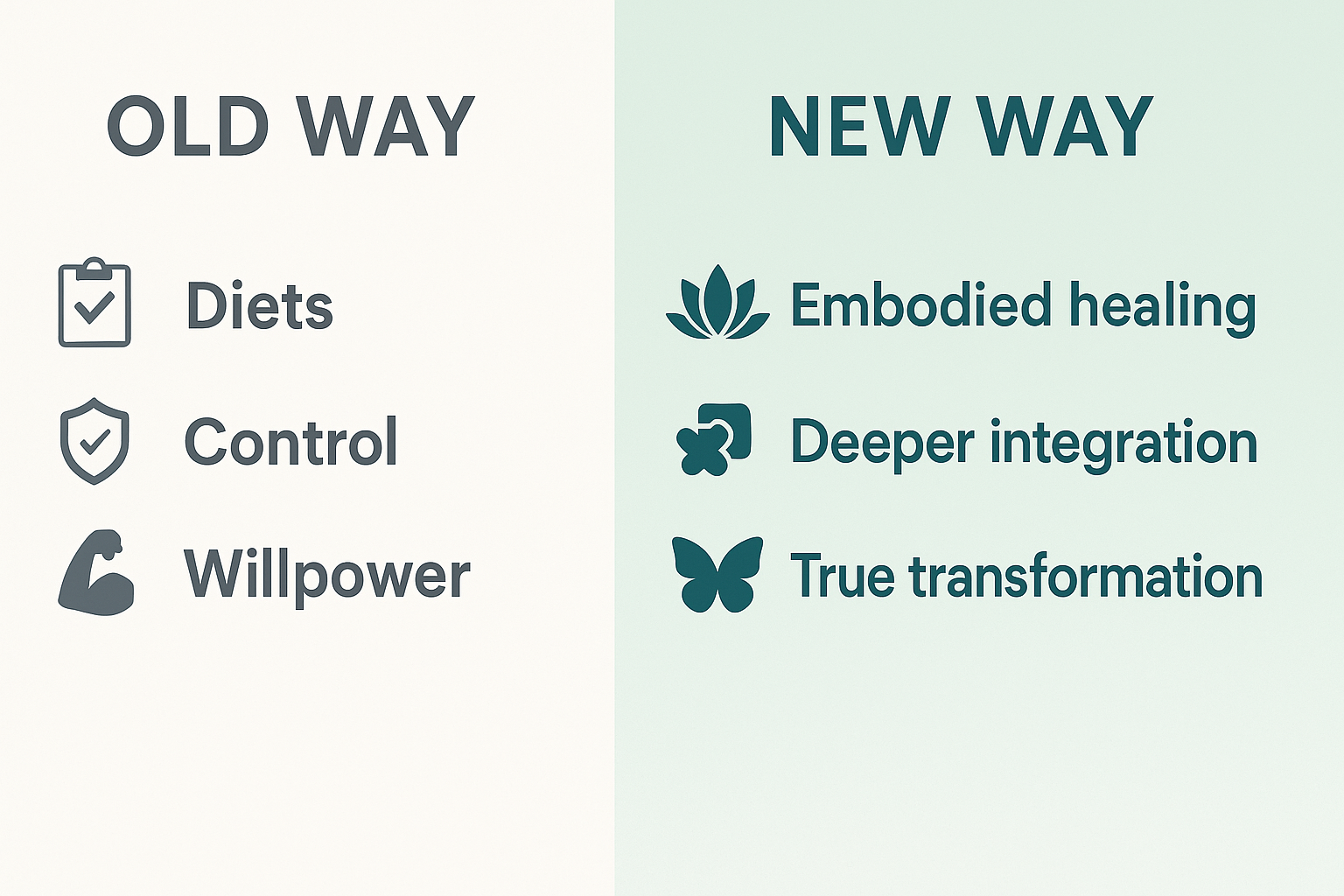
Binge eating isn’t about a lack of willpower. It’s often about pain, overwhelm, and unmet needs. The stories shared in this article come from people who once felt lost in that same cycle—and who found a way out.
These are not polished, perfect success tales. They are messy, nuanced, human stories. But they are full of truth, tenderness, and hope. Alongside them, you’ll find grounded tools and next steps—like Eating Enlightenment’s quiz, journal app, course, and coaching—to guide your own healing.
Wondering where to start?
Take our free quiz to gently explore your relationship with food.
Emma’s Story: “Food Was the Only Thing That Listened”

Emma grew up in a home where emotions weren’t talked about. She learned early: don’t cry, don’t complain, just smile. But inside, she was overwhelmed. By high school, food became her refuge.
“I didn’t even know I was binge eating,” she shared. “I thought I just had no control.”
What helped Emma wasn’t another diet—it was therapy that focused on emotional safety. Her therapist helped her understand how bingeing was a coping mechanism. Together, they practiced identifying triggers and slowing down when the urge hit.
She started writing letters to herself after each binge—not to scold, but to understand. Slowly, her episodes became less frequent. Eventually, she started choosing to feel rather than numb.
Emma’s Key Shifts:
- She stopped labeling food as “good” or “bad”
- She learned her binges had a purpose—emotional regulation
- She replaced judgment with curiosity and care
Journaling helped Emma reconnect with her body.
You can try our Mindful Meal Journal & App to begin gently noticing your patterns.
Jordan’s Story: Breaking Free from “All or Nothing”
Jordan’s binges always followed a familiar script: extreme dieting, followed by loss of control. The more he restricted, the more intense the rebounds became.
“I’d be good all week. Then Friday night, I’d eat everything in sight. And hate myself for it.”
For years, Jordan blamed himself. But things changed when he learned about nervous system dysregulation—how bingeing wasn’t weakness, but a survival response. His body was doing what it needed to feel safe.
He started eating more regularly. He introduced play—yes, actual play—into his life. Movement that wasn’t punishment. Food that wasn’t earned.
He began treating himself not like a machine, but like a human being.
Ready to explore the emotional roots of bingeing?
Our Enlighten Eats Course guides you through the deeper why behind your eating patterns.
Priya’s Story: Recovery Isn’t Linear—and That’s Okay
Priya had gone 18 months without a binge. She felt proud—and then it happened again.
“I thought I had failed,” she said. “I spiraled into shame. But then I remembered—this is part of healing.”
Instead of starting over, Priya picked up where she left off. She reached out to her coach. She reviewed her journal. She ate breakfast the next day.
That was a turning point.
Relapse wasn’t the end. It was a reminder that healing is a spiral, not a straight line. That every time she met herself with grace, she was actually growing stronger.
A 2020 study in the International Journal of Eating Disorders emphasized this truth: self-compassion significantly reduces relapse rates and improves long-term outcomes in BED recovery (Kelly & Carter, 2020).
Priya’s Insights:
- Relapse is feedback, not failure
- Structure helps, especially around meals and emotions
- Gentle re-engagement is more powerful than “starting over”
Coaching gave Priya the relational safety she needed.
You can explore 1-on-1 coaching if you’re ready for personalized support.
What Do These Stories Have in Common?

These journeys are unique, but they share core patterns that reflect the deeper truths of recovery:
1. Bingeing Has Roots Beyond Food
Each person discovered that bingeing was never really about food—it was about unmet needs, emotional overwhelm, and survival.
2. The Nervous System Plays a Key Role
When safety is missing—physically or emotionally—the body often turns to bingeing to regulate. Slowing down and feeling safe changes everything.
3. Compassion Changes the Script
Not one person healed by being harder on themselves. They healed by learning how to meet themselves—with patience, not pressure.
Tools That Can Support Your Journey Today
You don’t have to wait to feel “ready.” You just need a gentle next step. Here are some resources that helped others—and may help you too:
- 🌿 Free Quiz: Discover where you are in your recovery journey
- 📝 Meal Journal App: Track hunger, feelings, and patterns without shame
- 🎓 Enlighten Eats Course: Learn the stages of recovery and the deeper roots of bingeing
- 💬 Coaching Support: Get personalized guidance and co-regulation from a compassionate coach
Conclusion: Your Story Is Still Being Written
If these stories spoke to you, know this: there is nothing wrong with you.
You are not too far gone. You are not too late.
Healing doesn’t happen all at once. It happens in quiet decisions. In messy moments. In your willingness to try again—not perfectly, but presently.
Let these stories be seeds of hope in your own soil. Let them remind you: it’s possible. And maybe… just maybe, your story is already beginning to change.
\Ready to take your first (or next) step?
Take our free quiz to explore what’s underneath your eating patterns and what healing could look like.