

It often starts with a promise: I’ll be better tomorrow.
But when tomorrow comes, and the binge happens again, the spiral begins. Shame. Blame. Tight control. Then, again, release.
If you’re reading this, chances are you’re caught in that painful loop — not because you’re broken, but because you’re overwhelmed.
Binge eating isn’t a failure of willpower.
It’s a response to pain, confusion, and unmet needs.
And what if the thing you’ve been taught to use — harshness, pressure, perfection — is the very thing making it worse?
This is where self-compassion comes in. Not as a fluffy idea. But as a vital, healing force. One that rewires your nervous system, heals shame, and opens a path forward.
Curious about your relationship with food?
Take our free quiz here for gentle insight and support.
Let’s explore how being kind to yourself isn’t giving up — it’s the beginning of something profoundly different.
Why Self-Compassion Matters in Binge Eating Recovery

The Cycle of Shame and Restriction
For many, binge eating is fueled by internal shame. After an episode, the mind attacks:
- Why did I do that again?
- What’s wrong with me?
- I’ll be strict tomorrow.
This pattern creates internal threat. Your body, wired for survival, flips into fight-or-freeze. Restriction follows, then bingeing, and the cycle tightens.
Self-compassion breaks this loop.
Instead of threat, it offers safety.
Instead of judgment, it brings understanding.
What Self-Compassion Actually Looks Like
Self-compassion isn’t letting yourself off the hook. It’s holding your humanity with care.
It might sound like:
- “This is hard, and I’m still learning.”
- “No wonder I ate that — I was overwhelmed and lonely.”
- “What does my body really need right now?”
Self-kindness doesn’t mean you never set boundaries. It means the voice inside stops sounding like a drill sergeant.
In one study, women high in self-compassion had significantly fewer disordered eating symptoms than those high in self-criticism (Kelly & Carter, 2015).
You don’t need to earn compassion. You need to receive it.
From Self-Hate to Self-Understanding: A Nervous System Shift

Have you ever felt like something takes over during a binge?
That “something” is often a survival response.
When the nervous system is overwhelmed — by loneliness, stress, perfectionism — it shuts down higher reasoning. You go into autopilot.
It’s not weakness.
It’s biology.
And compassion can regulate what shame dysregulates.
What Helps Regulate the System?
- Gentle breathing before or after eating
- Touching your chest or holding your belly with warmth
- Naming your emotions without fixing them
- Journaling after an episode with curiosity, not criticism
These are all nervous system-informed ways of saying: I am here. I am listening.
Want a structured way to support this shift?
Explore our Mindful Meal Journal and scheduling app to create a rhythm of compassion.
Cultural Conditioning: Where the Harshness Began
Many of us learned to be harsh because we were taught:
- Thin = good
- Control = strength
- Hunger = bad
- Feelings = weakness
These messages came from media, school, family. Often with love, but distorted by fear.
We internalized a belief: If I’m hard enough on myself, I’ll be safe.
But that inner critic never delivered the safety it promised.
And now — paradoxically — being kind feels unsafe. Like laziness. Like giving up.
But what if safety was never supposed to feel like tension?
What if healing feels more like exhaling?
This is not about blaming the past. It’s about choosing differently now.
Want to dive deeper into the roots of disordered eating?
Learn more in our Enlighten Eats course — a compassionate guide to food, body, and identity healing.
What to Say to Yourself After a Binge

This is where it gets practical. Imagine you’ve just binged.
Instead of panicking, what if you practiced a script like this:
“That was hard. I notice I feel tight, ashamed, maybe numb. I’m going to sit for a moment. Bingeing doesn’t mean I failed — it means something inside me needed soothing. I wonder what I needed earlier today. I’ll listen now.”
This moment — right here — is where healing begins.
You don’t have to promise to “never binge again.”
You just have to stay.
Tips for Post-Binge Self-Compassion:
- Take a warm shower or bath
- Go outside and breathe, slowly
- Journal about what was happening before the binge
- Talk to someone safe
- Make yourself a cup of tea, without rushing to fix anything
You may not stop bingeing immediately. That’s okay. Healing takes time.
But each act of compassion is a step toward wholeness.
Why Kindness Works Better Than Control
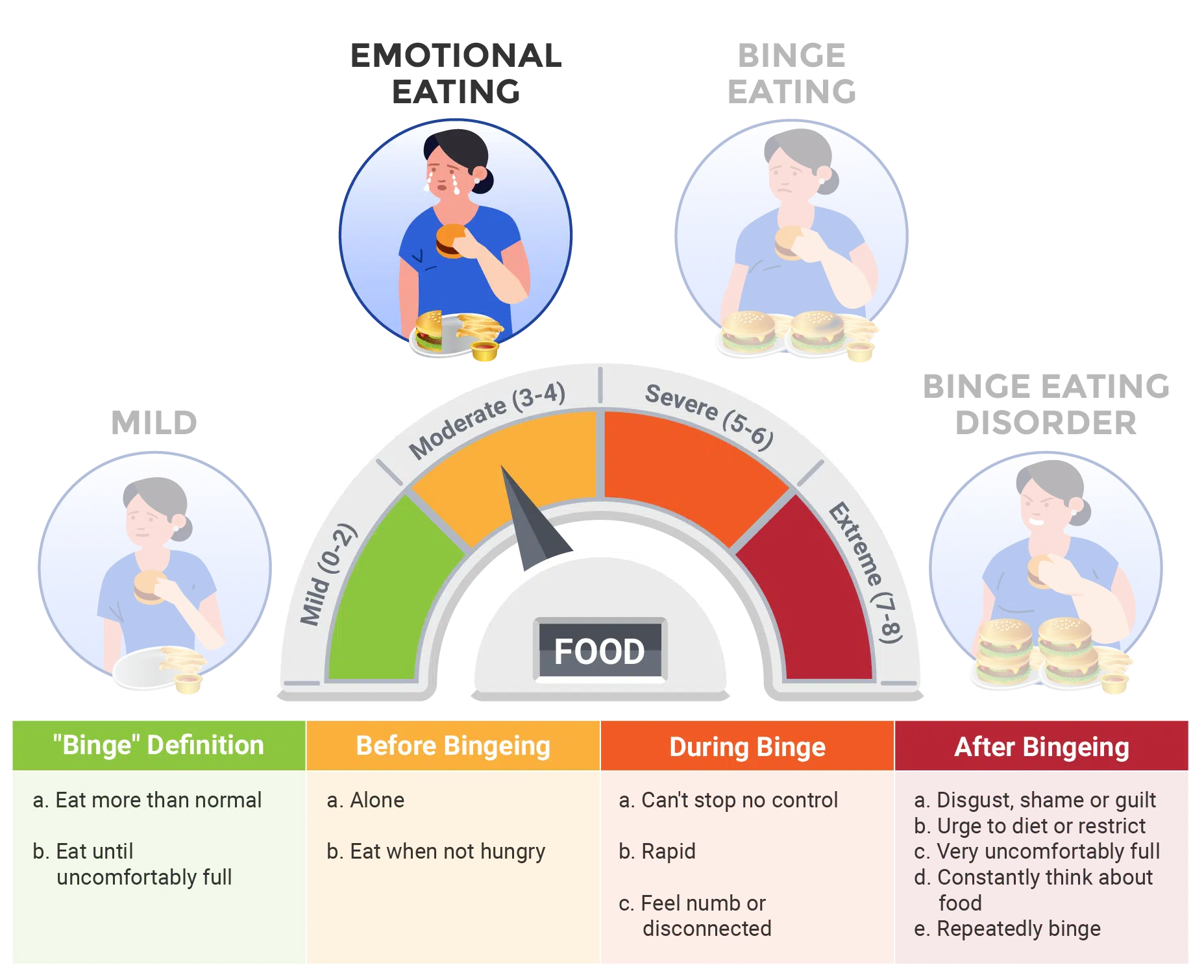
Here’s the paradox:
The more you try to control yourself, the more your body rebels.
Control creates fear. Fear spikes urgency. Urgency fuels binges.
Kindness, on the other hand, soothes the system. It brings you back online. It makes choices available again.
It allows your inner child, your body, your protector parts — to stop bracing.
Because now they’re finally being met with love.
Need someone to walk with you through this?
Consider our Coaching Program — trauma-informed support for your unique journey.
You Are Not Broken: A Gentle Conclusion
If you’ve struggled with binge eating, you’ve likely thought:
- I’m too much.
- I’ll never change.
- Something’s wrong with me.
But the truth is: binge eating is not who you are. It’s what happened when you didn’t know how else to cope.
Self-compassion is not a cure.
It’s a doorway.
A doorway back to yourself. Back to softness. Back to safety.
Every time you pause, breathe, and say “I’m still worthy” — you change your story.
You matter.
And you are allowed to heal.
Ready to start gently?
Take the free Eating Enlightenment Quiz and get your next small step.