

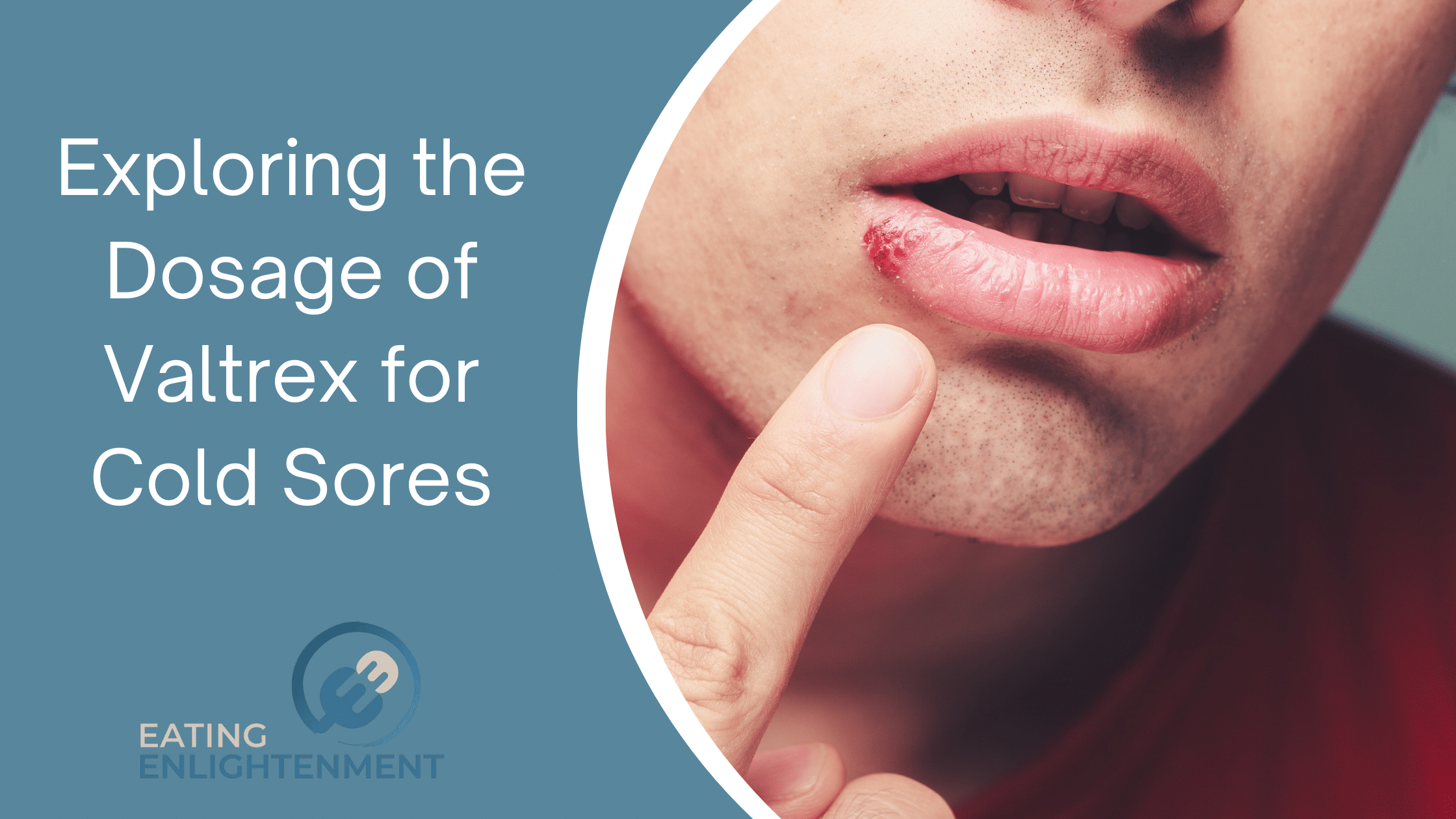
Dealing with cold sores can be frustrating and embarrassing. As someone who has battled with them many times, I understand how important it is to find the proper treatment. That’s why I’ve decided to write about Valtrex today. Valtrex is a medication commonly prescribed for cold sores, and it’s a top treatment for cold sores that I’ve personally used with great success. The challenge, however, is knowing the correct dosage to use. In this post, we’ll explore the dosage of Valtrex for cold sores and what you should consider when using this medication.
First and foremost, it’s essential to understand the purpose of Valtrex. This medication is an antiviral drug, particularly effective against the herpes virus that causes cold sores. The medication works by stopping the virus from replicating, which ultimately reduces the number of cold sores that develop. When it comes to the dosage, the standard recommendation for adults is to take 2000mg of Valtrex (two 1000mg tablets) at the first sign of symptoms, followed by another 2000mg 12 hours later. This dosage is taken twice daily for two to three days.

However, some people may require a different dosage depending on their age, health status, or overall response to the medication. For instance, if you have kidney disease, your doctor may prescribe a lower dosage of Valtrex to avoid any adverse effects on your kidneys. Being aware of these indications can be beneficial when making decisions regarding your medication.
It’s also important to note that the effectiveness of Valtrex depends on how quickly you start using it. If you wait too long before beginning the treatment, the medication may not be as successful in reducing the number of cold sores, and your cold sore outbreak could be more severe. Therefore, it’s essential to start using Valtrex as soon as symptoms develop or shortly after your doctor diagnoses you with a cold sore.
In addition to the dosage and timing of Valtrex, it’s essential to be aware of possible side effects of this medication. Common side effects include nausea, vomiting, headache, and diarrhea. While these side effects are generally mild, you should contact your doctor if you experience severe or prolonged side effects. Depending on how severe the side effects are, your healthcare provider may adjust your dosage or switch you to a different medication altogether.
Cold Sore (Herpes Labialis)
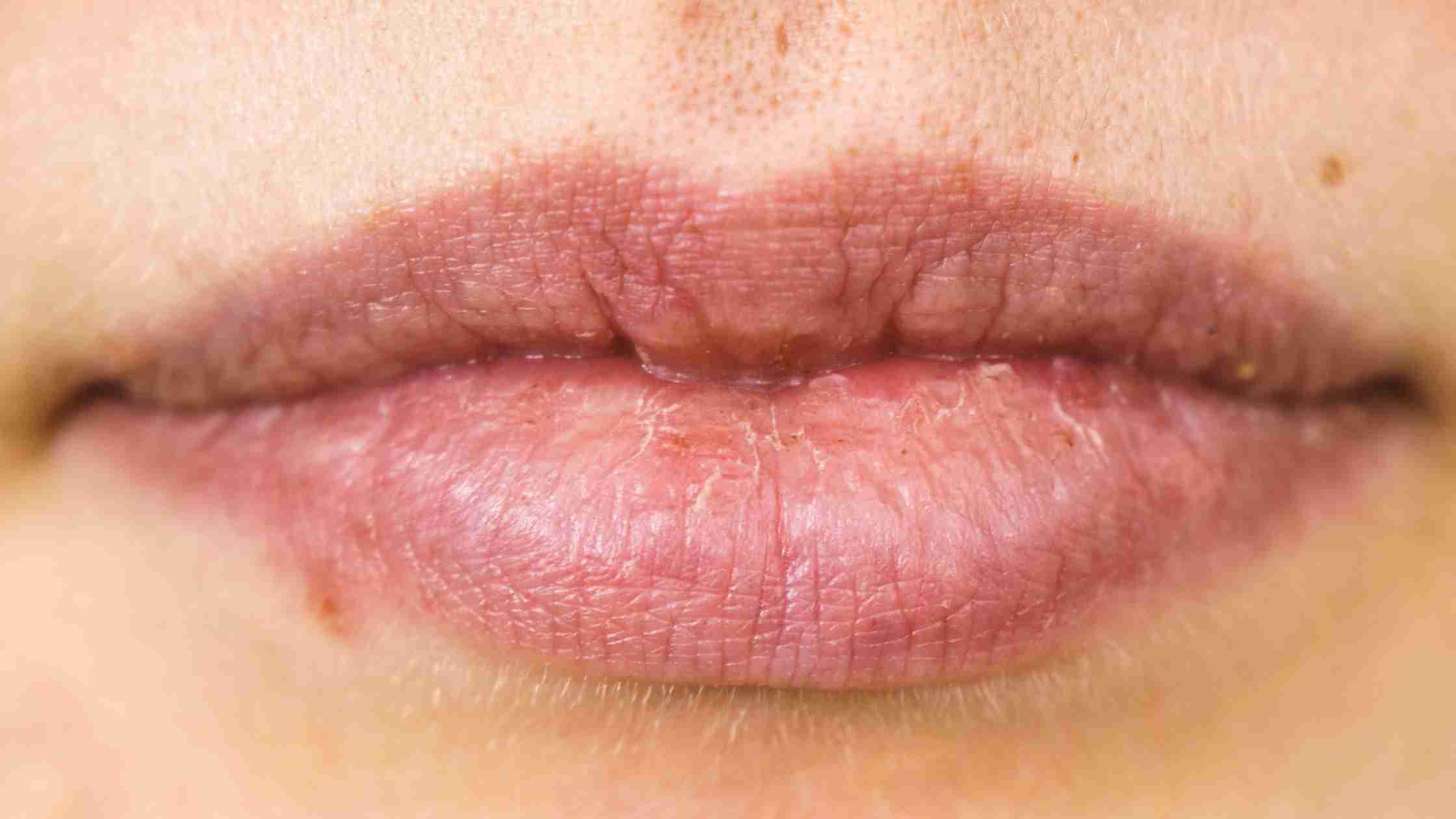
I see you’re curious about cold sores, those little blisters that sometimes pop up around your mouth. You’re not alone; many people get them from time to time. Let’s chat about what they are and how they might affect you.
Cold sores, also known as herpes labialis, are caused by a common virus called herpes simplex type 1 (HSV-1). It’s not the same as the other herpes virus you might think of – HSV-2, which usually affects different body areas.
When this little virus gets into your body, it can stay hidden in your nerve cells. Sometimes, it decides to wake up and cause a cold sore. This might happen when you’re tired, stressed, or even when you’ve been out in the sun too much.
The sore itself starts as a tingly, itchy spot. Then it turns into a blister, and finally, it crusts over. It’s not fun, but it usually clears up in a week or two.
Remember, cold sores are contagious. You can pass the virus to others through close contact, like kissing or sharing items like lip balm.
It’s okay to feel a bit upset when a cold sore appears. But remember, they’re ubiquitous, and lots of people have them. If you’re worried, or your cold sores keep returning, it’s a good idea to chat with a doctor. They can give advice or prescribe medicine to help.
Take care of yourself because you’re important. And remember, a cold sore doesn’t change who you are. You’re still you, and you’re fantastic.
Clinical Trials Experience in Adult Subjects

It sounds like you’re interested in learning about clinical trials and what adults might experience when they participate in them. That’s a critical topic, and I’m glad you’re curious about it.
Clinical trials are like extensive science experiments that help doctors, pediatric patients, and researchers determine if a new treatment or medicine works and is safe. They play a crucial part in advancing medical knowledge and patient care.
Let’s imagine you’re an adult participating in a clinical trial. What might you experience?
First, before starting, you would go through a process called “informed consent”. This is when the research team explains the study to you – what’s involved, the potential risks and benefits – so you can decide if you want to participate. They’d answer any questions you have. Remember, it’s your choice whether or not to take part.
Once in the trial, you might take a new medicine, use a new device, or follow a specific plan. The researchers will monitor your health closely. You might have more doctor visits and medical tests than usual.
Participating in a clinical trial can feel hopeful, exciting, and sometimes scary. It’s normal to feel a mix of emotions. You might be optimistic that a new treatment could help you or others. It can be exciting to contribute to medical research. But it also might feel scary because of the unknowns.
Remember, asking questions and sharing your feelings with the research team is okay. They’re there to support you. And whatever you decide, know that you’re playing a crucial role in helping us understand more about medicine and health.
Clinical Trials Experience in Pediatric Subjects
You’ve got questions about clinical trials and what they might be like for kids. That’s a big topic, and I’m glad you’re asking. Let’s dive in!
Clinical trials are how doctors and scientists test new medicines or treatments to see if they work and are safe. They’re like a big experiment, but instead of using test tubes or microscopes, they employ people who volunteer to take part.
Now, what might a child experience in a clinical trial? Like adults, before anything starts, there’s a step called “informed consent.” This is when the doctors explain everything about the trial to the child’s parents or guardians and answer any questions. Depending on their age and understanding, the child may also be included in this process.
Once the trial starts, the child might take a new medicine, try out a new device, or follow a specific plan. The doctors will closely monitor the child’s health, and there may be more doctor visits or tests than usual.
Being part of a clinical trial can bring up all sorts of feelings. It can be exciting because the child is helping doctors learn new things that could help other kids in the future. But it might also be scary or confusing because there are often many unknowns.
That’s why the child, their parents, and the doctors need to talk openly about any worries or questions. The doctors should always ensure the child feels comfortable and understands what’s happening as best as they can for their age.
Dosage Forms and Strengths

You’re curious about ‘dosage forms and strengths’ regarding medicines. I’m so glad you asked! Understanding these things is essential because they’re all about how we care for ourselves when we’re not feeling our best.
Let’s imagine for a moment. You’re sitting in your cozy living room, the lamp’s soft glow casting a warm light around. You’ve got a cup of steaming tea beside you and wrapped in your favorite blanket. But you’re not feeling well. You’ve got a cold or maybe a headache. So, you reach for the medicine bottle.
Now, this is where ‘dosage forms’ come in. That medicine could be in many different forms. It could be a tablet that you swallow with a sip of water. Or it could be a liquid you measure into a little cup. Maybe it’s a cream you rub on your skin or a patch that sticks to your arm. Each of these is a different ‘dosage form.’
Next, let’s talk about ‘strengths’. This is about how much medicine is in each dose. Do you know how some coffee is more potent than others? Medicine is similar. Some tablets might have 200 milligrams of medicine, while others have 500 milligrams. The right strength for you depends on your body’s needs to improve.
Remember, following the instructions on the medicine label or what your doctor tells you is always essential. Taking too much or too little might not help you feel better.
I hope this helps clear up your question. It’s okay if it’s a lot to take in. Health stuff can be complicated sometimes. But remember, you’re doing great just by asking questions and wanting to learn more. Take care of yourself, okay? Because you matter a whole lot.
Mechanism of Action
You’re curious about the ‘mechanism of action’ regarding medication. It’s a big phrase. But don’t worry; we’ll break it down and understand it together.
Imagine you’re on a journey, walking along a winding path in the forest. You’ve got a backpack filled with tools that you might need along the way. Now, think of your body as this beautiful forest and medicine as the tools in your backpack.
‘Mechanism of action’ is like a map for these tools. It’s a phrase scientists use to describe how a medicine works or its path through the body.
Taking a pill or spoonful of syrup is like sending a helpful tool on a journey inside your body. This medicine could do many things. Maybe it blocks pain signals from reaching your brain, like a brave warrior standing guard. Or perhaps it kills bacteria, like a knight fighting off dragons. It could even help to control how fast your heart beats, like a conductor leading an orchestra.
Each medicine has its unique path or ‘mechanism of action’. And just like every journey is different, so is every medicine’s mechanism of action.
Remember, it’s okay if all of this seems a bit complicated. Just like a forest, our bodies are complex and full of mystery. But by asking questions and seeking answers, you’re becoming the master of your health journey.
You’re doing a great job. Keep asking, keep learning, and above all, take care of the wonderful, unique person you are.
2 Genital Herpes Infections

I see you’re seeking to understand about genital herpes treatment. This can be a tricky topic, but it’s so important, and I’m proud of you for asking.
You know those moments when the sky is clouded over, and you’re waiting for a storm? That’s kind of what having genital herpes can feel like. It’s a condition that’s caused by a virus, recurrent genital herpes, sort of like an unwanted guest that shows up uninvited to your body’s party.
But let’s clear something up right away: having genital herpes doesn’t make you dirty or nasty. It’s just a health issue, like having a Valtrex for a cold sore dosage or a sprained ankle. Many people have it, even if they don’t talk about it.
When the virus decides to ‘rain,’ it causes outbreaks. These can include uncomfortable sores in the genital area. But sometimes, the virus is quiet, like a storm that’s far off in the distance. You might not even know it’s there.
Now, you might be wondering, how does someone get genital herpes? It often spreads through close, personal contact, especially during intimate moments. It’s like if you were sharing an umbrella with someone during a downpour. If they’ve got the virus, they could pass it on to you.
Is there a cure? I wish I could say yes, my friend. But right now, there isn’t one. However, some medicines can help manage the symptoms and make outbreaks less frequent. It’s like having a sturdy raincoat and boots to weather the storm.
Remember, it’s okay to feel scared or confused. Those are perfectly natural feelings. But also remember that you’re not alone. Doctors, counselors, and support groups are ready to offer help and understanding.
Your health is a journey, and every journey has its storms. But with courage, knowledge, and the right support, you can navigate through them. You’re already showing so much bravery by asking and learning. Keep going, my friend. You’re doing a fantastic job.
Herpes Zoster
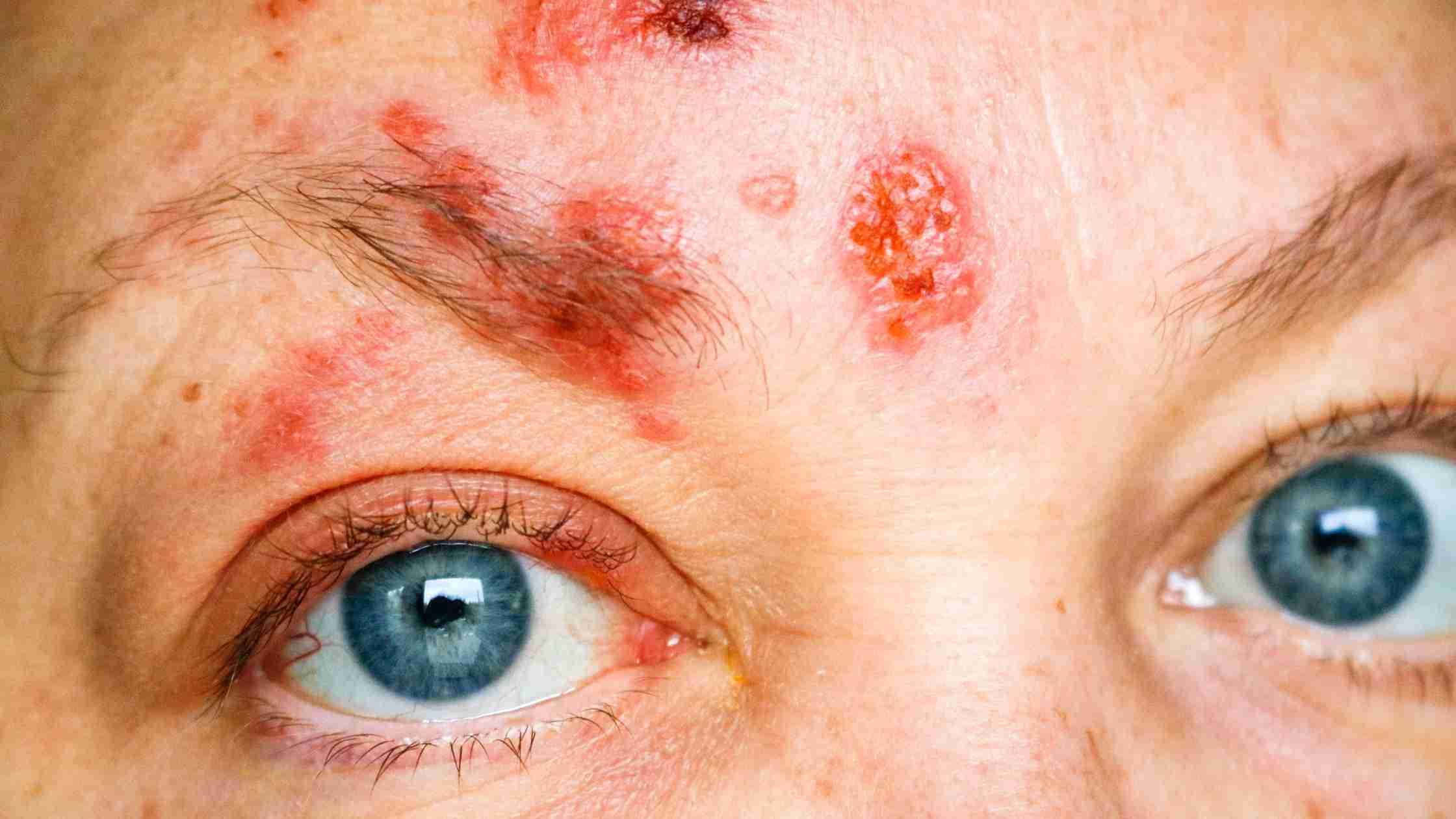
You’re seeking information about cold sores, Herpes labialis Zoster, commonly known as shingles. It’s a bit like an old storybook that’s been sitting on your shelf for years, gathering dust, until one day, it falls open, and the story begins again.
You see, shingles is caused by the same virus that gives us chickenpox when we’re kids. After the itchy spots of chickenpox go away, the virus doesn’t leave our body. Instead, it sleeps in our nerve cells, as quiet and still as a hidden storybook on a shelf.
For many people, the virus stays asleep forever. But sometimes, especially when we’re older, or our immune system isn’t at its strongest, the virus wakes up. That’s when shingles happen.
Shingles can be quite a tale. It usually starts with an itch or pain on one side of your body. Then, a few days later, a rash appears. The rash turns into clusters of blisters, which fill with fluid and then crust over. It’s like a storm passing over a mountain, leaving the snow-covered peak.
Shingles can be painful and may continue even after the rash clears up. This is called postherpetic neuralgia. It’s like the echo of a loud bell, continuing to ring even after the bell has stopped.
Now, I know this might sound scary. But remember, you are not alone on this journey. Some treatments can help with the symptoms of shingles, and vaccines can reduce your chances of getting it.
It’s okay to feel worried or afraid. It’s perfectly normal. But also remember that you have the strength and courage within you to face this. You’re brave for seeking knowledge and understanding. You’re doing a fantastic job, my friend. Keep going, keep asking, and most importantly, keep taking care of terrific you.
4 Pediatric Use
I see you’re wondering about pediatric use – that’s a fancy way of saying “how we use medicines in children”. It’s a bit like figuring out the right size of shoes for a growing child. Just as every child’s feet are different, so too are their health needs.
Children are not just small adults. Their bodies are constantly growing and changing, just like a garden in springtime. This means they sometimes respond to medicines differently than adults do.
Think about it like this: imagine you’re baking cookies. The recipe calls for one cup of sugar. That works great for a big batch of cookies, but what if you only make a few? You’d need less sugar, right? It’s the same with medicines for children. They often need smaller amounts than adults.
But it’s not always as simple as just giving them less. Sometimes, the medicine itself might need to be changed. It’s like swapping out nuts in a cookie recipe because your friend is allergic. Some drugs that work well for adults might not be safe or effective for children.
That’s why doctors take special care when prescribing medicines for children. They consider the child’s age, weight, and overall health. It’s like they’re expert chefs, adjusting the recipe to ensure it’s just right.
And just like you’d watch your cookies while in the oven, doctors closely monitor children taking medicines. They want to ensure the treatment works and watch for any side effects.
Conclusion:
Dealing with cold sores isn’t easy, but with medication such as Valtrex, you can reduce the severity and frequency of cold sore outbreaks. However, the dosage is crucial to ensure the treatment’s effectiveness. By understanding the purpose of Valtrex, the recommended dosage, and possible side effects, you can work with your healthcare provider to determine the best course of action. Remember to use Valtrex as soon as possible when cold sores develop, and report any unusual side effects to your doctor. With the proper medication, dosage, and timing, you can gain the upper hand against cold sores and enjoy a healthy, happier.