

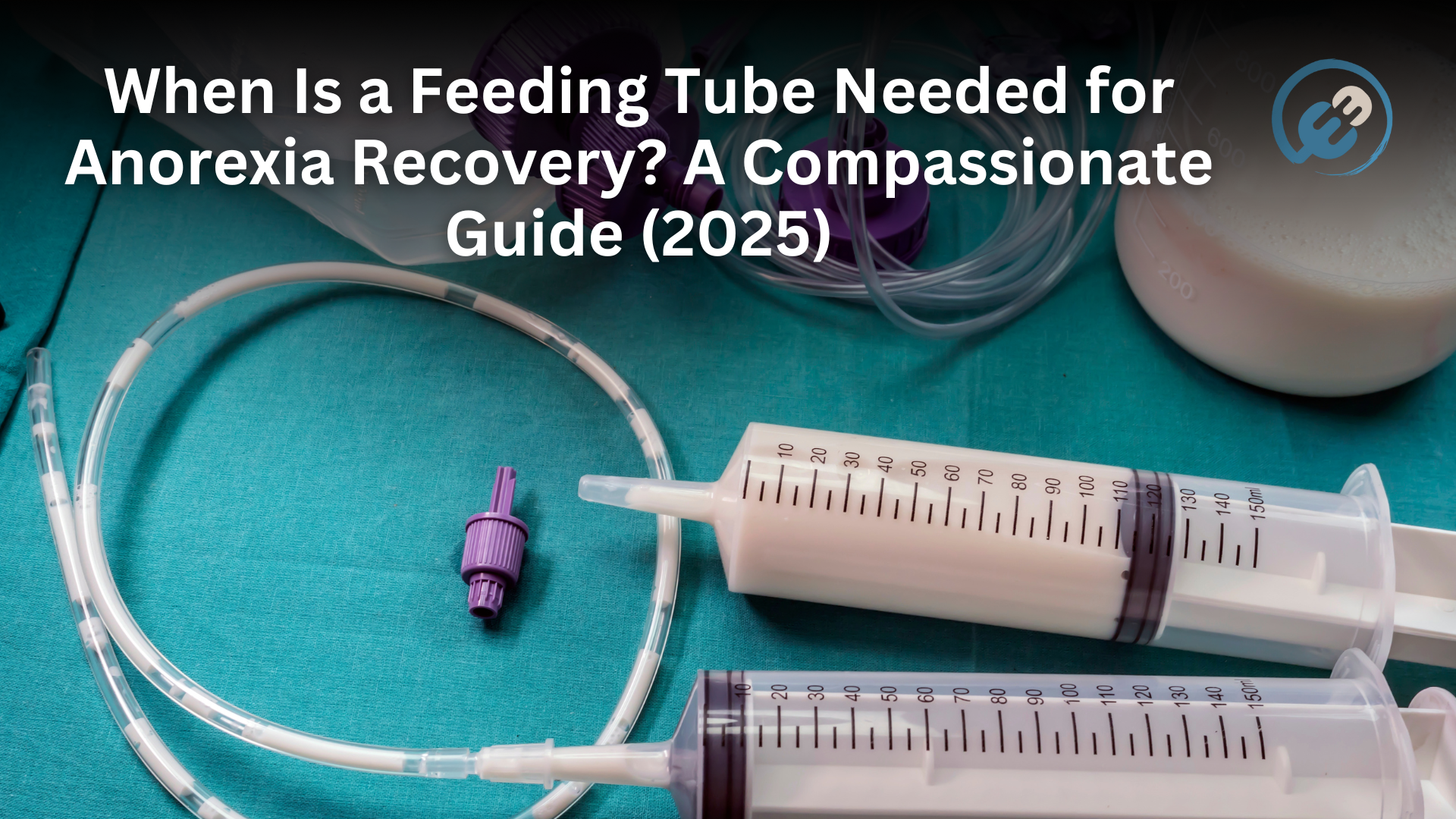
No one thinks their journey with food will end up here — wondering about feeding tubes, hospital stays, or what it means to “lose control.” It’s a question that many who suffer from anorexia are terrified to ask out loud. When is it bad enough for a feeding tube? What does that even mean?
If you’re here reading this, you may be feeling afraid, numb, or even ashamed. You may be supporting someone whose body is fading before your eyes. Or maybe a doctor or therapist recently mentioned tube feeding — and your stomach dropped.
Let me start with this: needing help to survive is never a failure. Needing a tube to stay alive is not a weakness. It is a sacred, difficult turning point — one that many brave souls have walked through and come out the other side.
If you want to understand the emotional and medical layers behind this decision — and begin to untangle the shame that so often surrounds it — this guide is for you.
Curious about your relationship with food? Our free quiz can offer some gentle insight into where you are and what support might help.
Why the Idea of a Feeding Tube Feels So Scary
For many in recovery, the idea of a feeding tube feels like the ultimate loss of control. It’s not just about food — it’s about identity. Perfectionism. Power. And deeply internalized stories like:
- “If I need a tube, I’ve failed.”
- “I’m not sick enough to deserve that.”
- “Only people who give up need tubes.”
But here’s a reframe: feeding tubes are not a punishment. They’re a form of rescue.
Why the fear exists:
- Cultural myths that equate recovery with willpower
- Internalized shame from diet culture and trauma
- Nervous system overwhelm that leads to emotional shutdown
Many people with anorexia don’t just refuse food — they’re neurologically unable to tolerate it. Their bodies and brains are stuck in a state of survival that makes nourishment feel threatening.
From this lens, a feeding tube becomes less about force — and more about safety. It’s about giving your nervous system enough stability to begin healing.
What Triggers the Need for a Feeding Tube in Anorexia Recovery?
So when does it reach that point?
Here are clinical indicators that may prompt medical professionals to consider tube feeding:
- Extremely low BMI or body weight
- Dangerously low heart rate (bradycardia) or blood pressure
- Electrolyte imbalances (risking organ failure)
- Inability or refusal to eat orally despite intervention
- Severe gastrointestinal shutdown (gastroparesis)
- Ongoing rapid weight loss
Feeding tubes are typically recommended when life is at risk or when oral intake is insufficient to sustain health despite best efforts.
According to the Journal of Adolescent Health, nasogastric feeding can be a life-saving bridge in acute anorexia care, reducing cardiac risks and supporting mental clarity during refeeding (Hart et al., 2020).
It’s not a quick fix — and it’s rarely the first intervention. But when the body begins to shut down, restoring nourishment becomes the non-negotiable first step.
Feeding Tubes as a Temporary Stabilization Tool
There are two primary types of feeding tubes used in anorexia care:
- Nasogastric (NG) tubes: Inserted through the nose into the stomach. Usually temporary and used during inpatient stays.
- Gastrostomy (PEG) tubes: Surgically placed through the abdomen for longer-term use, less common in anorexia.
These tools aren’t about replacing food forever — they’re about keeping someone alive long enough for healing to begin.
Important reminders:
- Needing a tube doesn’t mean you’re “incurable.”
- Most people only use them short-term.
- They allow the brain to receive enough nutrition to reawaken connection, clarity, and emotional regulation.
Feeding is not just about calories. It’s about the nervous system returning to safety — so therapy, support, and self-trust can begin to grow again.
What It’s Really Like to Have a Feeding Tube (Anecdotal Insight)
Let’s imagine:
Jasmine is 16. She hasn’t had a full meal in weeks. She’s dizzy, distant, and insists she’s “fine” — but her vitals say otherwise.
The hospital admits her. She panics when they mention a tube. She says, “No way. I’m not that sick.”
But that night, a nurse sits with her. Just holds her hand. Reminds her that she’s not in trouble. That her body needs help. That she’s still good. Still loved.
Jasmine cries as they place the NG tube. But in the days that follow, her eyes clear. Her voice steadies. She laughs at something. She begins to write in a journal again.
The tube wasn’t the end — it was the beginning.
Co-regulation — safe connection with others — made it bearable. And that, more than anything, is what nourished her nervous system.
Emotional and Relational Recovery After Tube Feeding
The medical crisis may pass, but the emotional ripples continue.
After tube feeding, many people feel:
- Deep shame: “I can’t believe I needed that.”
- Guilt: “I put my family through so much.”
- Fear: “What if I relapse again?”
This is where relational repair begins.
Healing doesn’t just mean eating again. It means:
- Learning to trust hunger cues after bypassing them
- Reclaiming the right to eat with pleasure
- Letting go of moral judgments around needing support
The nervous system needs safety, not performance. Often, therapy, group work, and compassionate coaching are essential in rebuilding food trust.
Want support as you rebuild that trust? Explore Eating Enlightenment Coaching.
Systemic Issues: Access, Medical Bias, and Delayed Support
Not everyone who needs a feeding tube gets one.
Why?
- Gender bias: Boys and men often go undiagnosed
- Weight stigma: People in larger bodies are told they “don’t look anorexic”
- Racial bias: Black and brown patients are less likely to receive timely eating disorder care
- Insurance issues: Authorization delays or denials
If you or someone you love was dismissed, misdiagnosed, or denied care — please know: It is not your fault. These systemic gaps reflect a broader crisis in eating disorder treatment access.
We’re working to create a world where all bodies are seen. Until then, your pain is valid. Your worth is not determined by a number or a diagnosis.
Alternatives and Adjuncts to Feeding Tubes in Severe Anorexia

Feeding tubes are one option — not the only one.
Other supportive approaches include:
- Nutritional shakes and soft oral refeeding plans
- Inpatient or residential meal support programs
- Family-based treatment (especially for adolescents)
- Motivational enhancement therapy to rebuild agency
Some people recover without ever needing a tube. Others need one for stabilization — then transition back to oral intake with support.
Curious about your patterns around eating and control?
Take our free quiz to learn more about what drives your relationship with food.
What Recovery Can Look Like After Tube Feeding
Recovery after a tube doesn’t mean returning to “normal.” It means finding a new normal rooted in safety, permission, and deeper self-understanding.
This might include:
- Journaling to track hunger, emotions, and body sensations
- Building slow trust in meal routines
- Celebrating small wins: a snack eaten, a boundary held, a fear faced
- Exploring deeper healing work — trauma, attachment, identity
Consider using our Mindful Meal Journal to gently reconnect with your hunger and needs.
And if you want personalized support, our coaches are here to walk beside you.
Conclusion: You Are Not a Failure — You Are a Survivor
If you’ve made it to the point of needing a feeding tube — or supporting someone who has — it means the suffering has been immense. It also means… you’re still here.
That matters.
This moment — however scary — is not the end. It may be the very beginning of deeper healing. You are not broken. Your body is not the enemy. You are worthy of care, nourishment, and peace.
Want to take a next step in your journey?
Start with our free quiz or connect with a coach who gets it.