

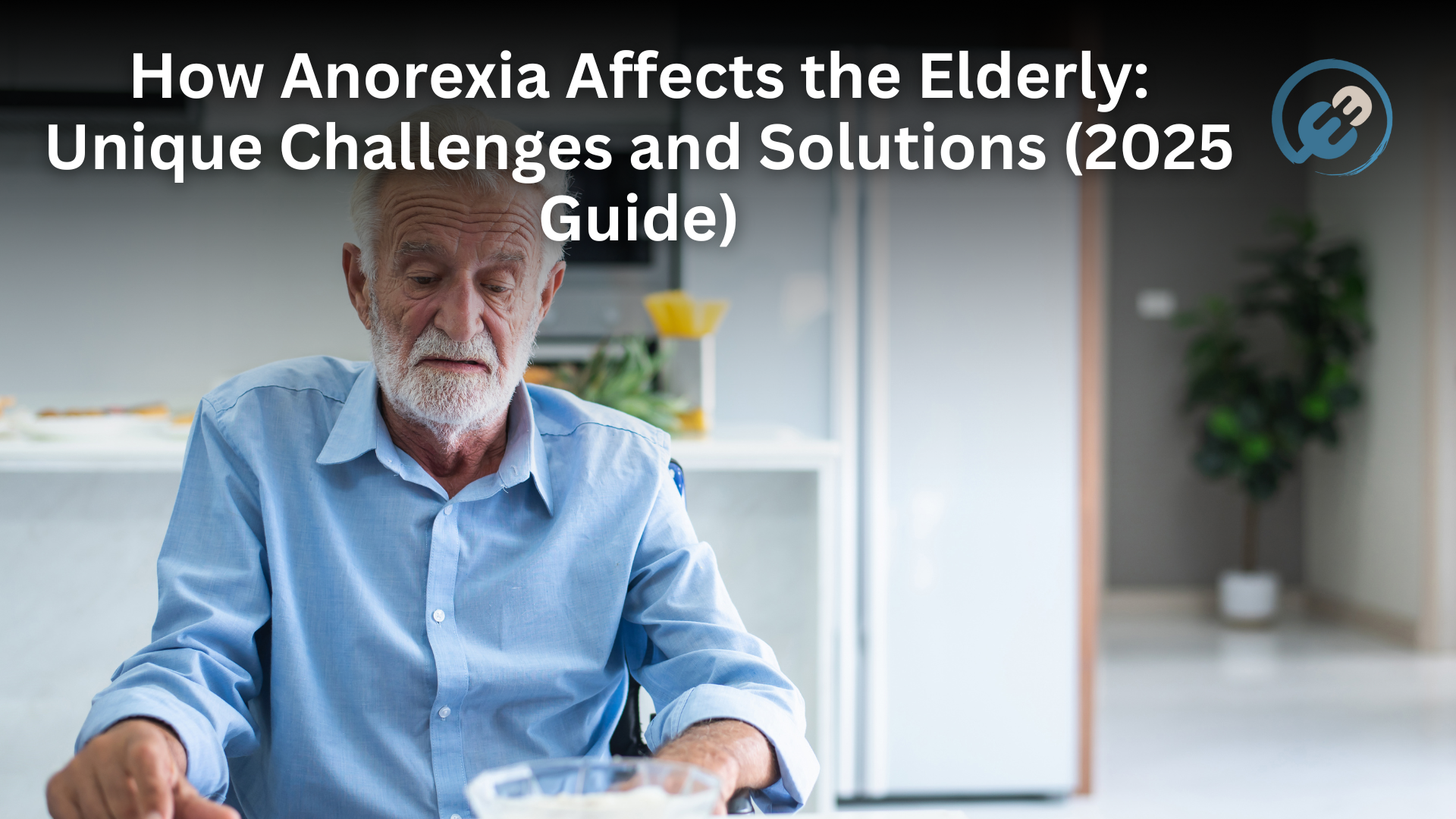
She didn’t say much anymore at dinner. Just gently pushed peas across her plate, barely touching the toast. “I’m not hungry,” she’d whisper. But something deeper sat beneath those words — not appetite, but maybe grief, maybe fear, maybe something she herself couldn’t name.
Anorexia in the elderly rarely looks the way we expect it to. There’s no loud refusal or visible control. It often comes cloaked in silence — missed meals, shrinking clothing, a quiet disconnection from nourishment.
This article is here for you — whether you’re an elder feeling the fog of hunger and shame, or a loved one witnessing someone you care about fade softly into smaller and smaller meals. Together, we’ll explore how anorexia uniquely affects older adults, why it’s so often invisible, and what gentle, hopeful paths toward healing still remain.
💡 Curious about your relationship with food?
Our free quiz can offer some gentle insight.
Why Anorexia in the Elderly Often Goes Unnoticed

Older adults experiencing anorexia frequently fall through the cracks of awareness — in hospitals, families, and even their own self-understanding.
Why?
- Symptoms mimic aging: Fatigue, weight loss, low appetite — these are often misattributed to “normal” aging, chronic illness, or depression.
- Ageism in healthcare: Doctors may overlook disordered eating in older patients, focusing instead on physical comorbidities.
- Cultural silence: Many grew up in eras that discouraged emotional openness or body awareness. Talking about food struggles might feel self-indulgent or shameful.
- Invisible grief: Widowed elders, especially those who shared meals with a partner for decades, may lose appetite both physically and emotionally.
According to a 2022 study in the Journal of Aging and Health, up to 78% of older adults with disordered eating remain undiagnosed — particularly men, who are less likely to seek help or be screened. (Smith et al., 2022)
Invisibility isn’t a reflection of unimportance — it’s a call to look deeper.
Physical and Emotional Symptoms to Look For

The signs of anorexia in older adults are often subtle. But they’re there.
Common Physical Signs
- Noticeable weight loss or muscle weakening
- Dehydration, dizziness, or low blood pressure
- Poor wound healing or frequent illnesses
- “I’m just not hungry anymore” becomes a frequent refrain
Emotional and Behavioral Cues
- Withdrawing from shared meals or social situations
- Fixating on body size, appearance, or control
- Loss of interest in foods they once loved
- Saying things like “I don’t want to be a burden” or “I eat enough”
Behind these behaviors may lie a deep well of emotion: grief, shame, or a fear of losing autonomy. Some may even feel guilt for still being alive — especially if they’ve outlived peers, partners, or children.
Root Causes in Later Life
Eating isn’t just about food. Especially not in later life.
What Can Spark Late-Onset Anorexia?
- Medical issues: Conditions like dementia, cancer, chronic pain, and medications can disrupt appetite and digestion.
- Emotional loss: Grieving loved ones, retirement, or a shift in identity can trigger withdrawal from nourishment.
- Loneliness: Eating alone is physiologically less satisfying — we are wired to feel safer when eating with others.
- Nervous system collapse: In trauma, grief, or extended stress, the body can shift into a shut-down mode where hunger cues disappear entirely. It’s not stubbornness. It’s survival.
When food becomes a site of overwhelm, the body adapts. But that adaptation — while once protective — may no longer serve healing.
The Role of Shame, Perfectionism, and Control

In many elderly individuals, especially those with high-functioning, achievement-oriented backgrounds, control around food may feel like the last thread of order in a changing world.
- “I mustn’t need too much.”
- “Better to be small, quiet, undemanding.”
- “If I control my food, I still have some power.”
These thoughts don’t always sound so clear in the mind — but they echo subtly in habits. Skipped meals. Quiet refusals. Choosing crackers over real meals.
And for those raised during war or rationing, scarcity is remembered in the bones. Saving, controlling, eating little may once have been virtuous. Now, they can hide suffering.
How to Support an Elder with Anorexia (Without Shame)

The worst thing you can do is pressure or scold. The best? Be gently present.
Support Strategies That Work
- Share meals instead of monitoring them.
- Reflect feelings rather than correcting behavior: “I’ve noticed you’ve been eating less lately. How are you feeling these days?”
- Medical guidance: Work with providers familiar with eating disorders in older adults.
- Offer structure, not control: Suggest meal times, soft routines, or shared cooking.
- Be patient: Food is emotional. Healing takes time.
💛 Want to support someone’s healing journey?
Our Mindful Meal Journal & Scheduling App can bring gentle structure and reflection into daily life.
Healing Is Possible at Any Age
Recovery in older age may not look like “bouncing back.” It might look like…
- Saying yes to soup and bread with a friend.
- Feeling hunger for the first time in years — and trusting it.
- Crying after a meal — not from shame, but because you felt loved.
Healing isn’t a return to the past. It’s a quiet unfolding into presence.
“It was never about food,” said one 79-year-old client in a coaching circle. “It was about letting myself be here. And maybe even be cared for.”
✨ Want support that honors your pace and needs?
Explore 1:1 coaching with Eating Enlightenment — you don’t have to do this alone.
If You’re an Elder Reading This: You Are Not Alone
You are not too old to heal. You are not too late. You are not a burden.
If you’ve been struggling with food, with shame, or with the confusion of why your body feels so foreign — this isn’t your fault. Patterns that made sense decades ago may no longer serve you now. And that shift can feel scary.
But you are allowed to begin again. Not by force. But by curiosity. And kindness.
Take one step. A sip. A seat at the table. A moment to ask, what would nourish me today?
🌱 Our free quiz might be a place to start — no pressure, just gentle awareness.
Conclusion: Dignity, Nourishment, and a Quiet Kindness
Anorexia in the elderly is not a sign of vanity, weakness, or failure. It is a whisper from the body asking for attention, not punishment. It is a symptom of a life that’s carried too much without being held enough.
And it is never too late to come home to yourself.
Healing is possible — not by fixing, but by softening. By being met, seen, and supported.
💬 Feeling curious or tender after reading this?
Try our journaling app to begin noticing your relationship with food in a kind, structured way.