

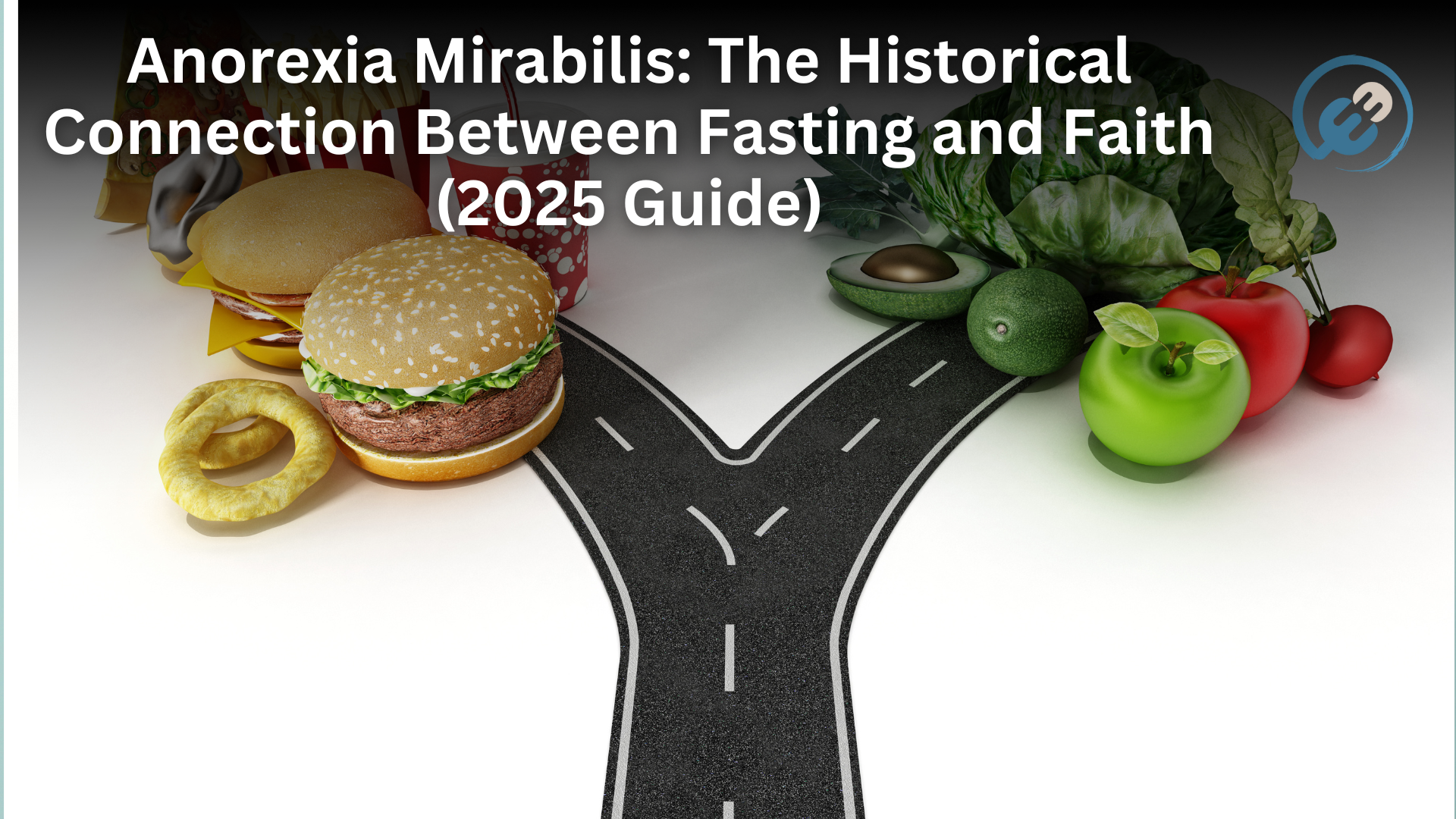
In a quiet stone cell, somewhere in 13th-century Europe, a young girl refused to eat.
Not because she wanted to be thin. Not because she feared food. But because she longed to be holy — to feel closer to God, to control her body’s longings, to offer her suffering as proof of divine love.
This is the world of anorexia mirabilis — a historical phenomenon in which girls and women fasted not to achieve beauty, but to achieve sainthood. And yet, the echoes of their hunger live on in today’s struggle with anorexia nervosa.
Why does this matter now?
Because beneath many modern eating disorders, especially those with a spiritual or perfectionistic bent, lives an ancient story: that suffering brings salvation, and that controlling the body might purify the soul.
If you’re navigating disordered eating shaped by identity, belief, or longing for transcendence, this article is for you. We’ll explore history, insight, and healing — and offer gentle resources along the way.
Curious about your relationship with food and deeper meaning? Take our free quiz for gentle insight into your patterns.
What Is Anorexia Mirabilis? A Brief Historical Overview

Anorexia mirabilis, or “miraculous loss of appetite,” describes a pattern of extreme religious fasting practiced by women — particularly Catholic mystics and saints — in medieval Europe.
Key characteristics:
- Fasting as a spiritual devotion
Women fasted not for appearance, but to imitate Christ, express humility, or attain closeness to the divine. - Social praise for extreme denial
In a time when women had few outlets for agency or voice, fasting became a path to authority and reverence. - Physical symptoms as spiritual proof
Emaciation, visions, and even death by starvation were seen as marks of holiness.
One of the most well-known figures is St. Catherine of Siena, who refused food from the age of seven and ultimately died from starvation at 33. Her behavior was not labeled pathological but venerated.
In today’s terms, many of these women would meet criteria for anorexia nervosa. Yet their motives were wrapped in spiritual longing — not aesthetic ideal.
Fasting, Faith, and Feminine Identity: Why Control Was a Path to Power
In medieval times, girls were often denied education, independence, or public roles. Religious fasting became a paradoxical path to both self-erasure and spiritual authority.
For many, fasting meant:
- Claiming space in a male-dominated religious world
- Expressing protest against forced marriage or domestic expectations
- Gaining social status as mystics or saints
But the deeper reality? These women were often in pain — both physically and emotionally. Their hunger spoke of more than piety. It was also a cry for autonomy, transcendence, and relational safety in a world where these were scarce.
Worldview Insight:
Like many modern eating disorders, anorexia mirabilis was a response to overwhelming conditions. Fasting was a language — not just of devotion, but of desperation.
Are There Parallels Between Anorexia Mirabilis and Modern Anorexia Nervosa?
While the cultural containers differ, the inner patterns can feel hauntingly similar:
| Anorexia Mirabilis | Anorexia Nervosa |
|---|---|
| Spiritual purity | Physical perfection |
| Rejection of flesh | Fear of weight gain |
| Transcendence via hunger | Control via denial |
| External praise | Cultural validation |
Today’s media praises thinness the way medieval clergy praised fasting. The language has changed — but the longing for approval, safety, and spiritual identity remains.
And for many, anorexia isn’t about vanity. It’s about meaning. About control in chaos. About the belief that if I just try harder, I’ll finally be okay.
The Role of Shame and the Nervous System

Many people with disordered eating carry deep shame — not just about food, but about being “too much,” “too needy,” or “too emotional.”
In both anorexia mirabilis and anorexia nervosa, the body becomes the battleground for these deeper wounds. And when we live with chronic emotional suppression, our nervous system adapts:
- We may numb hunger cues
- We might enter a freeze state — emotionally flat, physically depleted
- We lose connection to joy, hunger, and spontaneous aliveness
Hunger becomes the enemy. But what if hunger is also a signal of aliveness — and an invitation back to wholeness?
How Cultural Messages Still Spiritualize Suffering
Even today, many messages still reward self-denial:
- “Good girls are low maintenance.”
- “Discipline equals virtue.”
- “Clean eating is morally superior.”
In some spiritual communities, fasting is framed as a way to get closer to God — yet little is said about the trauma histories or body shame that can make fasting a trigger.
Relational Conditioning Insight:
When you grow up believing that your worth is tied to self-denial, it’s easy to confuse emptiness with holiness. Recovery means learning that nourishment — not suffering — is sacred.
Toward Healing: What Recovery Looks Like When Faith and Food Intersect
If your eating struggles are tangled up with spirituality, perfectionism, or morality, recovery needs to be more than nutritional.
Key healing elements:
- Somatic re-attunement
Gently relearn hunger and satiety through non-judgmental curiosity. - Spiritual reframing
Explore spiritual practices that honor the body — like mindful eating, prayerful movement, or embodied meditation. - Relational co-regulation
Work with a coach or therapist who can hold space for complexity without forcing black-and-white thinking. - Cultural deprogramming
Question inherited messages about control, virtue, and what makes someone “good.”
You might start with our Mindful Meal Journal App — a gentle place to track not just food, but feelings and hunger cues, without pressure.
Gentle CTAs for Further Support
- 🌱 Take our Free Quiz to explore how your relationship with food may carry emotional or spiritual roots.
- 📘 Use our Mindful Meal Journal to rebuild trust with hunger and self-awareness.
- 💬 Explore 1:1 Coaching if your recovery journey feels tangled in spiritual perfectionism.
- 🎓 Learn from the Enlighten Eats Course to unpack deeper roots of disordered eating across developmental layers.
Conclusion: Hunger Is Not a Sin — It’s a Signal

To those whose hunger has ever felt like failure — you are not alone.
Anorexia mirabilis shows us that disordered eating has deep roots. But it also shows us that healing is possible when we meet hunger with compassion, not condemnation.
You were never meant to earn your worth through emptiness. Your body is not a test to pass. It is a place of wisdom, memory, and longing. And it deserves nourishment — not just with food, but with care, connection, and meaning.
Start where you are. Let your next meal be a prayer — not of control, but of welcome.